All sixteen Gemma cases are complete. No plant identity or geographic conclusion was accepted.
What were we trying to find out?
Could a second vision model recognise historical plant drawings well enough to help the botanical study? Both models saw the same six reference drawings, each full and with detail removed, plus four Voynich pages without reference names.
What did we find?
| Known-example outcome | Qwen | Gemma |
|---|
| Declined to identify | 10 | 6 |
| Compatible broad plant family | 1 | 1 |
| Flowering plants only — too broad to identify | 0 | 1 |
| Incompatible candidate | 1 | 4 |
Both models declined to identify all four Voynich pages. Gemma repeated Qwen’s palm-family error on a reduced Dracunculus drawing. Gemma also called plantain a grass/agave relative and wormwood a conifer.
What does this mean?
More answers did not make Gemma’s assessment more reliable. These models can offer observations to check; this comparison does not justify identifying all 134 illustrations or inferring where the manuscript came from.
How was it completed?
The original thirteen successful Gemma answers were kept. A preserved software scheduling failure stopped one case. After a small safety fix, that case was retried once and the last two were attempted for the first time. No successful case was rerun; cleanup checks passed at completion.
Limits
Six paired drawings are six originals, not twelve independent specimens. Four exact reference folios remain unresolved. Historical labels do not establish modern species, and background writing may remain despite instructions to ignore it. No accuracy percentage, calibrated confidence or geographic overlap is justified. Different cooling and recovery conditions prevent a fair speed comparison.
Explore all sixteen paired cases
Each image is the same frozen input seen by both models. Open either model’s answer to read its plant-part observations, reasons, missing details and alternatives. These are model claims for checking, not accepted descriptions. “Full” means the full frozen drawing input, not necessarily an entire manuscript folio.
C01 — full illustration
Mandragora historical depiction. Reference labels are historical depictions, not authenticated modern species.
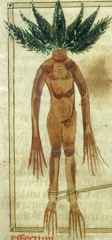
Qwen: declined to identify. Gemma: declined to identify.
Read Qwen observations and reasoning
Qwen: what it reported
Output stopped early. This response is incomplete. Its saved classification is an abstention; no repair was run.
Root: Two distinct, thick, fleshy structures extending from the lower legs/ankles. They are pale in color and terminate in a dense cluster of long, thin, finger-like or root-like projections. The structures appear to be bound or wrapped at the top (ankle area).
Stem: A central, vertical, fleshy column resembling a human torso and legs. It displays anatomical features such as a rib cage, pectoral muscles, and genitalia. The texture is smooth and skin-like, colored in shades of brown and tan. It serves as the central axis for the other structures.
Leaves: A large, dense rosette of long, lanceolate (lance-shaped) leaves radiating from the top of the central column (neck/head area). The leaves are dark green with visible lighter venation. They are arranged in a starburst pattern, completely obscuring the upper portion of the stem.
Terminal Structures: The upper terminus is the leaf rosette. The lower terminus consists of the root-like clusters. The lateral terminations (hands) are elongated, tapering into long, thin, finger-like projections that resemble roots or tendrils.
Read the preserved incomplete answer
```json
{
"observations": {
"root": "Two distinct, thick, fleshy structures extending from the lower legs/ankles. They are pale in color and terminate in a dense cluster of long, thin, finger-like or root-like projections. The structures appear to be bound or wrapped at the top (ankle area).",
"stem": "A central, vertical, fleshy column resembling a human torso and legs. It displays anatomical features such as a rib cage, pectoral muscles, and genitalia. The texture is smooth and skin-like, colored in shades of brown and tan. It serves as the central axis for the other structures.",
"leaves": "A large, dense rosette of long, lanceolate (lance-shaped) leaves radiating from the top of the central column (neck/head area). The leaves are dark green with visible lighter venation. They are arranged in a starburst pattern, completely obscuring the upper portion of the stem.",
"terminal_structures": "The upper terminus is the leaf rosette. The lower terminus consists of the root-like clusters. The lateral terminations (hands) are elongated, tapering into long, thin, finger-like projections that resemble roots or tendrils."
},
"candidate_or_abstain": "abstain",
"taxonomic_level": "N/A",
"support": [
"The illustration depicts a composite figure combining human anatomy (torso, limbs) with botanical features (leaf rosette, root-like extremities).",
"No single plant species matches this morphology; the 'stem' is clearly a human body, and the 'roots' are attached to the legs rather than the base of a stem.",
"The 'leaves' are attached to the neck/head region, which is not a natural botanical attachment point for a rosette."
],
"contradictions": [
"The central axis is a human body, not a plant stem.",
"The 'roots' are attached to the lower legs/ankles, not the base of the plant.",
"The 'leaves' emerge from the head/neck area, not the top of a stem or a node.",
"The hands are depicted as root-like structures, which is a morphological impossibility for a single organism."
],
"missing_parts": [
"A distinct plant stem (the central axis is a human body).",
"A true root system at the base of a stem.",
"A natural leaf attachment point (petioles attached to a stem).",
"Flowers or fruits (terminal structures are leaves and roots).",
"A human head (replaced by the leaf rosette)."
],
Read Gemma observations and reasoning
Gemma: what it reported
Candidate or abstention: abstain. Level: Not supplied.
Root: Not visible; lower extremities terminate in claw-like or root-like digits.
Stem: Represented by a humanoid torso and limbs with reddish-brown pigmentation.
Leaves: A rosette of lanceolate, serrated, green leaves emerging from the head/neck area.
Terminal Structures: None visible beyond the leaf rosette.
Reasons it offered: Not supplied.
Problems it reported: The structure is a composite of human anatomy and botanical elements, which does not correspond to any single biological organism.
Missing details: True root system, flowers, seeds, and standard plant vascular structures.
Symbolic or composite alternatives: Mandrake (Mandragora) as depicted in historical folklore/alchemy.
Clipping: The image is cropped at the bottom, cutting off the lower portion of the feet/roots.
C01 — reduced detail
Mandragora historical depiction. Reference labels are historical depictions, not authenticated modern species.
Qwen: declined to identify. Gemma: declined to identify.
Read Qwen observations and reasoning
Qwen: what it reported
Candidate or abstention: abstain. Level: Not supplied.
Root: Not visible; the lower portion of the figure is clipped at the mid-thigh/knee level.
Stem: Not visible; the central axis is a human torso, not a botanical stem.
Leaves: Not visible; no foliar structures are present.
Terminal Structures: Not visible; the figure is clipped at the top (neck/shoulders) and bottom (legs), and hands are partially visible but are human, not botanical.
Reasons it offered: Not supplied.
Problems it reported: The image depicts a human figure (torso, arms, hands), not a plant. No botanical structures (roots, stems, leaves, flowers, fruits) are present.
Missing details: All botanical parts: root, stem, leaves, terminal structures (flowers/fruits).
Symbolic or composite alternatives: The image may be a historical anatomical or artistic depiction of a human, possibly from a medical or religious manuscript, but it does not represent a botanical subject.
Read Gemma observations and reasoning
Gemma: what it reported
Candidate or abstention: abstain. Level: Not supplied.
Root: not visible
Stem: not visible
Leaves: not visible
Terminal Structures: not visible
Reasons it offered: none
Problems it reported: the image depicts a human figure, not a botanical specimen
Missing details: all botanical structures
Symbolic or composite alternatives: human figure
C02 — full illustration
Plantago historical depiction. Reference labels are historical depictions, not authenticated modern species.
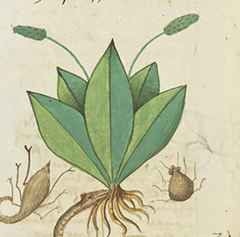
Qwen: declined to identify. Gemma: incompatible candidate.
Read Qwen observations and reasoning
Qwen: what it reported
Output stopped early. This response is incomplete. Its saved classification is an abstention; no repair was run.
Root: A dense, fibrous, and tangled mass of thin, light-brown roots emerges from the base of the plant. The roots are depicted as numerous and fine, lacking any thick taproot or tuberous structures.
Stem: No distinct, elongated vertical stem is visible. The leaves appear to arise directly from the root crown in a basal rosette. Two thin, green, curved stalks (peduncles) extend upwards from the center of the leaf cluster.
Leaves: A cluster of broad, lanceolate to ovate leaves forms a rosette. The leaves are green with a distinct central midrib and parallel lateral venation. They are arranged radially around the central point of origin.
Terminal Structures: Two elongated, cylindrical, green structures (spikelets or catkins) sit atop the thin stalks. These structures are textured with small dots or scales, resembling a cone or a cluster of small flowers/fruits. Additionally, there are two separate, unrelated figures at the bottom: a small, brown, segmented creature (possibly a worm or larva) on the left and a small, round, spiny insect or seed pod on the right.
Read the preserved incomplete answer
{
"observations": {
"root": "A dense, fibrous, and tangled mass of thin, light-brown roots emerges from the base of the plant. The roots are depicted as numerous and fine, lacking any thick taproot or tuberous structures.",
"stem": "No distinct, elongated vertical stem is visible. The leaves appear to arise directly from the root crown in a basal rosette. Two thin, green, curved stalks (peduncles) extend upwards from the center of the leaf cluster.",
"leaves": "A cluster of broad, lanceolate to ovate leaves forms a rosette. The leaves are green with a distinct central midrib and parallel lateral venation. They are arranged radially around the central point of origin.",
"terminal_structures": "Two elongated, cylindrical, green structures (spikelets or catkins) sit atop the thin stalks. These structures are textured with small dots or scales, resembling a cone or a cluster of small flowers/fruits. Additionally, there are two separate, unrelated figures at the bottom: a small, brown, segmented creature (possibly a worm or larva) on the left and a small, round, spiny insect or seed pod on the right."
},
"candidate_or_abstain": "abstain",
"taxonomic_level": null,
"support": [
"The fibrous root system and basal rosette of leaves are consistent with monocots or certain herbaceous dicots.",
"The terminal spikelets suggest a plant in the order Poales (e.g., Juncaceae, Cyperaceae, or Orchidaceae) or possibly a composite flower head, but the specific morphology is stylized."
],
"contradictions": [
"The combination of broad, simple, lanceolate leaves with terminal spikelets is not a standard diagnostic combination for a single common family without further detail (e.g., leaf sheaths, flower parts).",
"The presence of the unrelated creatures (worm/insect) suggests a symbolic or alchemical context rather than a strict botanical specimen, making taxonomic identification unreliable."
],
"missing_parts": [
"Detailed floral anatomy (petals, stamens, pistils) is absent or obscured within the spikelets.",
"Leaf base details (sheaths vs. petioles) are not clearly defined.",
"Bark or stem texture is missing as the stem is not distinct."
],
"symbolic_alternatives": [
"The illustration may represent a symbolic plant (e.g., in an alchemical or herbal context) rather than a specific biological species.",
"The inclusion of the worm and the spiny insect/pod suggests a 'materia medica' or symbolic association
Read Gemma observations and reasoning
Gemma: what it reported
Candidate or abstention: Poaceae. Level: Family
Root: A thick, brownish rhizome-like structure with several descending, slender fibrous roots.
Stem: Absent or extremely reduced; leaves emerge directly from the rootstock.
Leaves: Broad, lanceolate, green leaves with central veins, arranged in a basal rosette.
Terminal Structures: Two slender, curved stalks emerging from the center, each terminating in an elongated, green, cylindrical seed head or spikelet.
Reasons it offered: Presence of linear/lanceolate leaves and cylindrical terminal spikes characteristic of certain grasses or sedges.
Problems it reported: The leaf width and overall morphology are stylized and atypical for most modern Poaceae.
Missing details: Flowers, seeds, detailed venation.
Symbolic or composite alternatives: The illustration may be a composite or stylized representation of a medicinal herb rather than a biologically accurate specimen.
Clipping: None
C02 — reduced detail
Plantago historical depiction. Reference labels are historical depictions, not authenticated modern species.
Qwen: declined to identify. Gemma: incompatible candidate.
Read Qwen observations and reasoning
Qwen: what it reported
Candidate or abstention: Abstain. Level: N/A
Root: Not visible. The image is cropped at the base of the depicted structure.
Stem: Not clearly visible as a distinct, elongated axis. The structure appears to be a dense cluster of leaf bases or a thickened central point from which leaves emerge.
Leaves: Multiple, lanceolate to ovate leaves arranged in a rosette or whorl. They are depicted in two shades of green (lighter and darker) to suggest depth and overlapping. The leaves appear to have entire margins and a pointed apex. The arrangement is radial.
Terminal Structures: No flowers, fruits, or distinct terminal buds are visible. The apex of the plant is formed by the tips of the uppermost leaves.
Reasons it offered: The visual evidence consists solely of a generic rosette of green leaves. While the shape is consistent with many monocots (e.g., Agave, Yucca, or certain grasses) or dicots (e.g., Hosta, or young Acanthaceae), the lack of flowers, fruits, specific venation patterns, or stem details makes a specific identification impossible. The style is illustrative rather than strictly taxonomic.
Problems it reported: None observed within the visible fragment, but the generic nature of the leaves contradicts the possibility of a unique identification without further context.
Missing details: Roots, flowers, fruits, detailed venation, stem texture, and the full extent of the plant (base and top) are missing.
Symbolic or composite alternatives: The image may represent a generic 'plant' or 'herb' symbol rather than a specific species. It could be a stylized representation of a rosette plant used in a broader botanical or alchemical context.
Read Gemma observations and reasoning
Gemma: what it reported
Candidate or abstention: Agavoideae. Level: Subfamily
Root: Not visible
Stem: Not visible; leaves appear to emerge from a central base
Leaves: Broad, ovate to lanceolate, with prominent central midribs and parallel lateral venation; arranged in a dense, overlapping rosette or cluster
Terminal Structures: None visible
Reasons it offered: Rosette arrangement of thick, fleshy, lanceolate leaves with distinct longitudinal venation
Problems it reported: Lack of spines or serrated margins common in many Agavoideae
Missing details: Roots Stem Flowers Fruit
Symbolic or composite alternatives: Stylized decorative foliage
Clipping: The image is cropped, showing only the upper foliage portion of the plant
C03 — full illustration
Nigella historical depiction. Reference labels are historical depictions, not authenticated modern species.
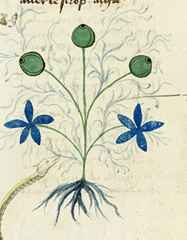
Qwen: declined to identify. Gemma: declined to identify.
Read Qwen observations and reasoning
Qwen: what it reported
Candidate or abstention: abstain. Level: Not supplied.
Root: A dense, fibrous, and somewhat tangled root system depicted in dark blue-grey ink, emerging from the base of the stem.
Stem: A single, central, green vertical stem that branches out into five distinct petioles (stalks) near the top.
Leaves: Two large, blue, five-petaled structures are depicted on the lower branches. They are stylized with a star-like shape and lack visible veins or serrations. They are positioned laterally rather than along the main stem.
Terminal Structures: Three green, spherical or ovoid structures are located at the tips of the upper branches. They appear to be fruits or seed pods, each with a small dark dot at the apex, possibly representing a stigma or opening.
Reasons it offered: The illustration shows a plant with a fibrous root system. It has a branching stem structure. The 'leaves' are highly stylized and blue, which is non-naturalistic. The terminal structures are green spheres, potentially representing berries or pods.
Problems it reported: The blue color of the 'leaves' is not naturalistic for any known plant species. The five-petaled star shape of the 'leaves' is highly stylized and does not match typical leaf morphology. The combination of blue star-shaped leaves and green spherical fruits is not a recognizable combination in standard botanical taxonomy.
Missing details: No flowers are depicted. No naturalistic leaf venation or texture is shown. No scale or size reference is provided.
Symbolic or composite alternatives: The blue star-shaped structures may be symbolic rather than literal representations of leaves. The green spheres could represent a specific type of fruit or seed, but their exact nature is unclear. The overall composition may be allegorical or part of a larger symbolic narrative rather than a strict botanical depiction.
Read Gemma observations and reasoning
Gemma: what it reported
Candidate or abstention: abstain. Level: Not supplied.
Root: A single primary root with several descending, tapering lateral rootlets.
Stem: Three primary ascending stems emerging from a single base, branching slightly as they rise.
Leaves: Numerous thin, wavy, light-blue linear filaments arranged alternately or irregularly along the stems.
Terminal Structures: Three spherical green pods/fruits, each featuring a small circular aperture or eye-like mark on the side.
Reasons it offered: Not supplied.
Problems it reported: The combination of blue star-shaped flowers and spherical pods with 'eyes' does not align with a single known botanical family.
Missing details: True floral organs (stamens, pistils) are not detailed; seed structures are not visible.
Symbolic or composite alternatives: The illustration may be a composite or symbolic representation of medicinal properties rather than a naturalistic study.
Clipping: The image is cropped at the top and left edges.
C03 — reduced detail
Nigella historical depiction. Reference labels are historical depictions, not authenticated modern species.
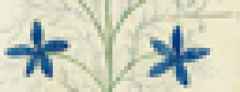
Qwen: declined to identify. Gemma: flowering plants only; too broad to identify.
Read Qwen observations and reasoning
Qwen: what it reported
Candidate or abstention: Abstain. Level: Not supplied.
Root: Not visible. The image is clipped at the bottom, showing only the upper portion of the plant structure.
Stem: A central, vertical, pale green stem is visible. It branches out into thinner, lighter green stems that extend outward and upward to support the flowers. The branching pattern appears somewhat symmetrical.
Leaves: No distinct leaves are visible. The structure consists primarily of the central stalk and the pedicels (flower stalks) leading to the blooms.
Terminal Structures: Two distinct blue flowers are present, one on the left and one on the right. Each flower has five pointed petals arranged radially. The color is a solid, medium-to-dark blue. The flowers appear to be attached to the main stem via thin, branching stalks.
Reasons it offered: The visual evidence consists of a stylized, symmetrical plant with a central stalk and two five-petaled blue flowers. While the five-petal structure is common to many families (e.g., Rosaceae, Onagraceae, Malvaceae), the specific blue coloration combined with the lack of leaves, specific petal shape details, or root structure makes a definitive taxonomic identification impossible based on this fragment alone. It resembles generic floral motifs found in historical textiles or manuscripts rather than a specific botanical plate.
Problems it reported: None observed within the visible fragment, though the lack of leaves on a flowering stem is biologically unusual for many species, suggesting a stylized or symbolic representation rather than a strict botanical depiction.
Missing details: Roots, leaves, buds, fruit, and the base of the stem are missing due to image clipping and the nature of the illustration.
Symbolic or composite alternatives: The image may represent a symbolic or heraldic floral motif (e.g., a stylized flax, cornflower, or generic 'blue flower') rather than a specific biological specimen. The symmetry and flat coloration suggest an artistic or decorative intent.
Read Gemma observations and reasoning
Gemma: what it reported
Candidate or abstention: Angiospermae. Level: Clade
Root: Not visible
Stem: Central vertical axis with lateral branching
Leaves: Small, narrow, linear to lanceolate leaves arranged alternately or in clusters along the stems
Terminal Structures: Two five-petaled, star-shaped flowers with pointed petals
Reasons it offered: Presence of flowers with petals and a vascular stem system
Problems it reported: None
Missing details: Roots Fruit Seeds Detailed floral reproductive organs
Symbolic or composite alternatives: Stylized floral ornament
Clipping: The image is cropped, removing the base of the plant and the upper extent of the stems.
C04 — full illustration
Papaver historical depiction. Reference labels are historical depictions, not authenticated modern species.
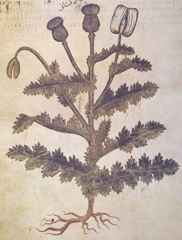
Qwen: compatible broad plant family. Gemma: compatible broad plant family.
Read Qwen observations and reasoning
Qwen: what it reported
Candidate or abstention: Papaveraceae (Poppy family). Level: Family
Root: A single, thick, reddish-brown taproot system with several branching lateral roots extending downwards and outwards.
Stem: A central, erect, brownish main stem that branches into several secondary stalks. The stem appears sturdy and supports the leaves and terminal structures.
Leaves: Leaves are arranged alternately along the stem. They are pinnately lobed or deeply cut with serrated margins. The coloration is a muted olive-green or brownish-green.
Terminal Structures: The plant terminates in several distinct structures: two dark, bulbous, urn-shaped pods (resembling poppy capsules) with a crown-like rim at the top; one pale, bell-shaped flower that is open and drooping, revealing a central column; and one smaller, drooping bud on a long, curved pedicel.
Reasons it offered: The combination of the dark, urn-shaped capsules with a distinct stigmatic disc (crown) at the apex and the bell-shaped, nodding flower is highly characteristic of the genus Papaver. The pinnately lobed leaves are also consistent with this family.
Problems it reported: The leaves appear somewhat stiff and serrated, which can vary among Papaver species but is generally consistent. The dark coloration of the pods is typical for mature poppy capsules.
Missing details: Seeds are not visible inside the capsules. The interior of the flower (stamens) is not clearly detailed. The ground line or soil context is absent.
Symbolic or composite alternatives: The illustration is a realistic botanical study rather than a purely symbolic icon, though poppies often carry symbolic weight (e.g., sleep, death, remembrance) in historical contexts. The specific depiction of the open flower and closed pods suggests a focus on the plant's reproductive stages.
Read Gemma observations and reasoning
Gemma: what it reported
Candidate or abstention: Papaveraceae. Level: Family
Root: A single primary root with several smaller, branching lateral roots extending downwards.
Stem: A central vertical axis with several nodes from which leaves and terminal stalks emerge.
Leaves: Pinnately lobed or deeply serrated leaves arranged alternately or in whorls along the stem.
Terminal Structures: Multiple upright stalks ending in bulbous, capsule-like structures; one structure is open, revealing internal segments.
Reasons it offered: The presence of bulbous seed capsules (pods) and the general leaf morphology are characteristic of the poppy family.
Problems it reported: The leaf arrangement and the specific structure of the open capsule do not perfectly align with modern botanical standards for any single genus.
Missing details: Flowers/petals are absent; only the fruiting bodies (capsules) are shown.
Symbolic or composite alternatives: The illustration may be a stylized or composite representation of a medicinal plant rather than a precise botanical study.
Clipping: None
C04 — reduced detail
Papaver historical depiction. Reference labels are historical depictions, not authenticated modern species.
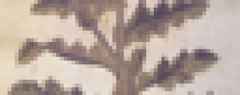
Qwen: declined to identify. Gemma: declined to identify.
Read Qwen observations and reasoning
Qwen: what it reported
Candidate or abstention: Abstain. Level: N/A
Root: Not visible; the image is clipped at the base of the stem.
Stem: A central, branching structure is visible, rendered in brown ink or wash. It forks into multiple upward-reaching branches.
Leaves: Clusters of foliage are present at the ends of the branches. The leaves appear to be compound or pinnate, with multiple leaflets arranged along a rachis. The rendering is soft and somewhat indistinct.
Terminal Structures: The terminal structures are the leaf clusters themselves. No distinct flowers, fruits, or cones are clearly resolved, though the tips of the branches are heavily foliated.
Reasons it offered: The image shows a woody plant with compound leaves, but the resolution is too low and the artistic style too generic to identify specific diagnostic features (e.g., leaflet count, stipules, bark texture, flower structure).
Problems it reported: None observed, but the lack of detail prevents positive identification.
Missing details: Roots, flowers, fruits, seeds, and the base of the trunk are missing or cropped out. The image is a partial view.
Symbolic or composite alternatives: The image could be a generic representation of a tree or shrub used for symbolic purposes (e.g., in a coat of arms or allegorical scene) rather than a strict botanical study.
Read Gemma observations and reasoning
Gemma: what it reported
Candidate or abstention: abstain. Level: Not supplied.
Root: Not visible
Stem: Single, central vertical axis with alternating lateral branches
Leaves: Ovate to elliptical shapes arranged along the stem and branches
Terminal Structures: None visible
Reasons it offered: General woody plant architecture with simple leaves
Problems it reported: Lack of diagnostic floral or fruit structures
Missing details: roots flowers fruits seeds
Symbolic or composite alternatives: Generic representation of a shrub or small tree
Clipping: The image is cropped, excluding the base and potential upper terminal buds
C05 — full illustration
Dracunculus historical depiction. Reference labels are historical depictions, not authenticated modern species.
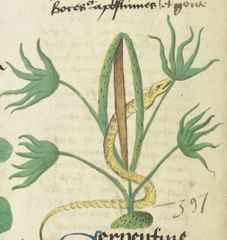
Qwen: declined to identify. Gemma: declined to identify.
Read Qwen observations and reasoning
Qwen: what it reported
Candidate or abstention: abstain. Level: Not supplied.
Root: A bulbous, greenish base is visible at the bottom of the central stem, from which the plant emerges. No distinct root system is depicted.
Stem: A central, thick, brownish vertical structure (possibly a stalk or seed pod) is surrounded by green, leaf-like bracts. A yellow, scaled serpent is coiled around this central structure.
Leaves: Several long, slender, green stems radiate outward from the base. These stems terminate in complex structures rather than typical flat leaves.
Terminal Structures: The radiating stems end in green, multi-fingered, star-like or hand-like structures. These appear to be stylized flowers or fruit clusters with distinct, separated lobes.
Reasons it offered: The illustration depicts a plant with a central stalk and radiating branches ending in star-like structures. The presence of a serpent coiled around the plant is a prominent feature.
Problems it reported: The inclusion of a serpent is not a botanical feature and suggests a symbolic or mythological context rather than a strict scientific depiction. The 'leaves' are actually long stems ending in complex structures, which is atypical for many common plants. The central brown structure is ambiguous; it could be a seed pod, a stalk, or a stylized element, making identification difficult.
Missing details: No true leaves are visible in the typical sense. No flowers are clearly depicted in a standard botanical sense. No fruit is clearly identifiable. No detailed root system is shown.
Symbolic or composite alternatives: The serpent coiled around the plant strongly suggests a symbolic or allegorical representation, possibly related to the 'Tree of Knowledge' or a similar mythological motif. The star-like terminal structures could be symbolic of a crown or a specific celestial body. The overall composition may represent a specific herb or plant from a historical text with symbolic associations, such as 'Borech' (Borage) or 'Asphodel', but the serpent makes a direct botanical identification unreliable.
Read Gemma observations and reasoning
Gemma: what it reported
Candidate or abstention: abstain. Level: Not supplied.
Root: Not visible
Stem: Single, slender, green vertical axis with branching lateral stems
Leaves: Four terminal clusters of finger-like, radiating green lobes
Terminal Structures: A central vertical pod-like structure split open to reveal a yellow coiled serpent
Reasons it offered: Not supplied.
Problems it reported: The presence of a vertebrate animal (serpent) emerging from a botanical structure is biologically impossible for any known plant taxon.
Missing details: root system flowers seeds
Symbolic or composite alternatives: Composite mythological or symbolic illustration combining botanical and zoological elements.
C05 — reduced detail
Dracunculus historical depiction. Reference labels are historical depictions, not authenticated modern species.
Qwen: incompatible plant family. Gemma: incompatible candidate.
Read Qwen observations and reasoning
Qwen: what it reported
Candidate or abstention: Palm (Arecaceae). Level: Family
Root: Not visible; the image is cropped at the base of the stem.
Stem: A central, vertical, brownish-tan stalk is visible. It appears relatively thick and straight, with green branches or petioles emerging from it.
Leaves: Green, palmate structures are visible. They appear to be compound leaves or fronds with multiple leaflets radiating from a central point. The leaflets are elongated and somewhat pointed. The arrangement suggests a palm-like or fan-like structure.
Terminal Structures: The top of the plant is not fully visible, but the visible green structures appear to be the leaf tips or fronds. There are no distinct flowers or fruits clearly identifiable in the visible portion.
Reasons it offered: The visible green structures strongly resemble the palmate fronds characteristic of the Arecaceae family. The central stalk is consistent with a palm trunk or stem.
Problems it reported: None apparent within the visible portion. The structures are consistent with a palm.
Missing details: Roots, base of the stem, and the very top of the plant (if it extends beyond the frame) are not visible. Flowers and fruits are not clearly depicted.
Symbolic or composite alternatives: Could be a stylized or symbolic representation of a palm tree, common in historical botanical or religious illustrations. It might also be a generic representation of a 'tree' or 'plant' with palmate leaves, but the specific structure points more strongly to a palm.
Clipping: The image is cropped, showing only a portion of the plant. The top and bottom are cut off, limiting the view of the full structure.
Read Gemma observations and reasoning
Gemma: what it reported
Candidate or abstention: Arecaceae. Level: Family
Root: Not visible
Stem: Vertical, cylindrical, light brown to tan coloration
Leaves: Elongated, lanceolate to linear blades; some appearing as palmately divided or radiating from a central point
Terminal Structures: Not clearly defined; upper portions of leaves extend beyond the frame
Reasons it offered: Presence of a single unbranched vertical stem and radiating, elongated leaf structures characteristic of palms.
Problems it reported: None
Missing details: Roots Flowers Fruits Full canopy
Symbolic or composite alternatives: Stylized representation of a palm tree
Clipping: Significant; image is cropped horizontally and vertically, removing the base and the top of the plant.
C06 — full illustration
Artemisia historical depiction. Reference labels are historical depictions, not authenticated modern species.
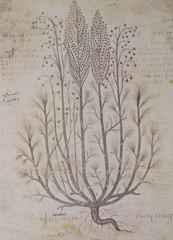
Qwen: declined to identify. Gemma: incompatible candidate.
Read Qwen observations and reasoning
Qwen: what it reported
Candidate or abstention: Abstain. Level: Not supplied.
Root: A single, thick, tapering taproot emerges from the base of the stem, depicted in a brownish tone with fine, hair-like lateral rootlets extending outward.
Stem: Multiple slender, dark-stemmed stalks arise from a common basal point. The stems are relatively straight and unbranched until the upper sections where they divide into finer twigs.
Leaves: The lower portion of the plant features whorls or clusters of fine, needle-like or linear leaves arranged along the stems. The upper stems are largely bare of foliage, transitioning into the terminal structures.
Terminal Structures: The plant terminates in two distinct types of structures. The central stalks end in elongated, dense, spike-like or cone-like clusters composed of numerous small, dot-like units (resembling seeds or florets). The lateral stalks end in open, branching panicles bearing scattered, spherical berries or seeds on thin pedicels.
Reasons it offered: The combination of a taproot, needle-like lower foliage, and terminal spikes is consistent with certain conifers or gymnosperms, but the presence of open, berry-like panicles on lateral branches contradicts a strict conifer identification. The structure resembles a composite depiction or a stylized representation of a plant with both cone-like and berry-like fruiting bodies.
Problems it reported: The co-occurrence of dense, cone-like terminal spikes (typical of gymnosperms) and open, berry-like panicles (typical of angiosperms) on the same individual is biologically contradictory for a single natural species. The needle-like leaves suggest a conifer, but the branching habit and fruit types suggest a dicot or a highly stylized artistic interpretation.
Missing details: No flowers are visible. No bark texture is detailed on the main stems. No cross-sections or internal structures are shown.
Symbolic or composite alternatives: The image may be a symbolic or allegorical representation of a plant rather than a strict botanical specimen, combining features of different plant types (e.g., a 'Tree of Life' motif or a specific medicinal plant composite). It could represent a stylized version of a juniper or cypress, where the 'berries' are artistic interpretations of the cones.
Read Gemma observations and reasoning
Gemma: what it reported
Candidate or abstention: Conifer. Level: Division
Root: A single, thick, winding woody root extending from the base into the ground.
Stem: A central base that divides into multiple upright, slender, vertical branches with minimal lateral branching.
Leaves: Small, linear, needle-like structures arranged densely along the vertical stems.
Terminal Structures: Two large, elongated, oval-shaped cones with a textured, scaled surface, positioned vertically at the apex of the central stems.
Reasons it offered: Presence of needle-like foliage and large, scaled terminal cones.
Problems it reported: The branching pattern is highly stylized and does not strictly follow a specific natural growth habit.
Missing details: Flowers, seeds, fruit.
Symbolic or composite alternatives: Stylized representation of a generic evergreen or pine tree.
Clipping: None
C06 — reduced detail
Artemisia historical depiction. Reference labels are historical depictions, not authenticated modern species.
Qwen: declined to identify. Gemma: declined to identify.
Read Qwen observations and reasoning
Qwen: what it reported
Candidate or abstention: Abstain. Level: Not supplied.
Root: Not visible; the image is cropped at the base of the stems.
Stem: Multiple, slender, vertical stems are visible. They appear greyish-brown and relatively uniform in thickness, rising from the bottom of the frame.
Leaves: Leaves are sparse and appear to be arranged alternately along the stems. They are small, lanceolate to linear in shape, and rendered in a muted, brownish-green tone. The foliage is not dense.
Terminal Structures: The stems terminate in small, indistinct clusters or buds. These structures are slightly darker than the stems and appear to be the tips of the branches, possibly representing flower buds or seed heads, but lack distinct detail.
Reasons it offered: The visual evidence consists of generic slender stems with sparse, small leaves and indistinct terminal buds. While the general habit resembles certain shrubs or small trees (e.g., willows, dogwoods, or ornamental grasses), the lack of specific diagnostic features (such as leaf venation, bark texture, or distinct flower/fruit morphology) prevents a defensible identification even at the family or genus level.
Problems it reported: None observed, but the generic nature of the features contradicts the possibility of a specific identification.
Missing details: Roots, detailed leaf venation, bark texture, distinct flowers, fruits, and the full extent of the plant (top and bottom) are missing or obscured by the low resolution and cropping.
Symbolic or composite alternatives: The image may represent a generic 'bush', 'shrub', or 'sapling' in a symbolic or decorative context rather than a specific botanical specimen. It could be a stylized representation of winter vegetation or a background element in a larger composition.
Read Gemma observations and reasoning
Gemma: what it reported
Candidate or abstention: abstain. Level: Not supplied.
Root: Not visible
Stem: Multiple vertical, slender, branching stalks with a textured, linear appearance
Leaves: Small, simplified, pointed projections emerging from the stems in opposite or alternate patterns
Terminal Structures: Tapered tips without distinct flowers or fruits
Reasons it offered: The illustration shows generic woody branching patterns.
Problems it reported: Lack of specific floral or foliar morphology to distinguish between families.
Missing details: roots flowers fruits detailed leaf venation
Symbolic or composite alternatives: Stylized representation of a thicket or shrubbery
Clipping: The image is cropped, showing only the upper portion of the plants.
T1 — Voynich f025v
Unlabelled transfer; no accepted identity. No reference plant name was supplied; neither model accepted an identification.
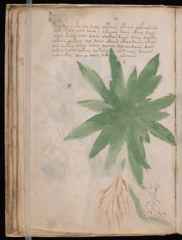
Qwen: declined to identify. Gemma: declined to identify.
Read Qwen observations and reasoning
Qwen: what it reported
Candidate or abstention: Abstain. Level: N/A
Root: A dense, fibrous taproot system is depicted in reddish-brown tones, spreading outward from the base of the stem.
Stem: A short, pale green stem connects the root system to the leaf whorl. It appears relatively thin and unbranched.
Leaves: A large, whorled cluster of lanceolate (lance-shaped) leaves radiates from the top of the stem. The leaves are painted in shades of green with visible central veins and pointed tips. The arrangement is dense and star-like.
Terminal Structures: No flowers, fruits, or seed heads are visible. The apex of the plant is formed entirely by the leaf whorl.
Other Features: A small, sketched animal (resembling a rabbit or hare) is present in the lower right corner, separate from the plant structure.
Reasons it offered: The fibrous root system and whorled, lanceolate leaves are morphologically consistent with the Asteraceae family (e.g., *Acanthaceae* or *Acanthus* species). The overall form resembles a rosette or basal whorl typical of certain herbaceous perennials.
Problems it reported: The leaf whorl is extremely dense and uniform, which may be an artistic exaggeration rather than a strict botanical representation. The lack of any reproductive structures (flowers/fruit) makes definitive identification impossible, as these are key diagnostic features for most plant families.
Missing details: Flowers Fruits/Seeds Bark texture (if woody) Scale bar or size reference
Symbolic or composite alternatives: The plant may be a symbolic representation of a specific herb used in medieval medicine or alchemy (e.g., a generic 'herb of virtue' or a specific apothecary plant like *Acanthus* or *Cannabis*, though the leaf shape is less serrated than typical hemp). The presence of the hare suggests a potential connection to folklore or specific medicinal uses associated with that animal.
Read Gemma observations and reasoning
Gemma: what it reported
Candidate or abstention: abstain. Level: Not supplied.
Root: A dense, fibrous cluster of reddish-brown roots extending downwards from the base of the stem.
Stem: A single, thin, vertical green stalk connecting the root system to the leaf cluster.
Leaves: A rosette of lanceolate, pointed green leaves radiating from a central point; leaves are elongated with smooth margins.
Terminal Structures: None visible.
Reasons it offered: Not supplied.
Problems it reported: Not supplied.
Missing details: flowers fruit seeds
Symbolic or composite alternatives: The inclusion of a small, stylized animal figure near the roots suggests the illustration may be symbolic or decorative rather than strictly botanical.
T2 — Voynich f052v
Unlabelled transfer; no accepted identity. No reference plant name was supplied; neither model accepted an identification.
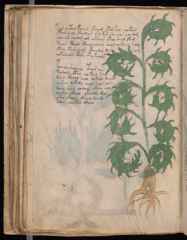
Qwen: declined to identify. Gemma: declined to identify.
Read Qwen observations and reasoning
Qwen: what it reported
Candidate or abstention: Abstain. Level: N/A
Root: A thick, fleshy, orange-brown taproot structure is visible at the base. It features a central vertical slit or opening and several long, tapering, root-like appendages extending downwards and outwards.
Stem: A single, slender, green vertical stalk rises from the root. It is relatively unbranched and supports the upper structures.
Leaves: No distinct, separate foliage leaves are visible. The green structures attached to the stem are bulbous and spiky, lacking the typical blade shape of leaves.
Terminal Structures: The stem is adorned with multiple (approximately eight) large, green, bulbous structures. These are roughly spherical or ovoid, covered in sharp, spiky projections, and contain internal white or pale yellowish swirls or markings. The topmost structure is slightly larger and more rounded.
Reasons it offered: The illustration depicts a plant with a taproot and a stem bearing spiky, bulbous structures. The visual style is consistent with medieval or early modern manuscript botanicals, often characterized by symbolic or stylized representation rather than strict anatomical accuracy.
Problems it reported: The spiky, bulbous structures do not clearly correspond to standard botanical definitions of flowers, fruits, or leaves in a way that allows for a specific taxonomic identification. The internal swirls within the green structures are ambiguous and do not match standard reproductive or storage organ morphology for common medicinal plants.
Missing details: Distinct foliage leaves. Clear flowers or fruits (if the spiky structures are not intended to be these). Soil or ground line context. Scale reference.
Symbolic or composite alternatives: The image may represent a stylized or symbolic plant rather than a specific biological species. The spiky, bulbous forms could be a stylized representation of a specific medicinal herb (e.g., a thistle or burdock relative) or a mythical plant. The internal swirls might be symbolic of the plant's properties or essence rather than anatomical features.
Read Gemma observations and reasoning
Gemma: what it reported
Candidate or abstention: abstain. Level: Not supplied.
Root: A single, thickened, fleshy taproot with several descending lateral rootlets.
Stem: A single, erect, green central axis supporting alternating foliage.
Leaves: Large, green, pinnatifid or deeply lobed leaves with rounded margins, arranged alternately along the stem.
Terminal Structures: The apex terminates in a leaf-like structure similar to the lower foliage.
Reasons it offered: Not supplied.
Problems it reported: Not supplied.
Missing details: flowers fruits seeds
Symbolic or composite alternatives: The stylized nature of the foliage and the simplified root structure suggest a schematic botanical representation rather than a precise anatomical study.
T3 — Voynich f014r
Unlabelled transfer; no accepted identity. No reference plant name was supplied; neither model accepted an identification.
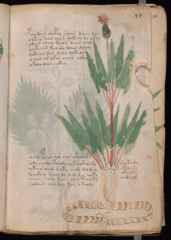
Qwen: declined to identify. Gemma: declined to identify.
Read Qwen observations and reasoning
Qwen: what it reported
Candidate or abstention: Abstain. Level: N/A
Root: A thick, bulbous, segmented structure is depicted at the base. It is rendered in a pale tan color with brownish banding, resembling a coiled or knotted root system or a stylized bulb. It appears to be the primary anchoring structure.
Stem: A single, central, reddish-orange stalk rises from the base. It is relatively straight and supports the upper foliage and terminal structures.
Leaves: The leaves are long, lanceolate (lance-shaped), and green. They are arranged in whorls or clusters along the upper part of the stem. The tips are pointed.
Terminal Structures: At the very top of the stem, there is a distinct, dark, bulbous structure (possibly a bud or seed pod) with a small, red, multi-petaled flower emerging from its apex. The flower has a yellow center.
Reasons it offered: The illustration shows a monocot-like growth habit with parallel-veined, lanceolate leaves. The presence of a bulbous base and a terminal flower structure is consistent with various liliaceous or asparagaceous plants. The reddish stem is a specific color trait, but not unique enough for identification without a reference.
Problems it reported: The root system is highly stylized and segmented in a way that does not clearly correspond to a specific natural root type (e.g., it looks more like a coiled rope or a segmented bulb than a typical fibrous root). The terminal structure is ambiguous; the dark bulb with a flower emerging from it is not a standard botanical depiction of a typical flower head.
Missing details: No clear depiction of the soil line or ground level. No secondary stems or branches are visible. The internal structure of the bulb/root is not shown.
Symbolic or composite alternatives: The segmented, coiled root could be a symbolic representation of a snake or a coiled rope, common in medieval manuscript iconography. The overall plant form might be a stylized representation of a specific medicinal herb rather than a botanically accurate specimen. The dark terminal bulb could be a symbolic object (e.g., a fruit or a vessel) rather than a biological structure.
Read Gemma observations and reasoning
Gemma: what it reported
Candidate or abstention: abstain. Level: Not supplied.
Root: A thick, fleshy, horizontally coiled or serpentine structure with alternating light and dark bands.
Stem: A short, thick, pale tan base transitioning into a slender, vertical red central axis.
Leaves: Lanceolate, green leaves arranged in a basal cluster and ascending along the red axis; some leaves show slight curling at the tips.
Terminal Structures: A single, globular green fruit or seed pod topped with a small, red, multi-lobed floral or crown-like structure.
Reasons it offered: Not supplied.
Problems it reported: The coiled, banded root structure is not characteristic of known botanical families associated with the leaf and fruit morphology shown.
Missing details: Detailed floral anatomy, seed structure, and branching patterns.
Symbolic or composite alternatives: The illustration may be a composite or symbolic representation, combining disparate botanical elements or depicting a mythical/medicinal plant.
T4 — Voynich f008v
Unlabelled transfer; no accepted identity. No reference plant name was supplied; neither model accepted an identification.
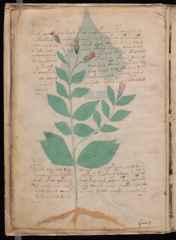
Qwen: declined to identify. Gemma: declined to identify.
Read Qwen observations and reasoning
Qwen: what it reported
Candidate or abstention: Abstain. Level: N/A
Root: A thick, brownish, taproot-like structure is depicted at the base, spreading horizontally with a few smaller lateral roots. It is shown emerging from a small mound of earth.
Stem: A single, upright, green, unbranched main stem. A secondary, thinner branch emerges from the upper part of the main stem, extending to the right.
Leaves: Leaves are simple, alternate, and lanceolate (lance-shaped) with entire margins. They are painted a uniform green and appear to have a prominent central vein. The lower leaves are larger than the upper ones.
Terminal Structures: The stem and branch terminate in small, nodding flower heads. These heads are composite, featuring a blue or dark purple lower section (likely involucral bracts or florets) and a red or orange upper section (likely florets). The structure resembles a small, bell-shaped or tubular flower cluster.
Reasons it offered: The illustration shows a plant with a taproot, alternate lanceolate leaves, and small, composite, nodding flower heads with blue and red coloration. While these features are consistent with certain families (e.g., Asteraceae or Campanulaceae), the stylized nature of the drawing, the specific color combination, and the lack of fine morphological detail (like leaf venation, hairiness, or precise flower anatomy) make a specific identification impossible without a label or reference.
Problems it reported: None observed within the illustration itself, but the stylized nature of the art may not accurately represent the true morphology of any single real-world species.
Missing details: Detailed floral anatomy (e.g., individual florets, stamens, pistils), leaf surface texture (pubescence), and precise leaf arrangement (phyllotaxy) are not clearly depicted. The ground and surrounding environment are minimal.
Symbolic or composite alternatives: The plant could be a symbolic or allegorical representation rather than a strict botanical depiction. The specific colors (red and blue) and the overall form might carry non-botanical meaning within the context of the manuscript.
Read Gemma observations and reasoning
Gemma: what it reported
Candidate or abstention: abstain. Level: Not supplied.
Root: A single, thick, brownish taproot extending downwards with a few smaller lateral extensions.
Stem: A central vertical green axis with several ascending lateral branches.
Leaves: Simple, lanceolate to ovate green leaves arranged oppositely or in whorls along the stems.
Terminal Structures: Small, red, tubular or bell-shaped flowers appearing at the tips of the branches.
Reasons it offered: Not supplied.
Problems it reported: Not supplied.
Missing details: detailed floral morphology fruit/seeds venation patterns
Symbolic or composite alternatives: The stylized nature of the plant, combined with the surrounding text, suggests it may be a symbolic or schematic representation of a medicinal herb rather than a precise botanical study.
What the source search resolved
Public catalog searches recovered two candidate manuscripts and their folio-labelled image inventories. None of the four frozen control images has yet been matched to an exact folio. These leads do not replace the original experiment inputs.
C01 — l0012811-mandrake.jpg
Candidate: MS.573. Exact image and folio match: unresolved.
Institutional manuscript record · Institutional image inventory
C02 — bites.jpg
Candidate: MS.626. Exact image and folio match: unresolved.
Institutional manuscript record · Institutional image inventory
C03 — nux.jpg
Candidate: MS.626. Exact image and folio match: unresolved.
Institutional manuscript record · Institutional image inventory
C05 — serpentine.jpg
Candidate: MS.626. Exact image and folio match: unresolved.
Institutional manuscript record · Institutional image inventory
MS.573 contains the Pseudo-Apuleius herbal on ff.6v–37r. MS.626 is the illustrated French herbal; its current catalog dates it to Northern France around 1470, while the curator essay used 1480–1500. This date difference remains recorded. MS.625 is a separate German excerpt and cannot be substituted.
Alternative references found, not used
Alternative source lead: Yale MS 49 has institution-named burnet on f28v and mandrake on f35r. Damage and later annotations are disclosed.
Alternative source lead: The ÖNB catalog identifies Eibisch on f16v of the Cod. Med. gr.1 facsimile. Reuse rights remain unresolved.
Alternative source lead: The lupine lead remains unverified because the source fetch timed out.
Diagnostic literature still missing
Publication record: Tucker and Janick’s 2019 identification chapter (pp.39–220) has a public abstract and bibliography; the diagnostic chapter requires a subscription and was not acquired or accepted.
Publication record: The publisher verifies the 2016 Clemens volume. Touwaide’s diagnostic text was not acquired, so its unseen arguments cannot be assessed.
All nine saved boundary checks
These are conservative source-context rectangles, not accepted exact plant outlines. Their original observations and coordinates are retained below.
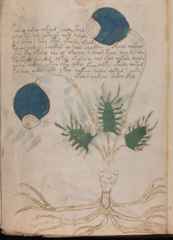
f89v-a
Native box [3000, 300, 5450, 3700] · Central illustration; left pharmaceutical fragments excluded. Right margin lies near neighbouring roots; retain whole spread for attribution.
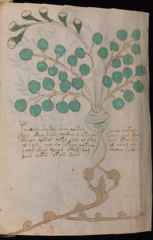
f89v-b
Native box [5400, 100, 7700, 3700] · Right illustration; curved roots extend to bottom and right edge. Partial-view label unchanged.
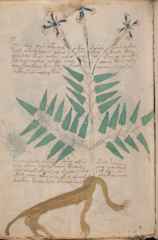
f90v-a
Native box [500, 100, 2810, 3610] · Single visible illustration with claw-like root extremities. Page edge constrains right context; no missing extent inferred.
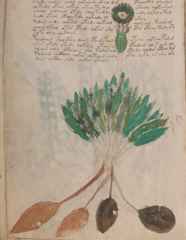
f94v-a
Native box [600, 550, 2970, 3600] · Left rosette/head and four tuber-like root units; show-through excluded as a competing non-front-layer mark.
f94v-b
Native box [2950, 1300, 5150, 3650] · Central three-stem illustration, root fan reaches lower page edge; no tight silhouette mask accepted.
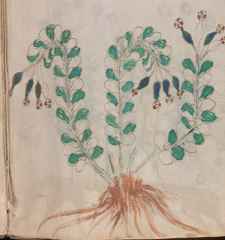
f94v-c
Native box [5350, 1200, 7580, 3630] · Right platform-like base, hanging roots and terminal green units. Exact ownership of faint peripheral marks remains uncertain.
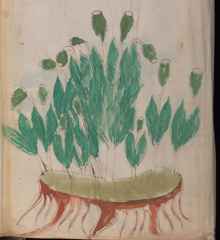
f95r-a
Native box [700, 650, 2520, 3630] · Main drawing only; clipped neighbouring flower/leaf fragment at left retained in whole-view context, excluded from this instance.
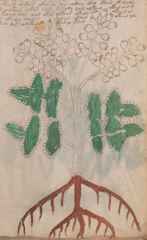
pilot-f093r
Native box [850, 350, 2450, 3650] · Whole central illustrated structure including dotted terminal unit, curved side units and long roots. Side-unit botanical identity unassigned.
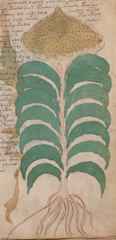
pilot-f011v
Native box [1100, 100, 2700, 3500] · Upper scaled/overlapping body and separate lower root-like drawing both included; visible gap preserved, connection not invented.
Original six reference records
The records below preserve the experiment’s original labels and dates. The later source search above records candidate manuscripts without changing these inputs.
C01 — mandrake / Mandragora historical depiction
Pseudo-Apuleium; 1250; folio not recovered; do not invent. single curator source; catalog404 and folio not recovered; historical copying/symbolic conventions; no diagnostic modern-species authentication
Institutional referenceC02 — plantain / Plantago
Platearius herbal; 1480–1500; folio not recovered; do not invent. single curator source; catalog404 and folio not recovered; historical copying/symbolic conventions; no diagnostic modern-species authentication
Institutional referenceC03 — Nigella
Platearius herbal; 1480–1500; folio not recovered; do not invent. single curator source; catalog404 and folio not recovered; historical copying/symbolic conventions; no diagnostic modern-species authentication
Institutional referenceC04 — Papaver / poppy
Cod. Med. gr.1 (facsimile photographic reproduction); Byzantium circa512; folio 221v. historical catalog common-name reference scored at genus/common level; modern species not independently validated
Institutional referenceC05 — Dracunculus
Platearius herbal; 1480–1500; folio not recovered; do not invent. single curator source; catalog404 and folio not recovered; historical copying/symbolic conventions; no diagnostic modern-species authentication
Institutional referenceC06 — Artemisia / wormwood
Cod. Med. gr.1 (facsimile photographic reproduction); Byzantium circa512; folio 22v. historical catalog common-name reference scored at genus/common level; modern species not independently validated
Institutional reference