ARCHIVED RESEARCH PROJECT · completed 2026-09-28 · Does Voynich's writing look more like medieval medical/pharmaceutical working notation than ordinary contemporary writing? · Back to Home

PROJECT SUMMARY

QuestionDoes Voynich's writing look more like medieval medical/pharmaceutical working notation than ordinary contemporary writing?
Method1. Deterministic shape retrieval ([deterministic method]). Every page, Voynich included, received identical processing: - scaled to a common page height of 1800 px; - printed library banners and dark scan background removed; - binarized with the Sauvola method; -…
Important numbers42 comparison manuscript · 96 scored page · 84 blind convention audit
Finding and conclusionNot in this corpus. Voynich does not look more closely related to medical/technical writing than to ordinary prose. - Automated shape retrieval: medical manuscripts produced no more Voynich-family matches than non-medical controls from the same tradition. For the Latin script, Italian and…
Limits- This is one analyst-chosen corpus with two pages per book. The group sizes are small (n = 1–7), so the p-values are exploratory. Italian and German medical manuscripts are mostly Penn/Heidelberg holdings, and the non-medical controls are not matched hand-for-hand. - The 1800 px page…
MeaningNot in this corpus. Voynich does not look more closely related to medical/technical writing than to ordinary prose. - Automated shape retrieval: medical manuscripts produced no more Voynich-family matches than non-medical controls from the same tradition. For the Latin script, Italian and…

Read the findings preserved from this completed study.

EXPLORE ALL RESULTS

222 accessible result rows from 222 authoritative meaningful result rows in the declared scope. Review cards are separate.

All rows from the stated saved result sets are accessible; detailed machine arrays remain in the linked source files.

REVIEW NEEDED

9 preserved review panels are available below.

This curated view is separate from the complete meaningful results listed above.

Medical-manuscript comparison (exploratory v001)

42 dated comparison manuscripts (84 pages, c.1300–1560) against Voynich fingerprint constructions. Exploratory first corpus; no Voynich reading or translation attempted. Report · ·

Answer

No — in this corpus Voynich does not look more like medical/pharmaceutical working notation than like ordinary contemporary writing. Automated shape retrieval gave medical manuscripts no higher Voynich-family rates than non-medical controls in any tradition (Latin-script permutation p≈0.4–1.0; Arabic-script medical pages scored lower). The blind convention audit found Voynich-relevant constructions (loops, minim runs, superscript marks, compounds) in every genre; what separates medical pages is pharmaceutical signs and recipe layout, which Voynich pages do not visibly share as a system.

Geography/script: Latin-script pages matched Voynich families modestly more often than Arabic-script pages (p≈0.01–0.05), with the highest scores from a Padua university logic text (1420) and a Strasbourg chronicle (1456) — dense abbreviating cursive, not medicine. No single tradition shows several distinctive Voynich constructions together.

Voynich reference constructions

Internal pattern-card contact sheets (existing project evidence, unchanged).

Voynich pattern card P03
P03
Voynich pattern card P01
P01
Voynich pattern card P09
P09
Voynich pattern card P14
P14
Voynich pattern card P21
P21
Voynich pattern card P18
P18
Voynich pattern card P24
P24

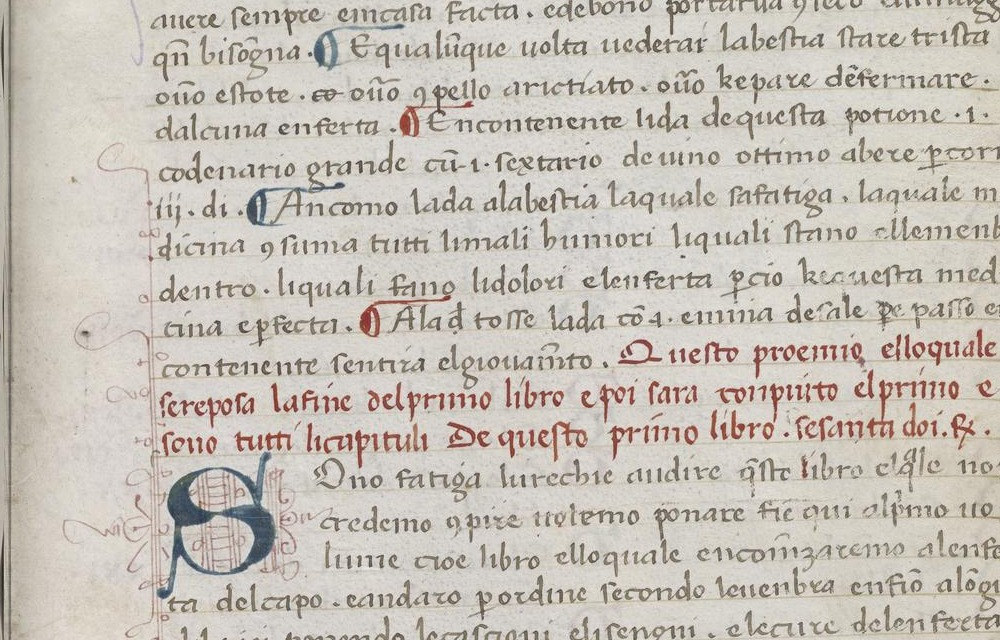
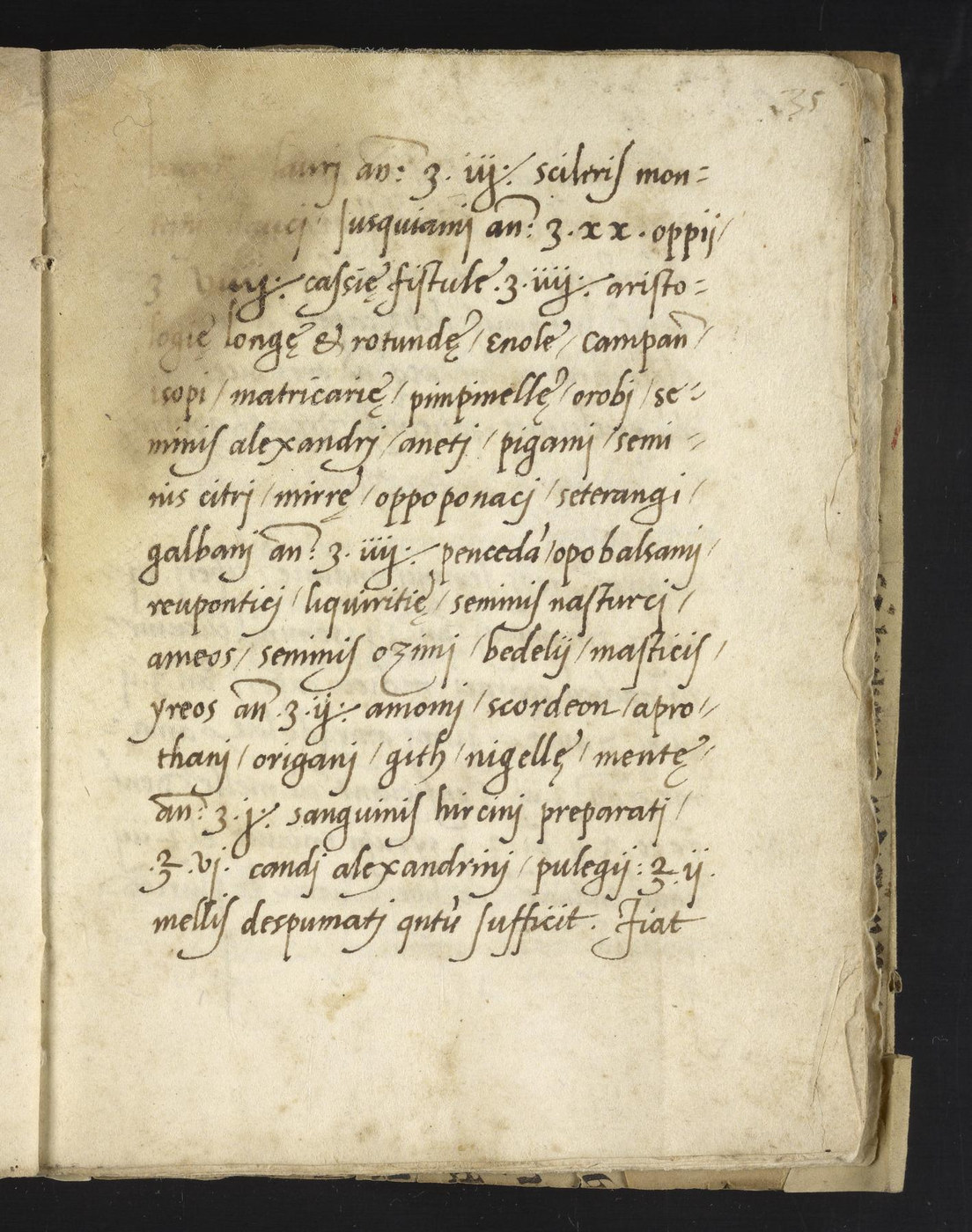
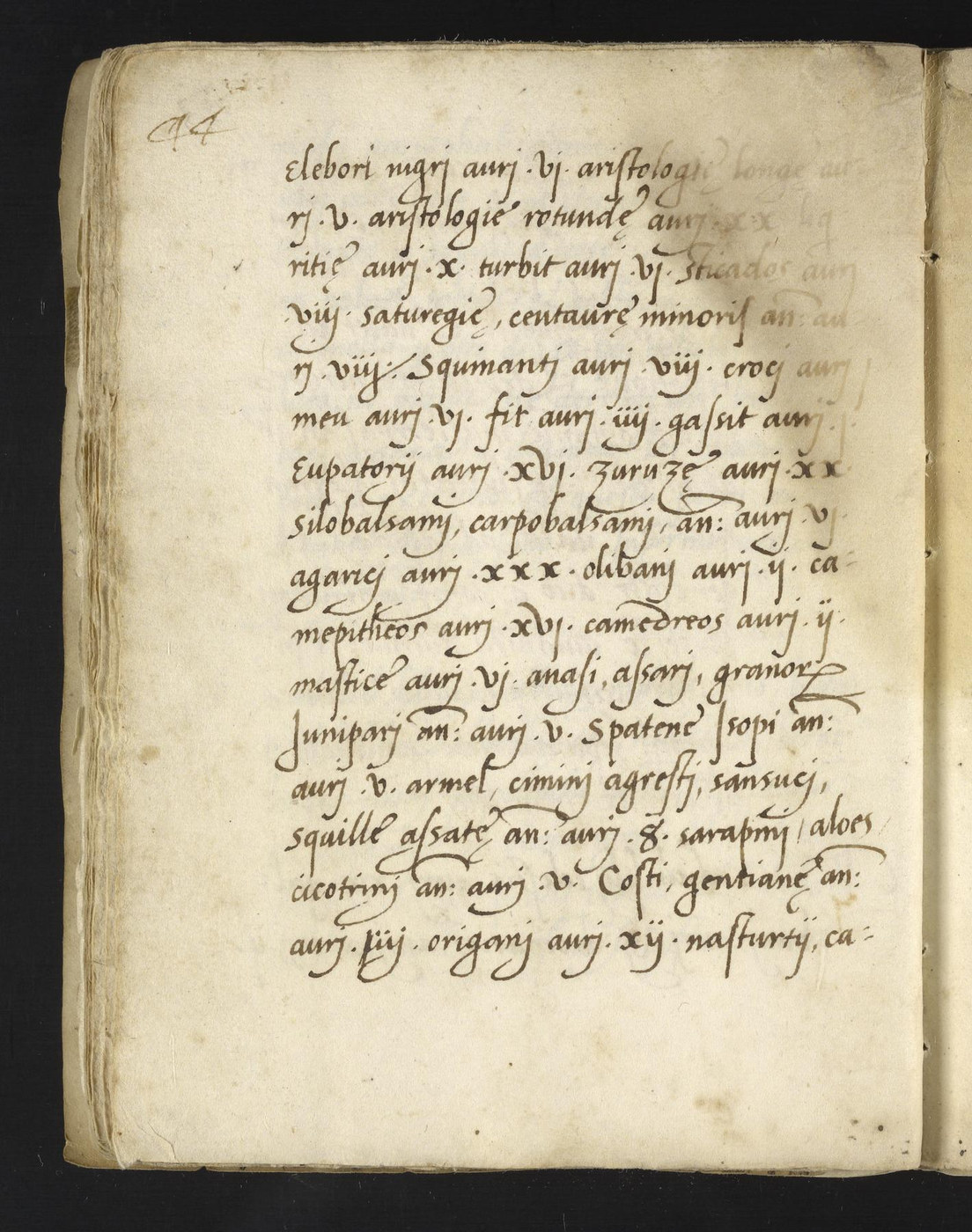
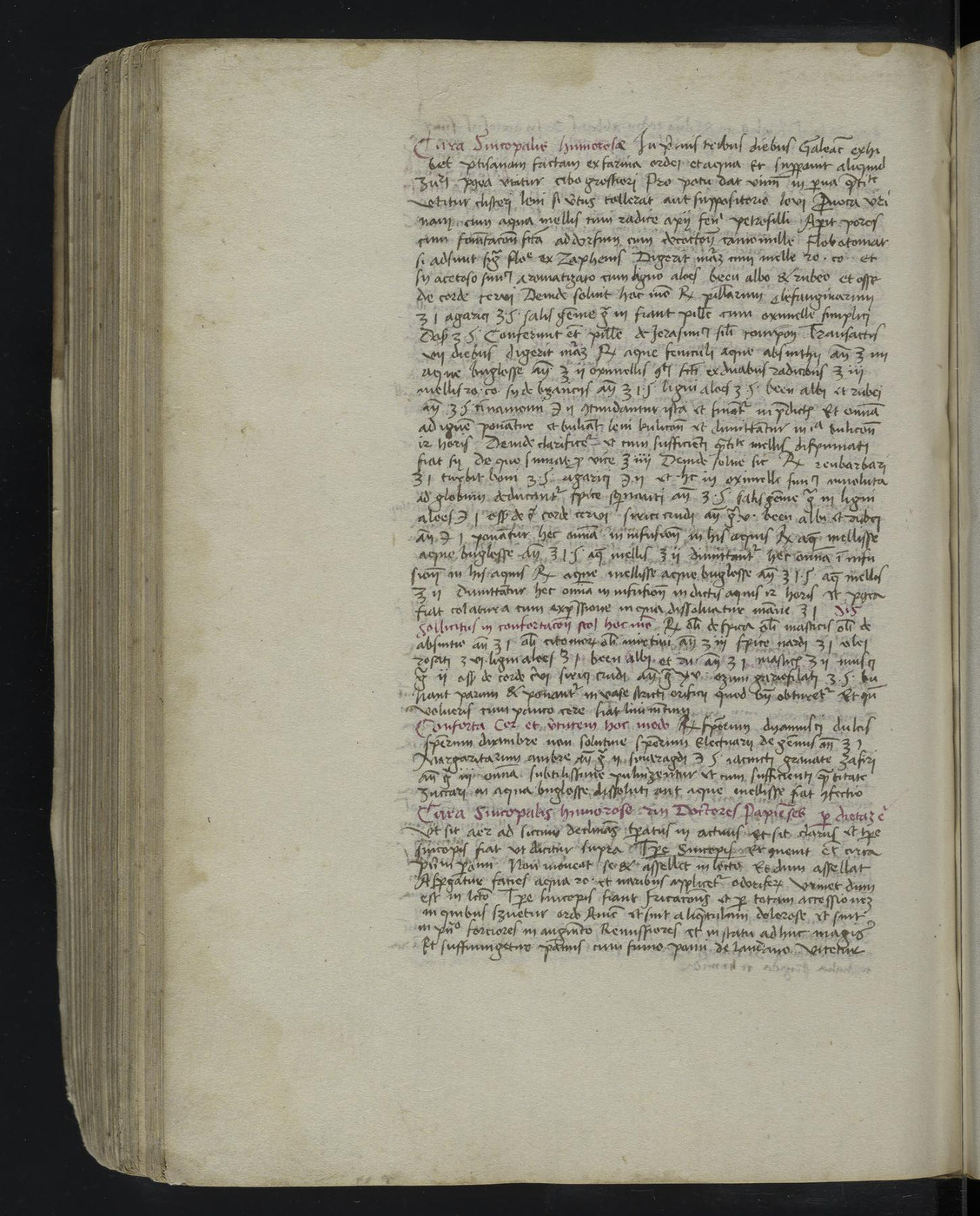
Medical-specific: Latin-script pharmaceutical notation (Italian and German)

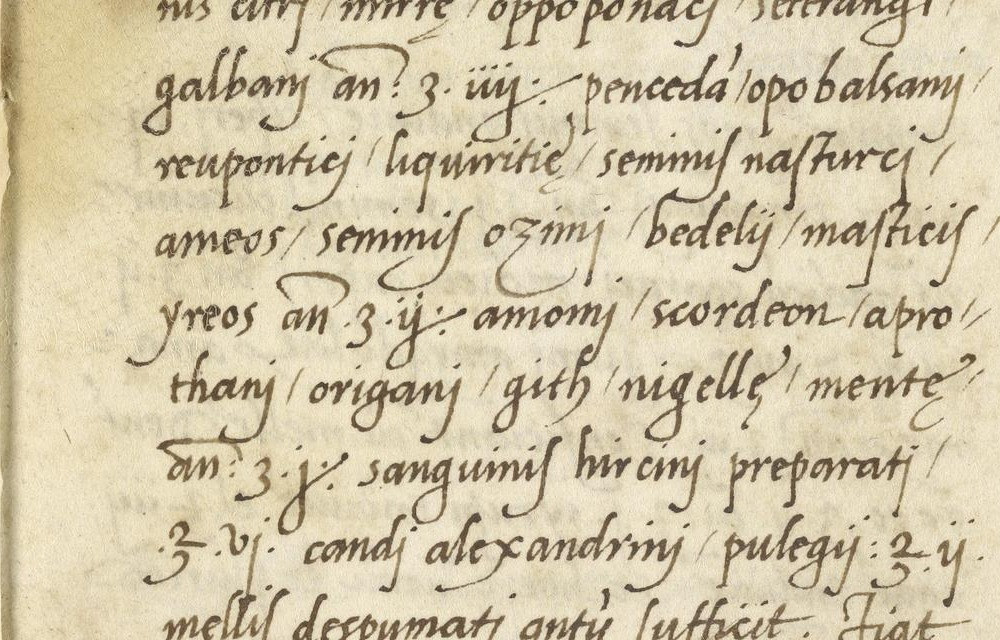
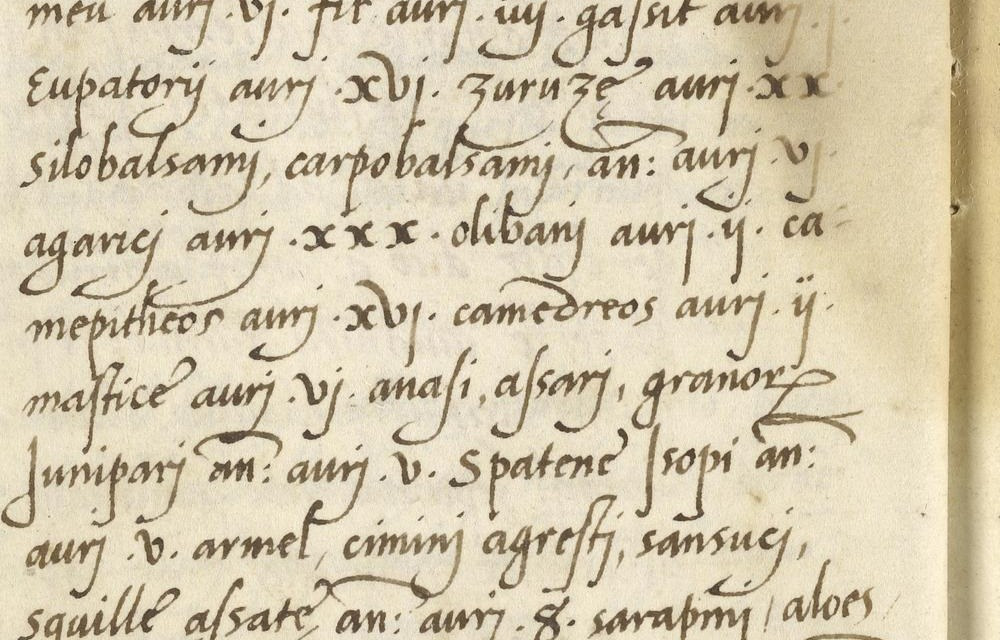
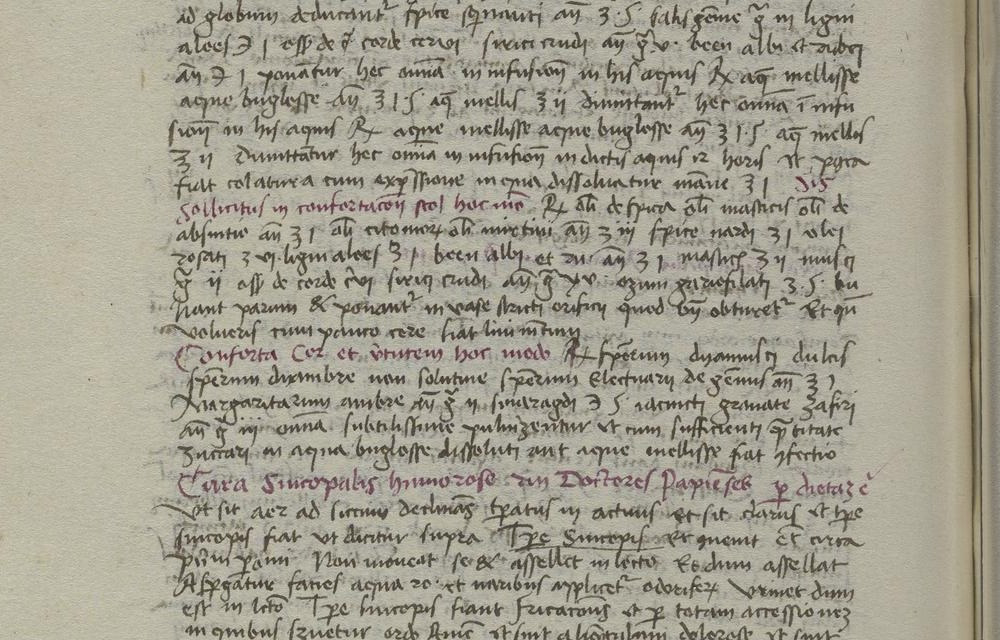
Recipe sign, ana (equal parts), drachm/ounce signs and dosage numerals in running text, plus list-like recipe layout. This is the clearest convention that separates medical from non-medical pages in this corpus. It is a small sign set added to otherwise ordinary script; the letter-forms themselves are not medical. Note the roman dosage numerals written as minim runs ending in a descending j (ij, iij, vj) — a visual echo of Voynich minim runs with a terminal stroke, but in a numeral system with a known function.

panel A09
IT-M6 · medical · ricettario (recipe book)
Ms. Codex 115
ca. 1530 · Italy
Audit A09: Humanist recipe list: ana, drachm and ounce signs, roman dosage numerals with final j, slashes between ingredients
page image · crop [60, 720, 1060, 1360]
panel A69
IT-M6 · medical · ricettario (recipe book)
Ms. Codex 115
ca. 1530 · Italy
Audit A69: Humanist recipe list: an(a), aurei, roman numerals with final j
page image · crop [400, 600, 1400, 1240]
panel A58
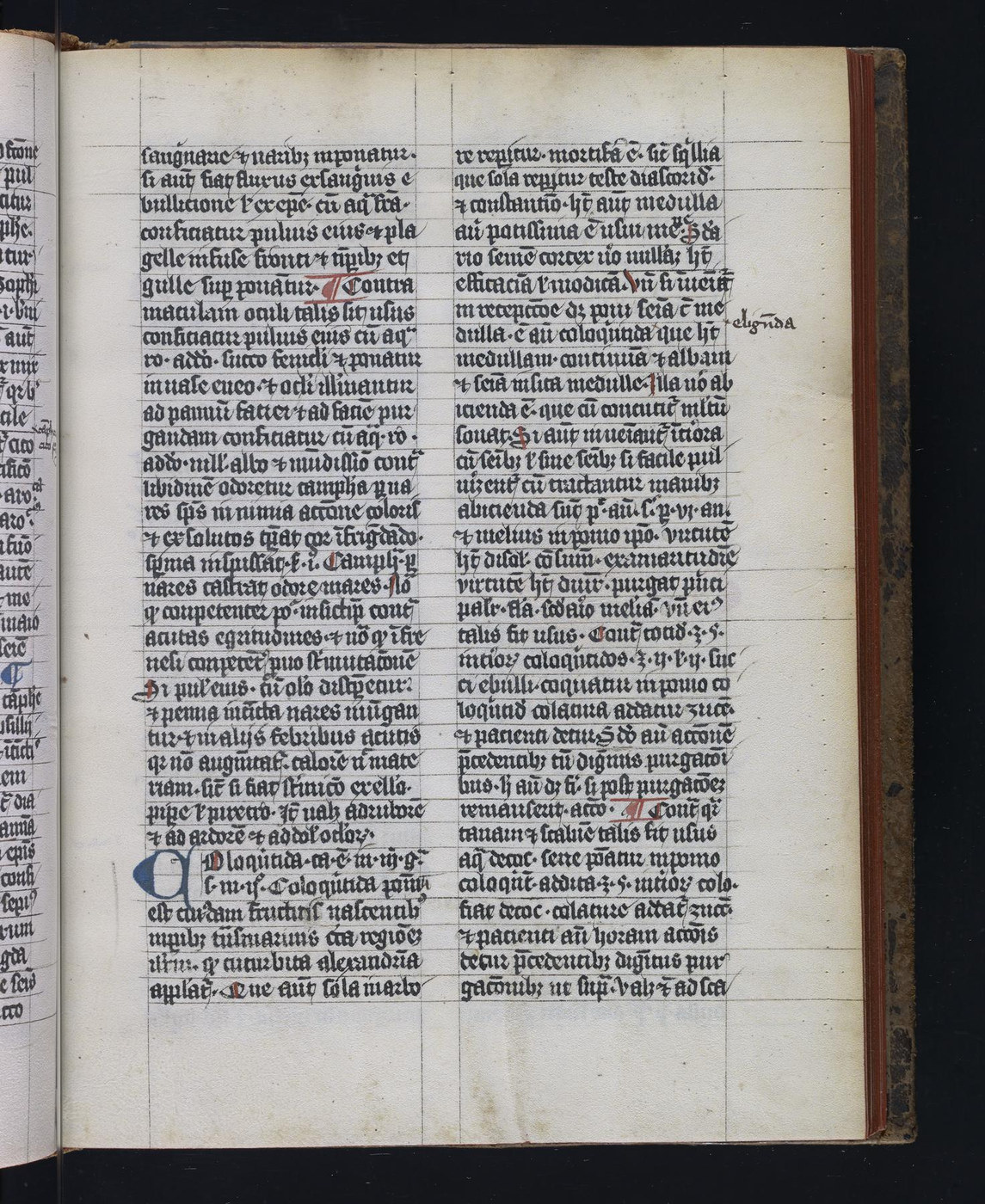
IT-M2 · medical · university medical text with annotations (Bologna)
LJS 424
1500-1501 · Bologna
Audit A58: Latin gothic cursive recipes: recipe sign, ana, drachm/ounce signs as looped z/3 forms
page image · crop [440, 720, 1440, 1360]
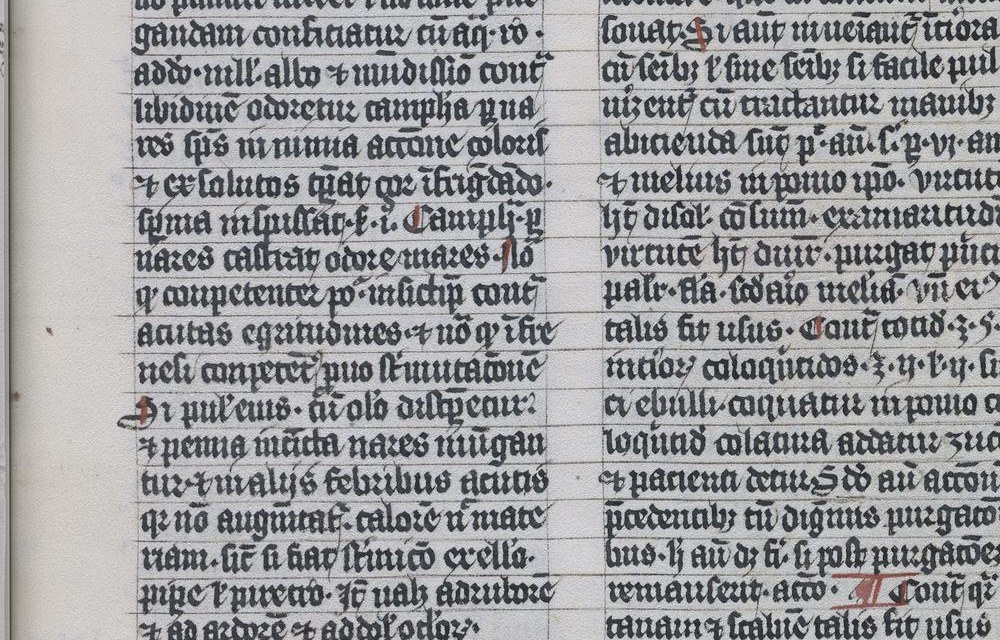
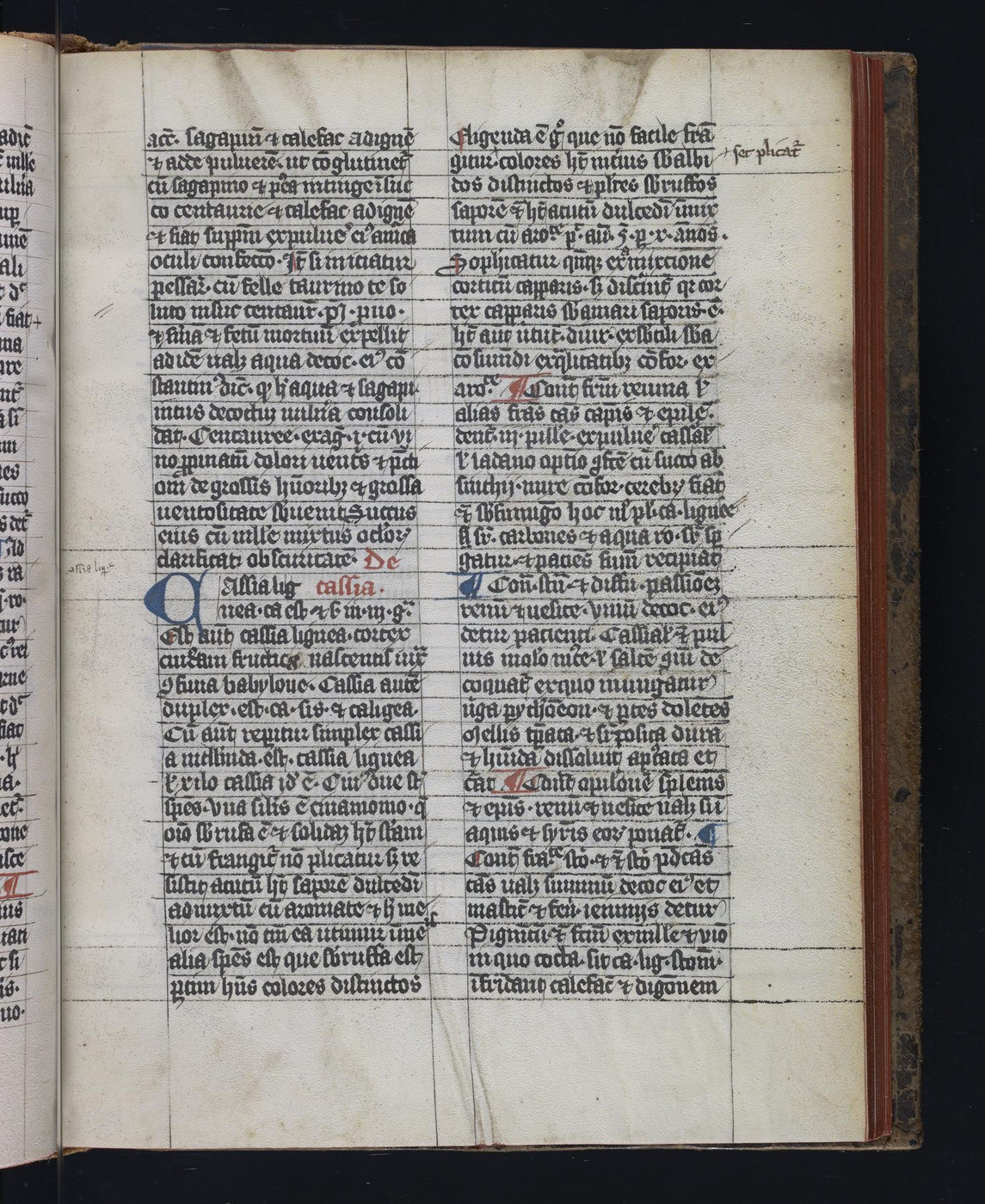
panel A37
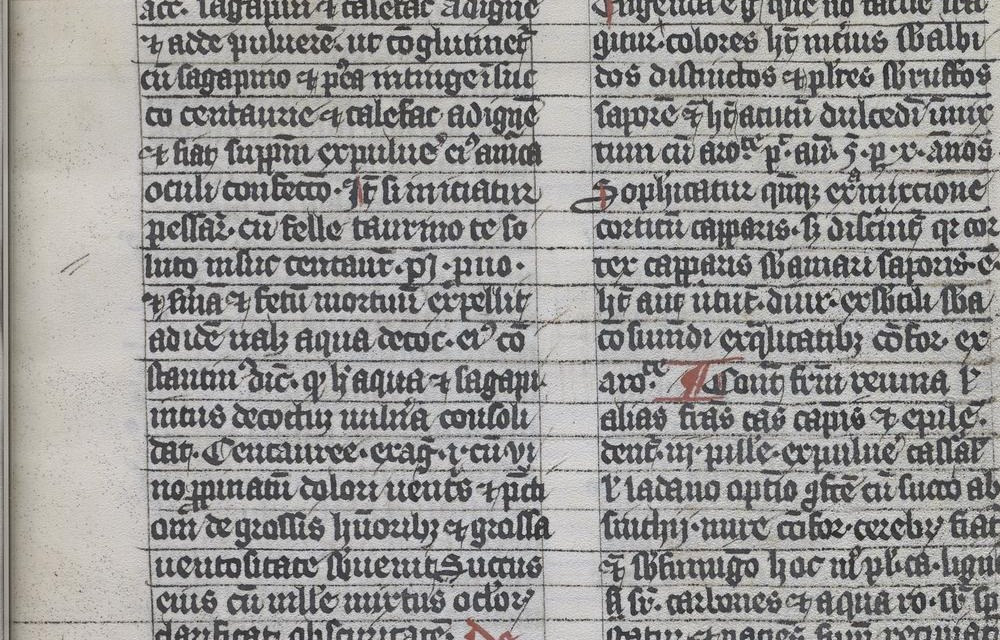
DE-M6 · medical · materia medica (De re medicina)
LJS 437
ca. 1400 · Germany or Austria
Audit A37: Latin textualis medical with drachm signs and dosage numerals
page image · crop [80, 620, 1080, 1260]
panel A53
DE-M6 · medical · materia medica (De re medicina)
LJS 437
ca. 1400 · Germany or Austria
Audit A53: Latin textualis medical with drachm/scruple-type signs
page image · crop [80, 200, 1080, 840]
panel A61
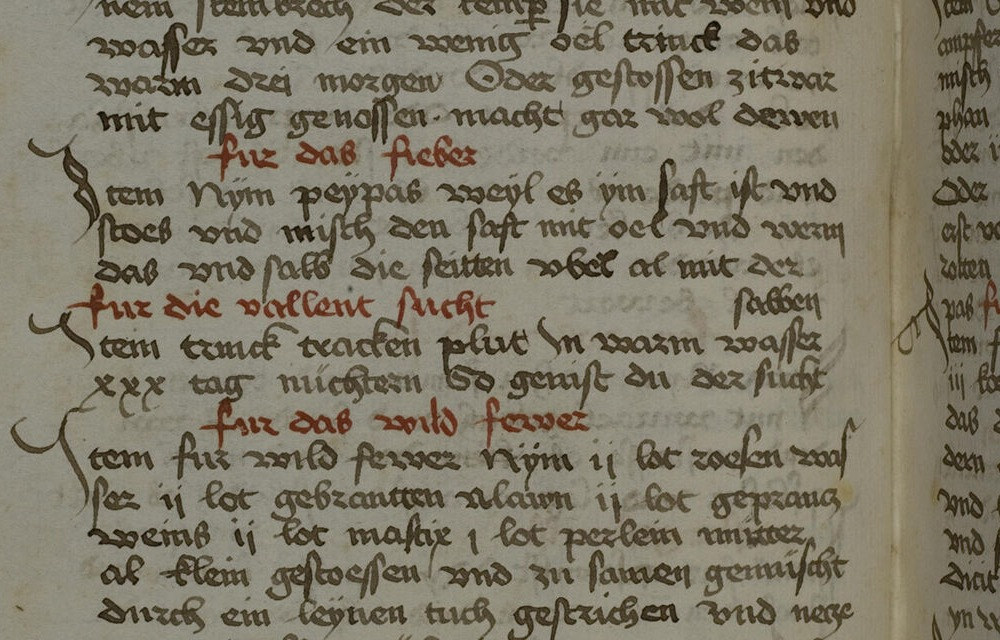
DE-M3 · medical · medical recipe collection and treatises
Heidelberg UB Cod. Pal. germ. 545
1474 · Nürnberg (?)
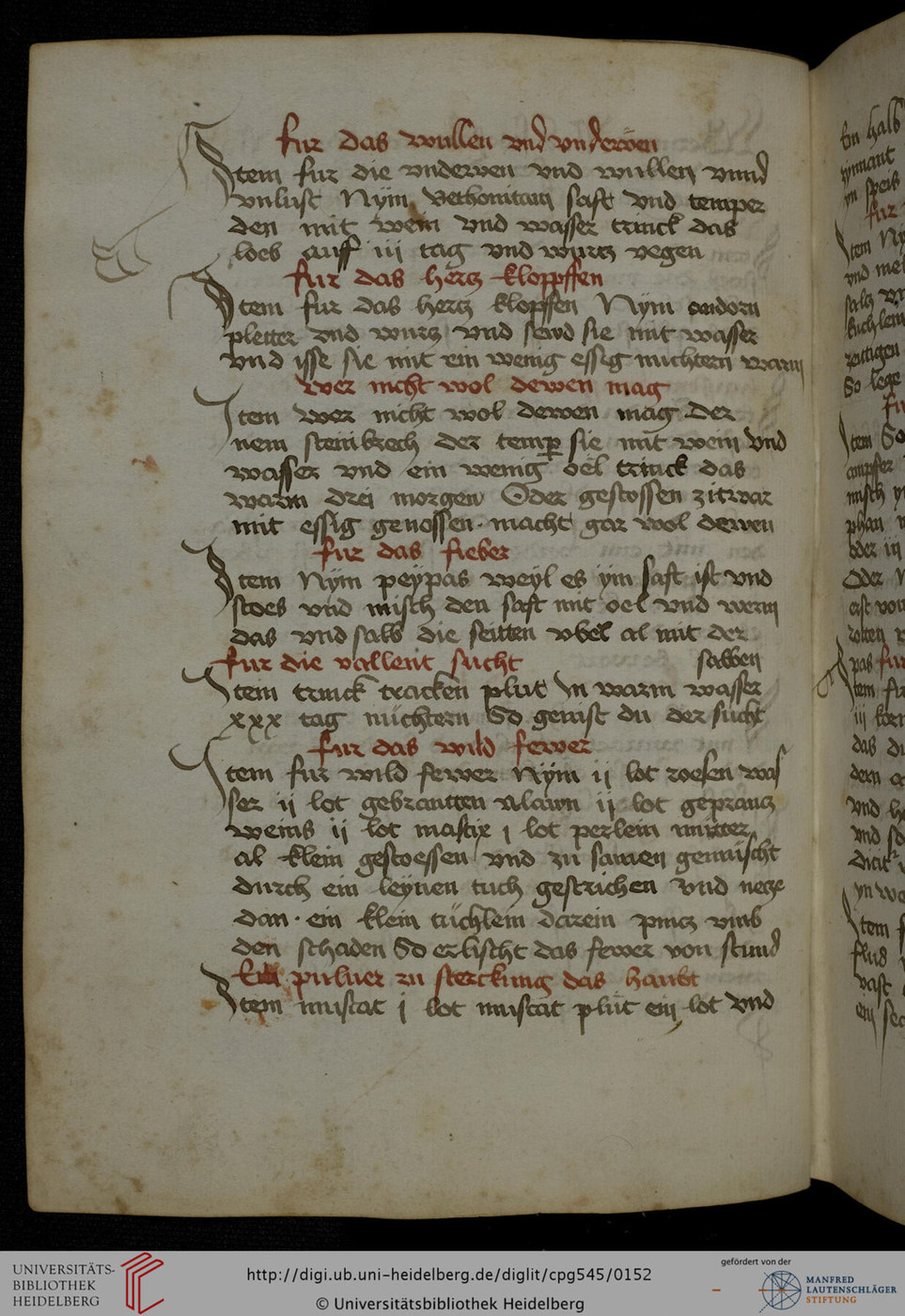
Audit A61: German cursiva recipe book: Item Nym, lot weights, roman numerals
page image · crop [220, 600, 1220, 1240]

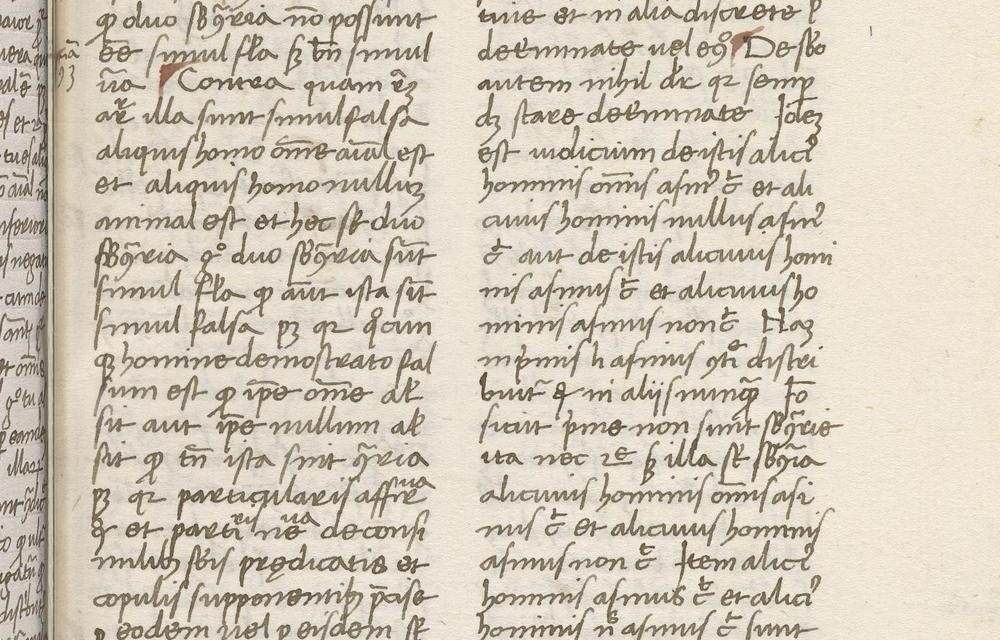
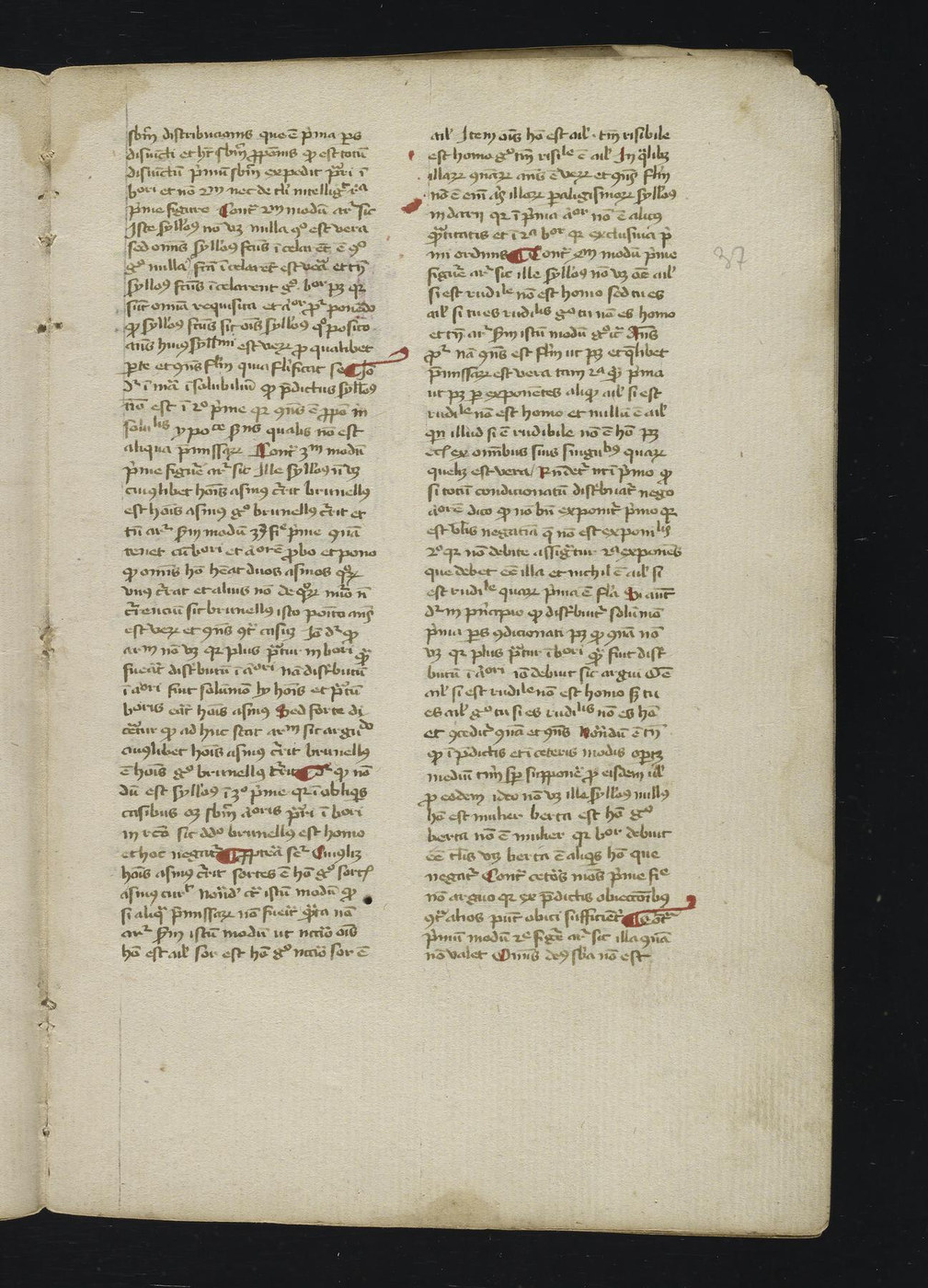
General scholastic Latin: dense abbreviation (not medical)

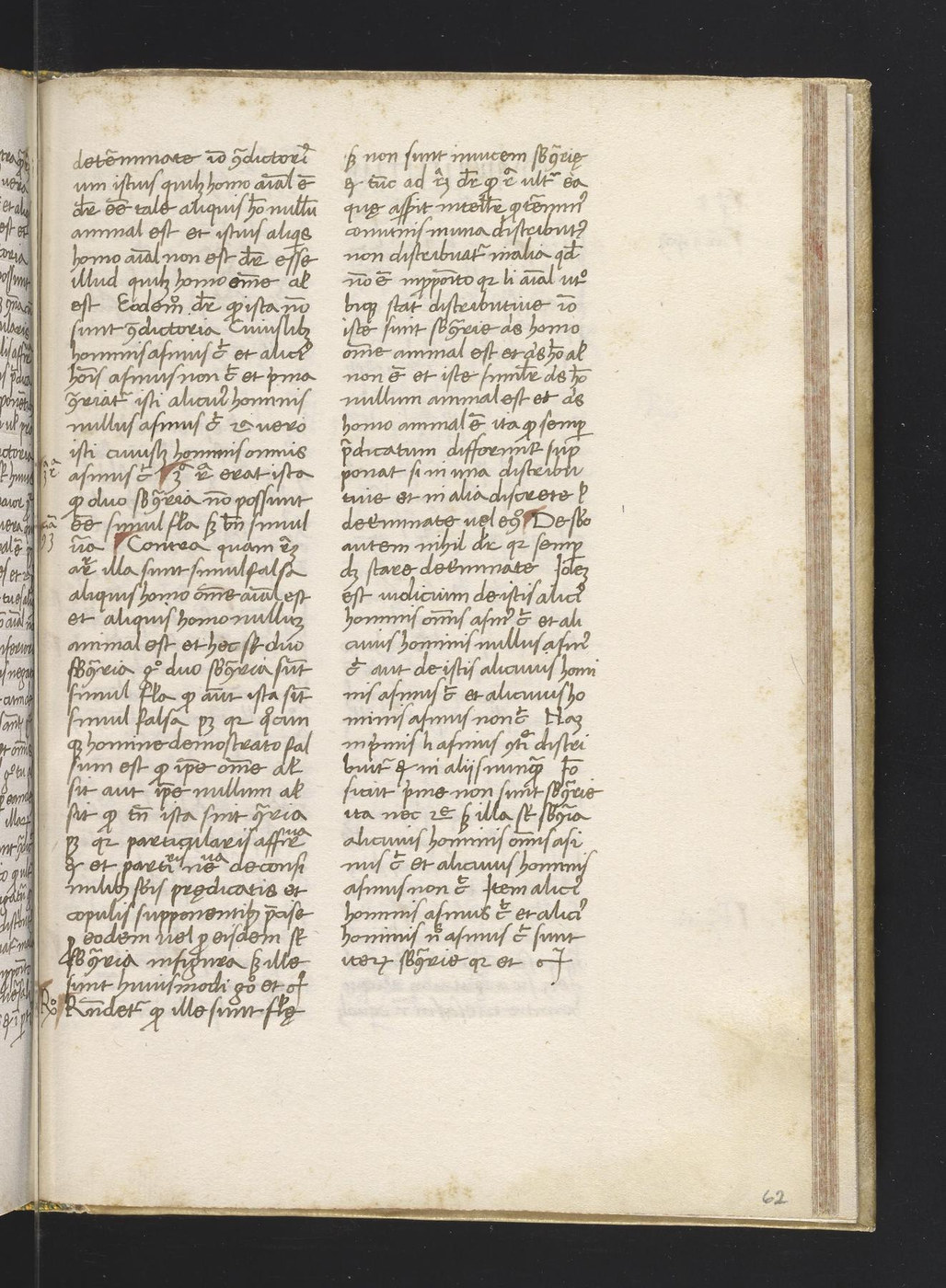
Superscript 9-shaped -us, backwards-c con-, suspension strokes and superscript letters. The densest examples are a Padua university logic text; medical texts use the same system less densely. This is general medieval Latin convention, strongest in university writing, not a medical notation.

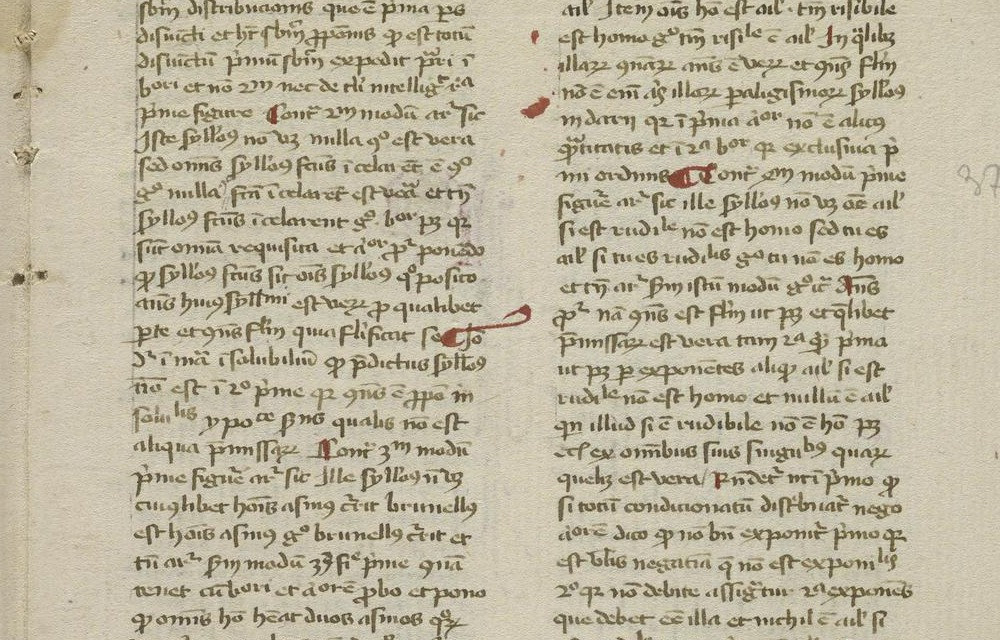
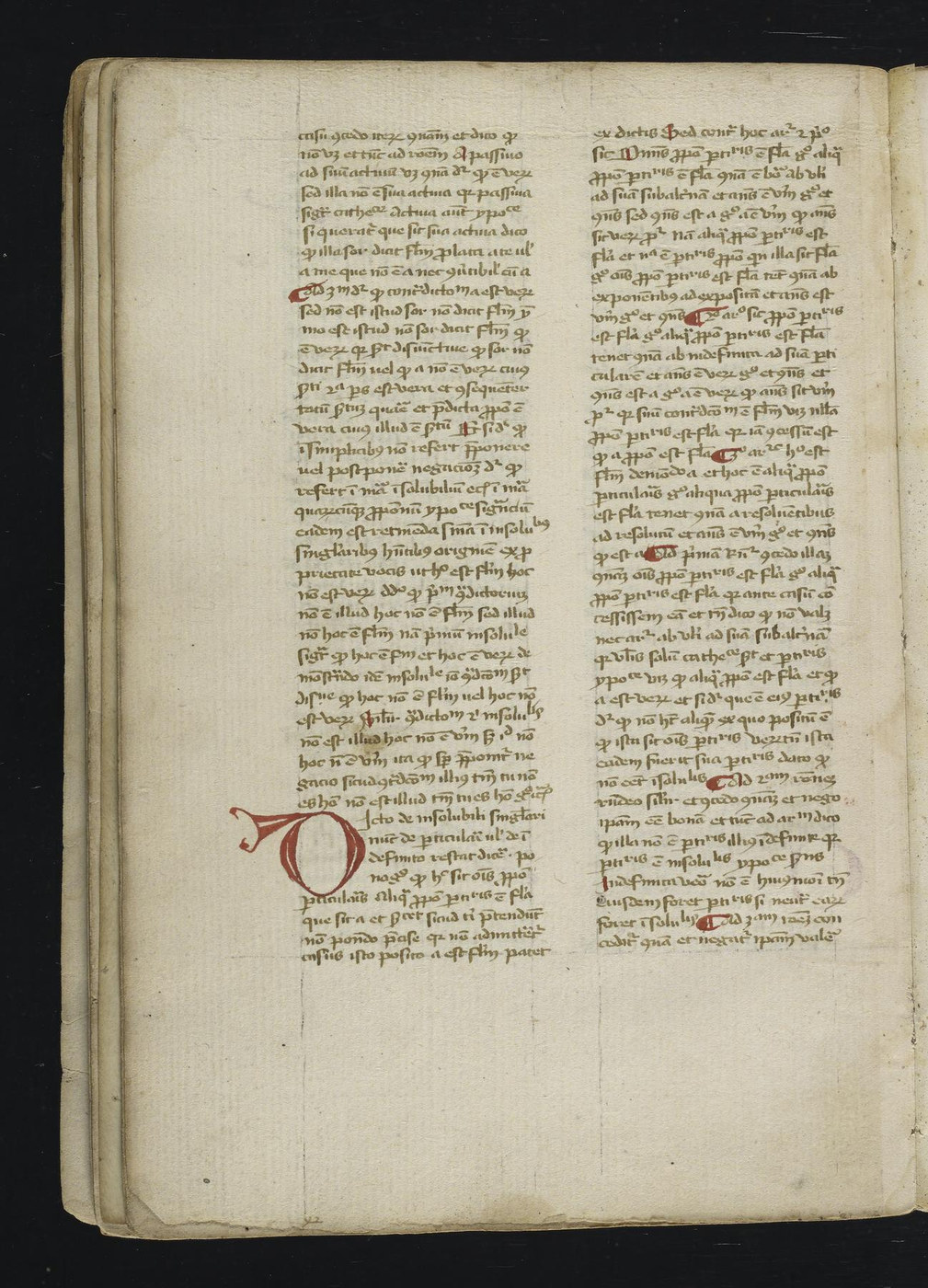
panel A59
IT-C1 · ordinary · university logic text (student copy)
LJS 56
1420 · Padua?, Italy
Audit A59: Latin scholastic logic; superscript 9 (-us) frequent
page image · crop [40, 180, 1040, 820]
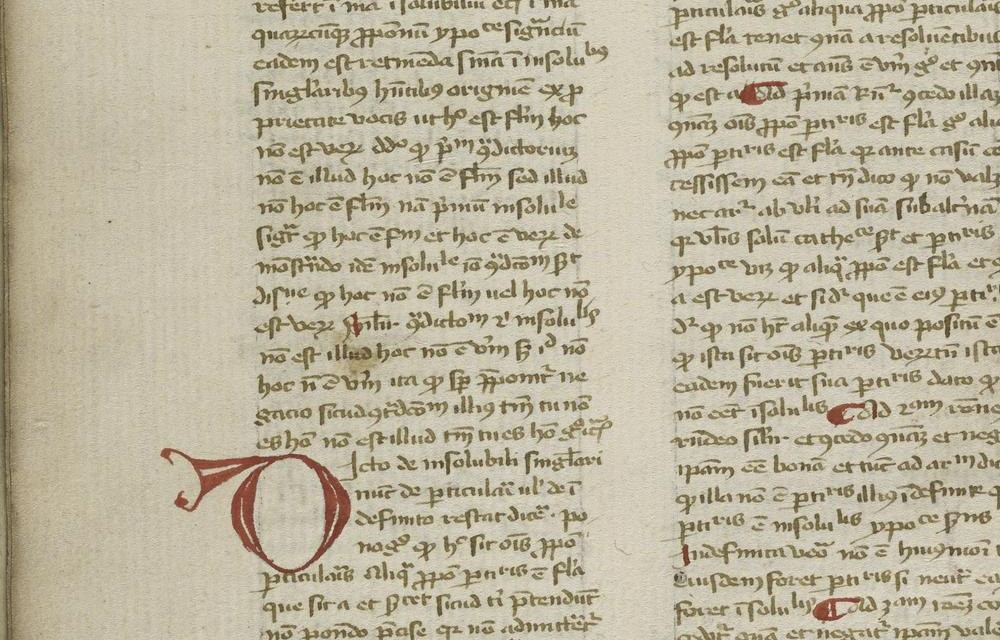
panel A75
IT-C1 · ordinary · university logic text (student copy)
LJS 56
1420 · Padua?, Italy
Audit A75: Latin scholastic, superscript 9 frequent
page image · crop [160, 680, 1160, 1320]
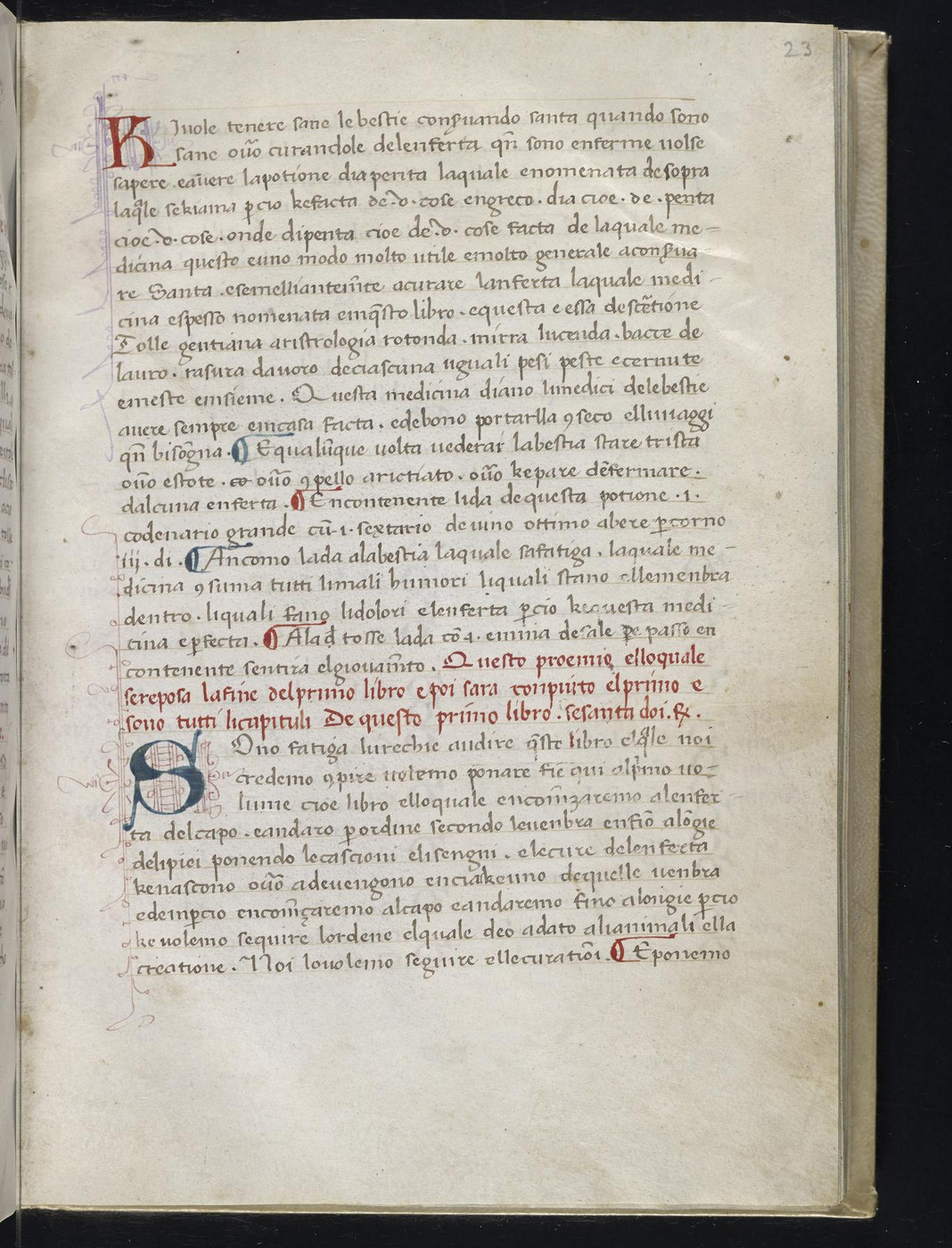
panel A56
IT-M7 · medical · veterinary medicine with recipes
LJS 484
between 1450 and 1475 · Ferrara?, Italy
Audit A56: Italian vernacular remedies: con- sign frequent, measures, paragraph marks
page image · crop [20, 600, 1020, 1240]
panel A18
IT-C2 · ordinary · logic text
LJS 457
1475 · Perugia
Audit A18: Latin scholastic logic, heavy abbreviation
page image · crop [0, 680, 1000, 1320]

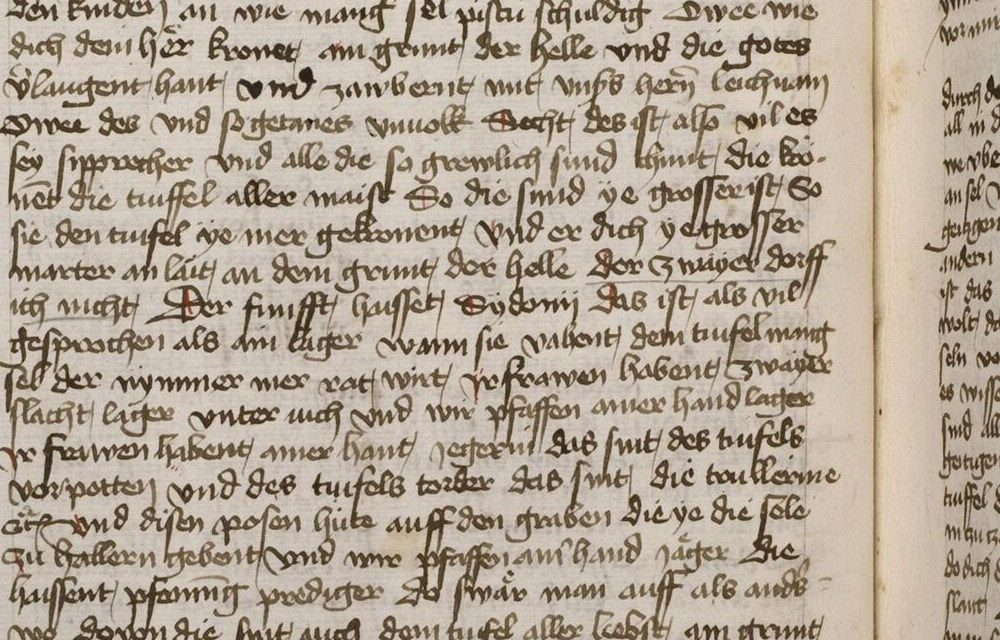
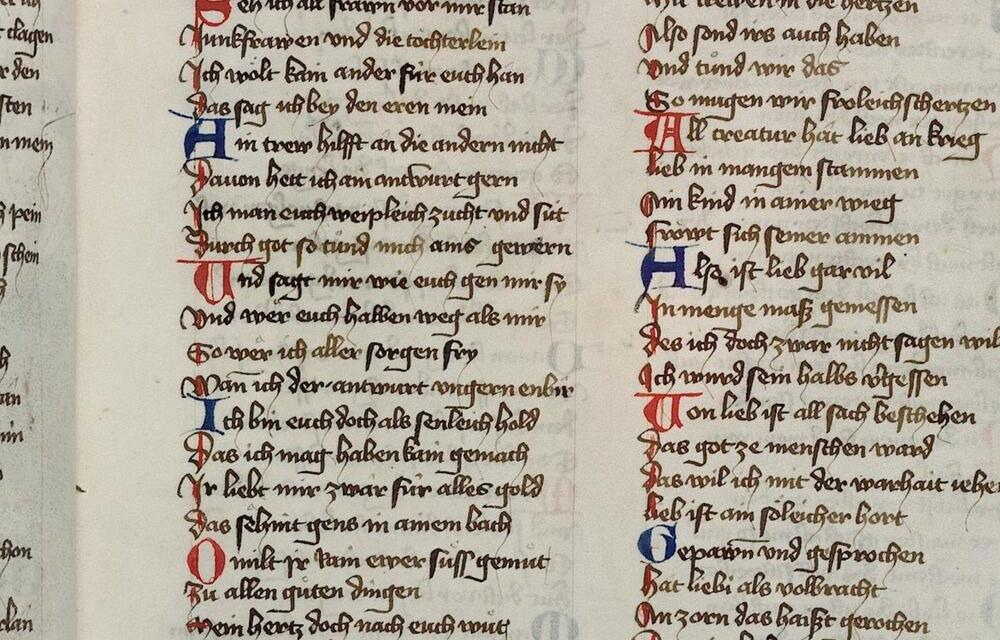
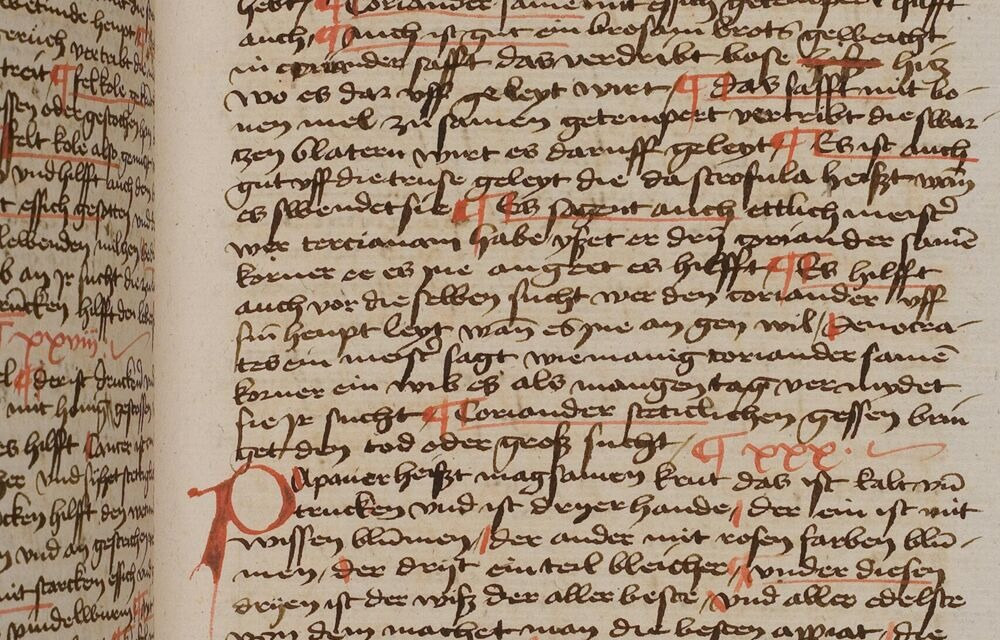
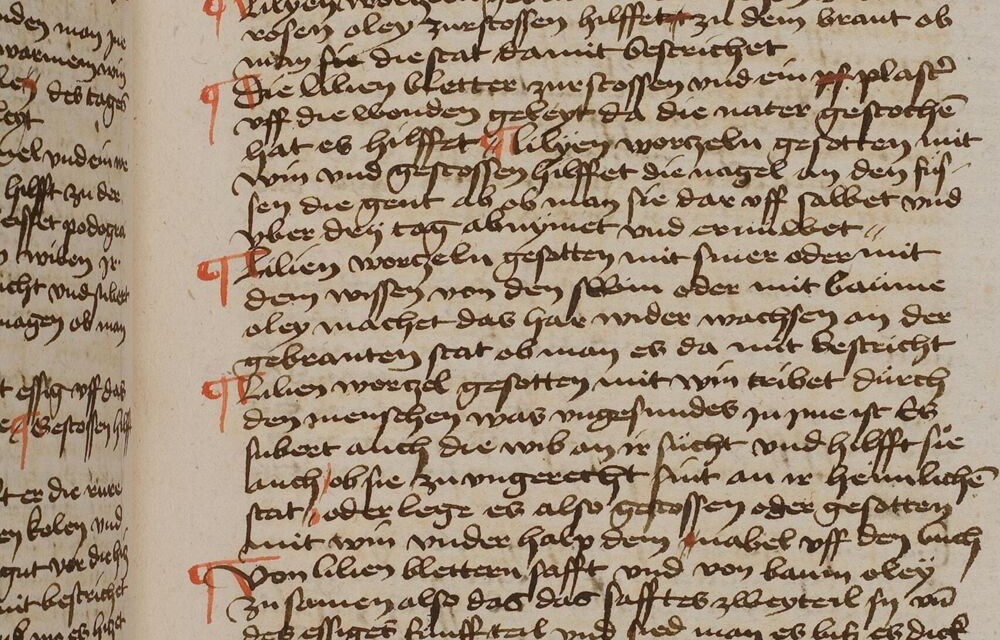
Regional: German cursiva looped ascenders and crossbar joins (all genres)

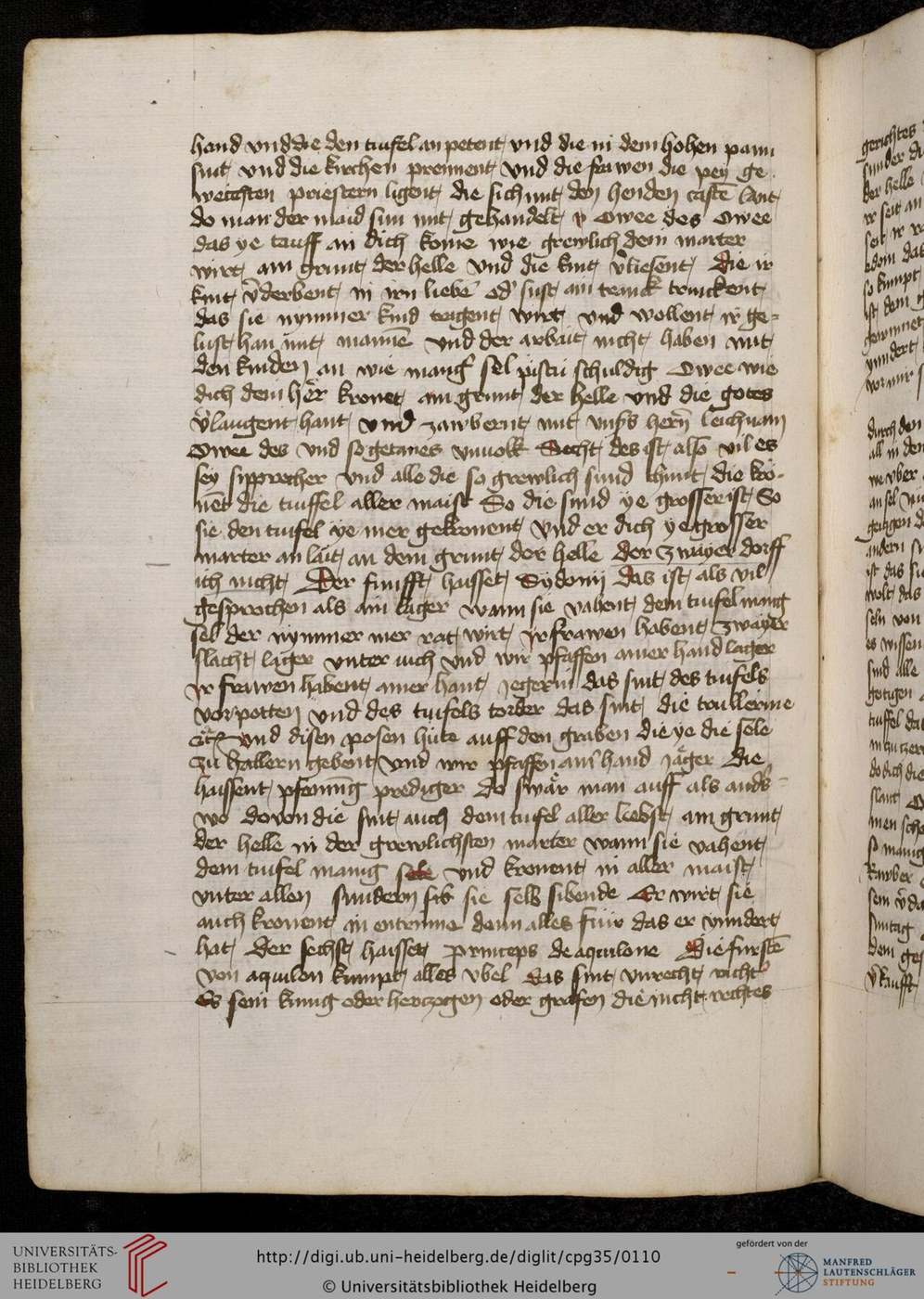
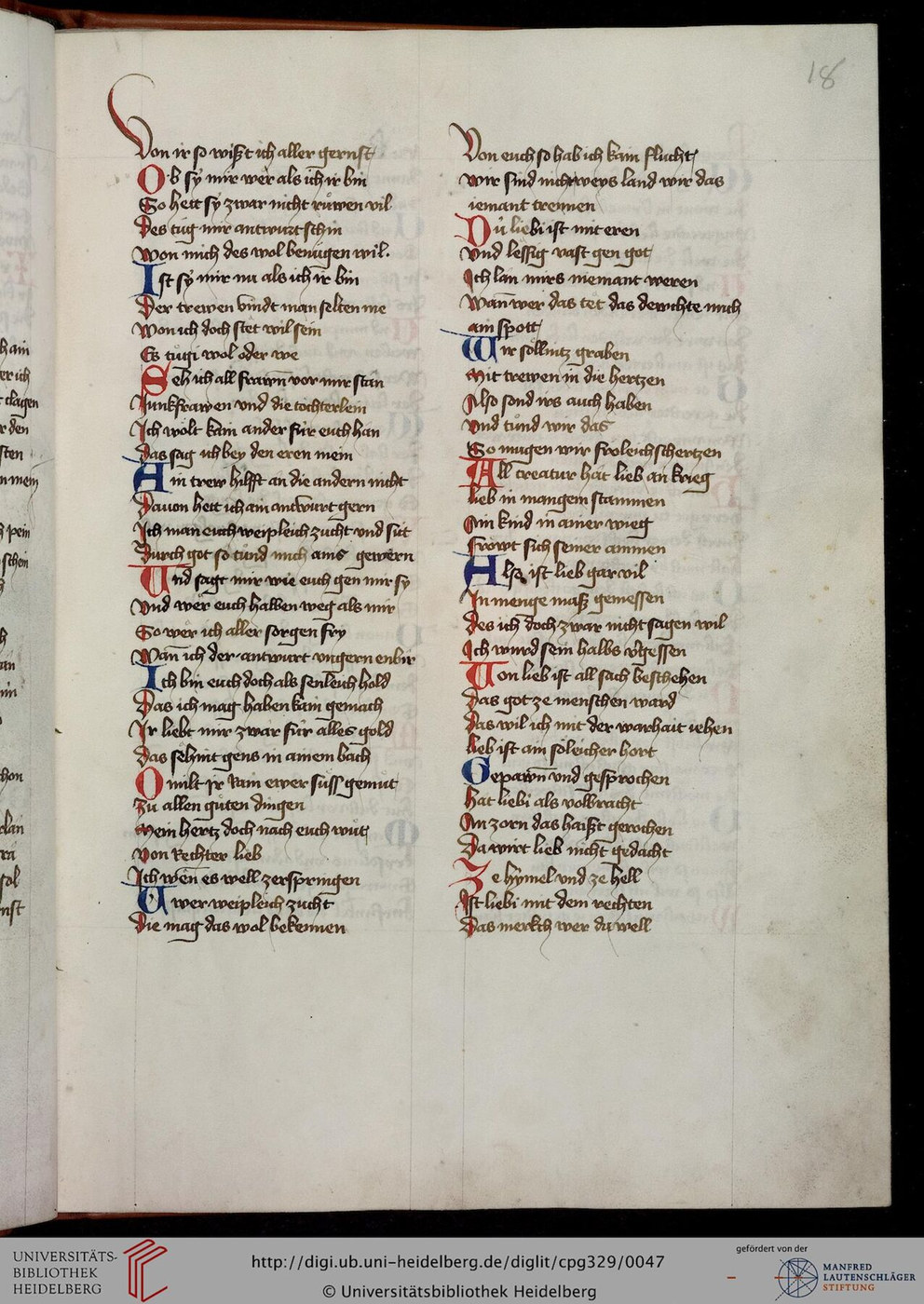
Tall looped ascenders and bars joining tall strokes — the nearest Latin-script analogue to gallows/bench shapes in this corpus. They occur in sermons, verse, law and medical recipes alike, so they are regional/script-style features, not medical ones.

panel A45
DE-C3 · ordinary · sermons
Heidelberg UB Cod. Pal. germ. 35
1439 · Bayern
Audit A45: German cursiva sermon
page image · crop [260, 500, 1260, 1140]
panel A81
DE-C4 · ordinary · songs, letters and speeches
Heidelberg UB Cod. Pal. germ. 329
1414/1415 · Steiermark
Audit A81: German cursiva verse with coloured initials
page image · crop [0, 520, 1000, 1160]
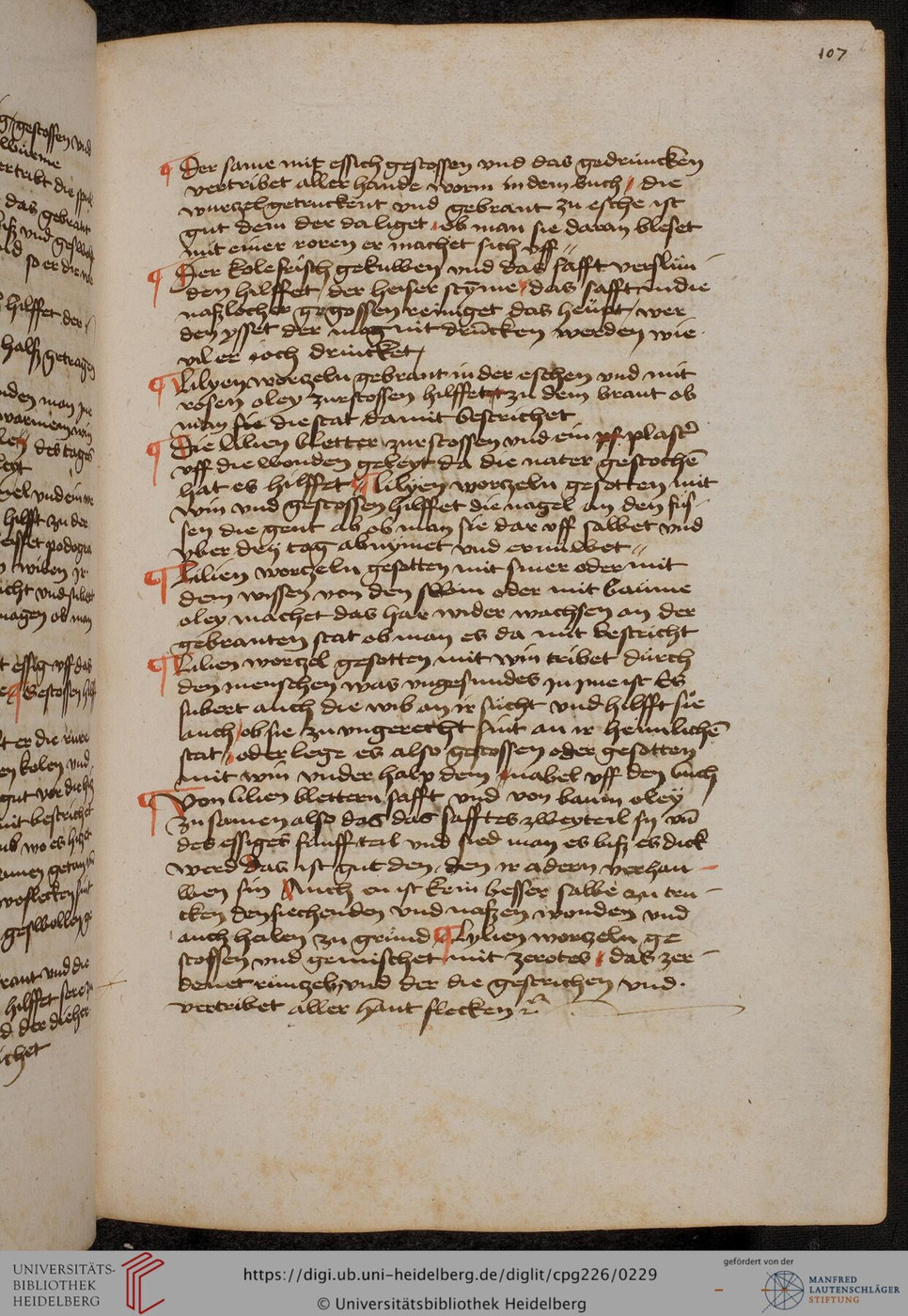
panel A24
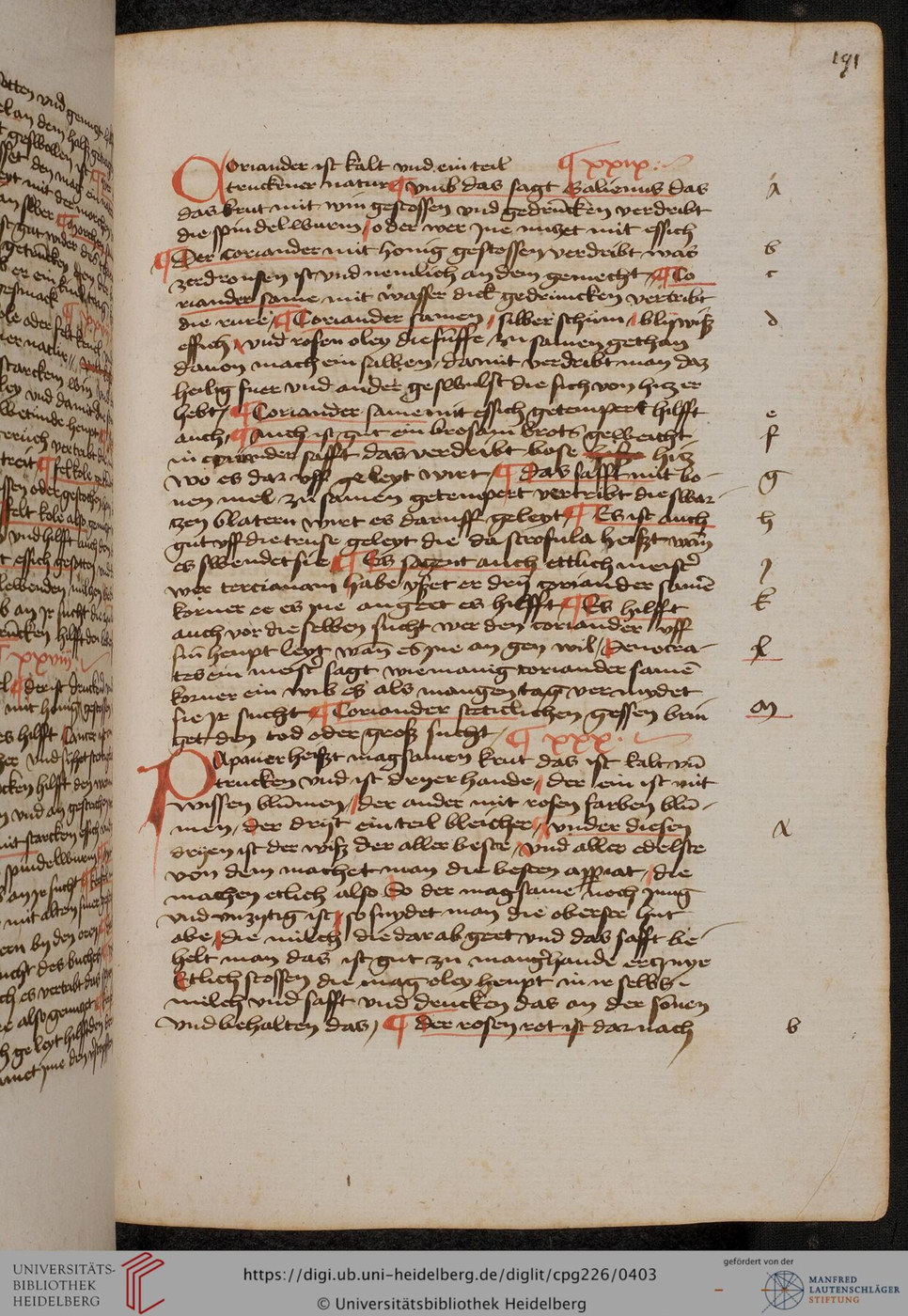
DE-M2 · medical · recipes with medical and astronomical treatises
Heidelberg UB Cod. Pal. germ. 226
1456-1469 · Elsass
Audit A24: German cursiva herbal-recipe text with paragraph marks
page image · crop [0, 560, 1000, 1200]
panel A27
DE-M2 · medical · recipes with medical and astronomical treatises
Heidelberg UB Cod. Pal. germ. 226
1456-1469 · Elsass
Audit A27: German cursiva recipes with paragraph marks
page image · crop [0, 520, 1000, 1160]

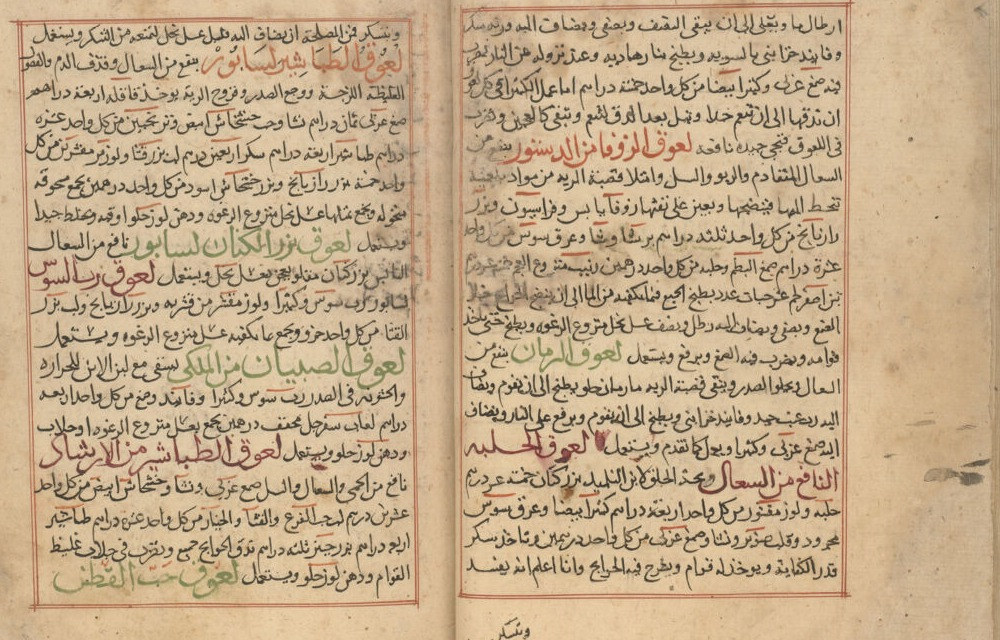
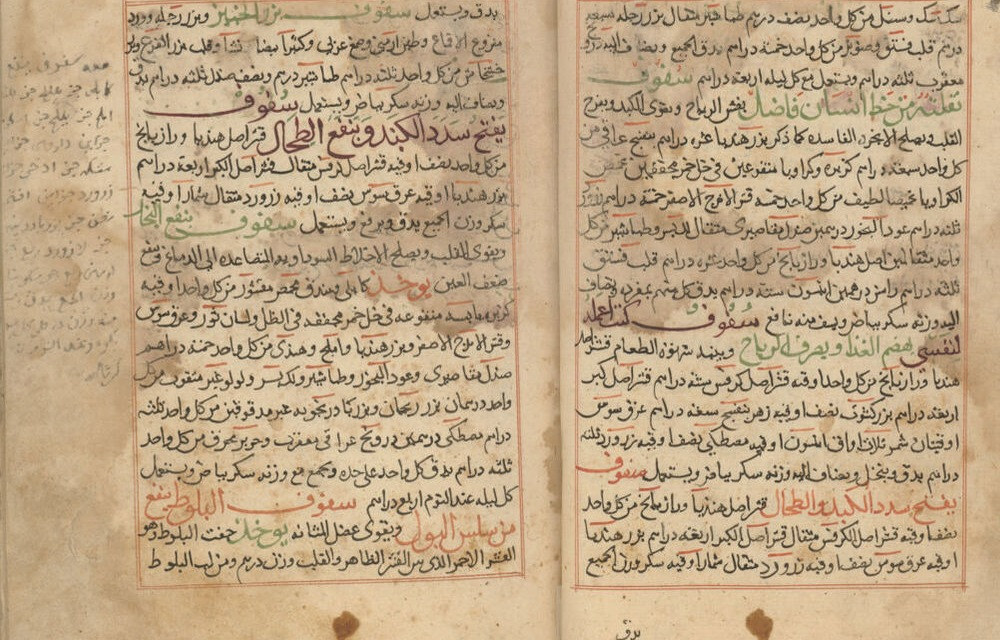
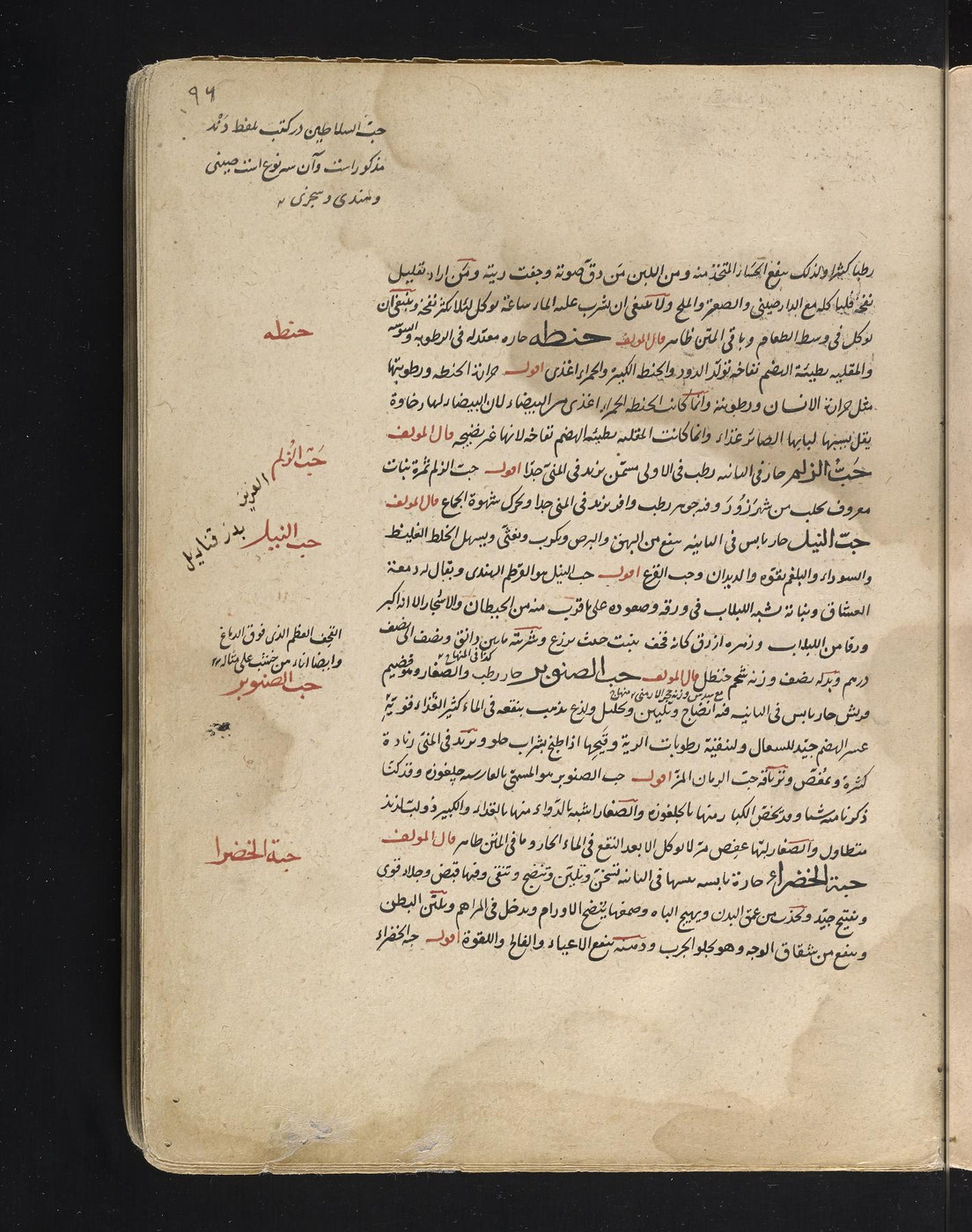
Arabic-script medical: formulary layout, not new letter-forms

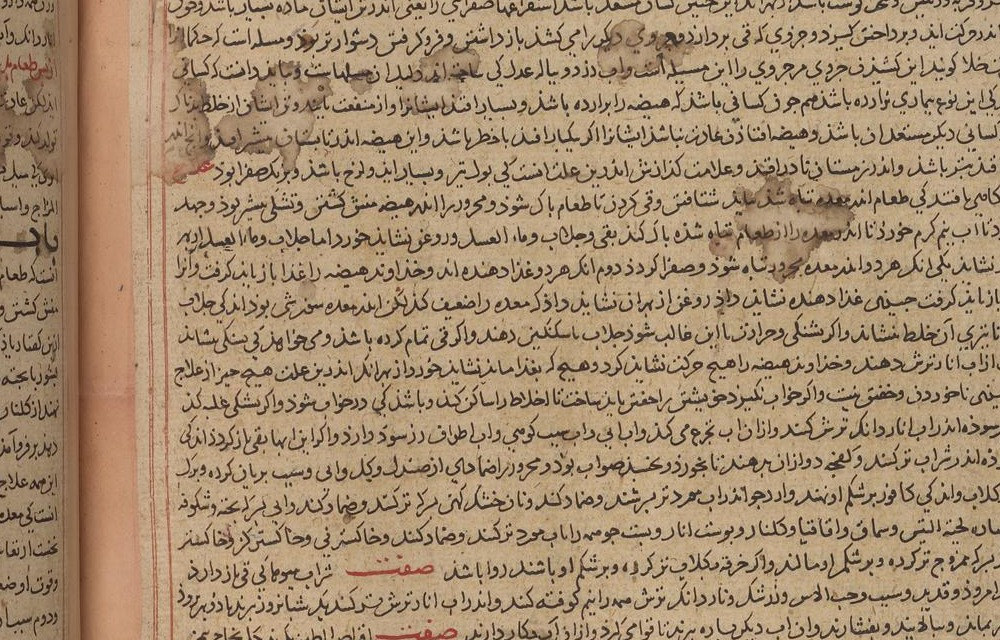
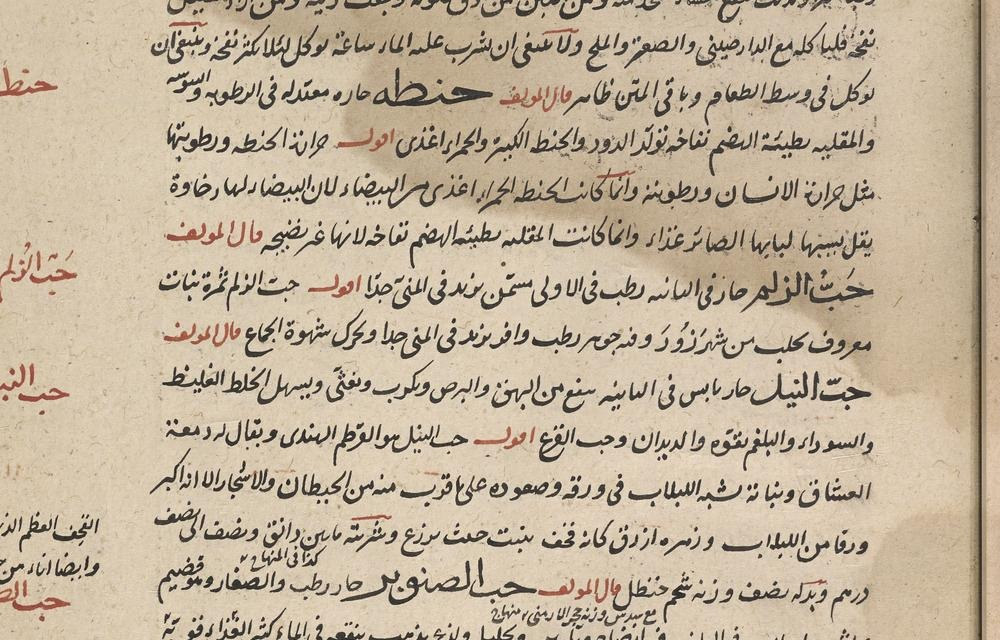
Arabic and Persian formularies mark recipes with coloured headings (electuaries, powders, “description”, “treatment”) and give weights mostly as words. The medical signal is layout and vocabulary; the letter-shapes match ordinary Arabic-script prose.

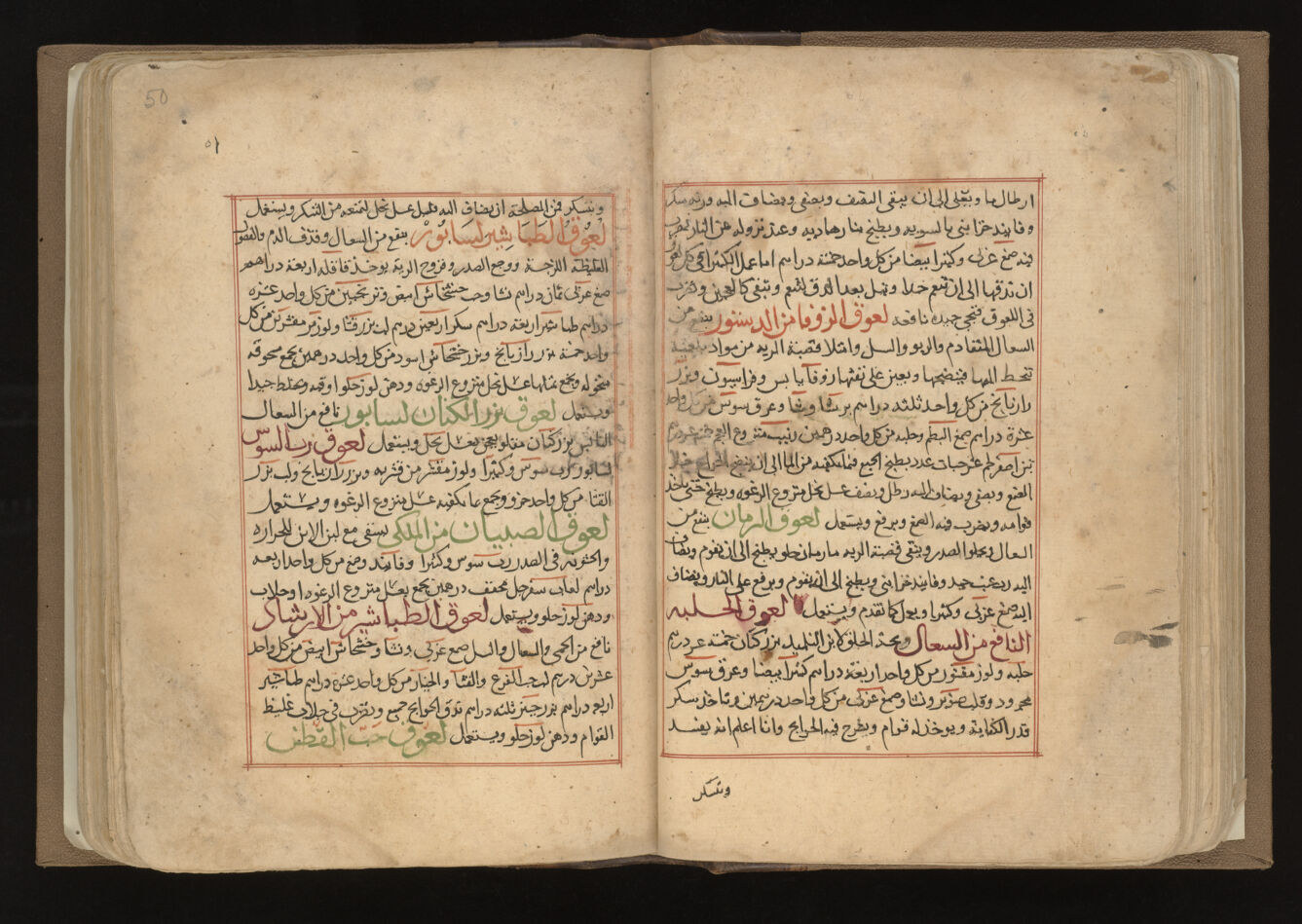
panel A19
AR-M6 · medical · medical text (Medicine, Arab)
MS Arabic 431
14 June 1513 ·
Audit A19: Arabic formulary: coloured headings for electuaries (la'uq), weights written as words
page image · crop [220, 180, 1220, 820]
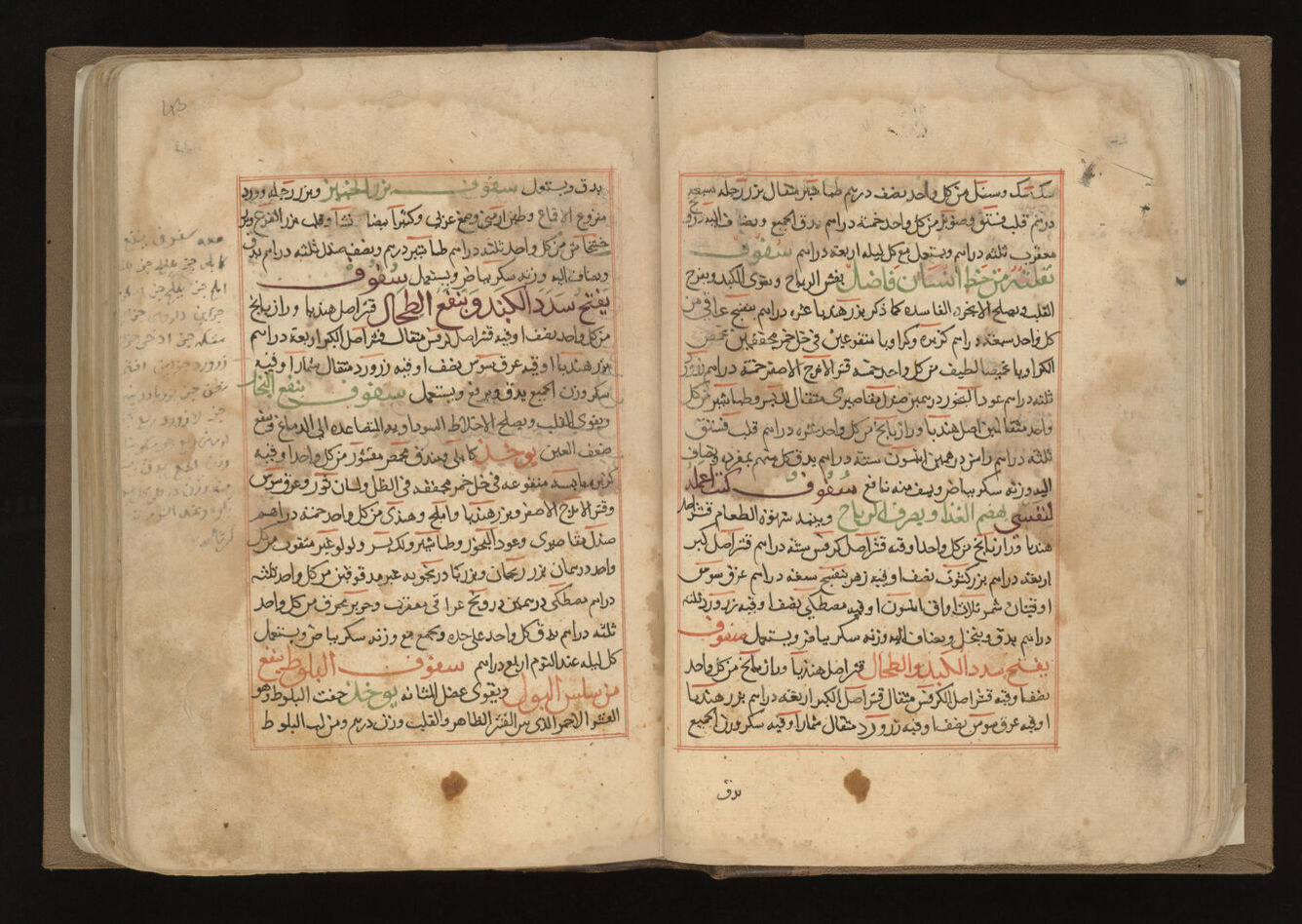
panel A38
AR-M6 · medical · medical text (Medicine, Arab)
MS Arabic 431
14 June 1513 ·
Audit A38: Arabic formulary: coloured headings for powders (sufuf), weight words
page image · crop [120, 180, 1120, 820]
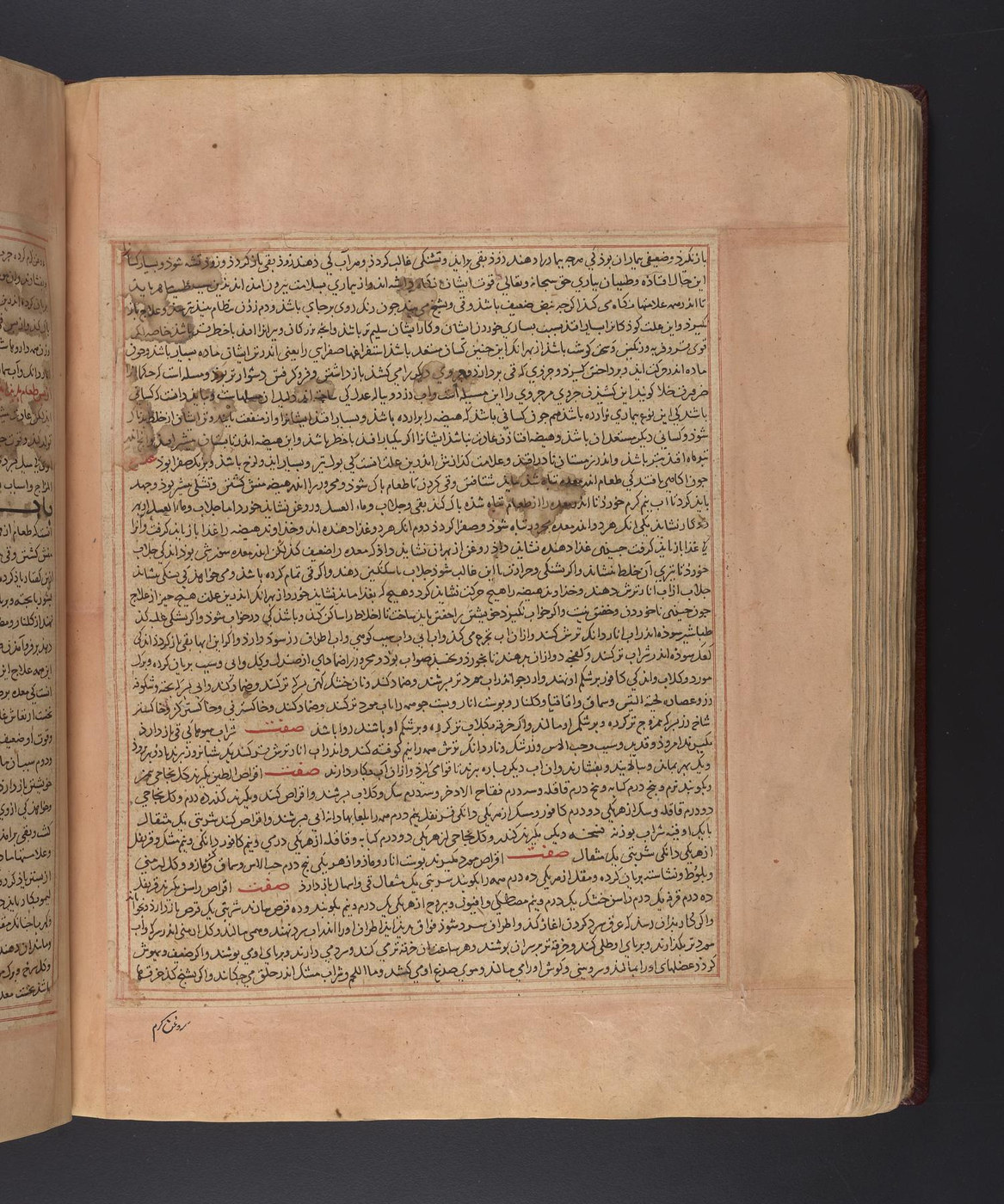
panel A52
FA-M1 · medical · Zakhirah-i Khvarazmshahi (medical encyclopedia)
Oversize LJS 189
between 1300 and 1399? · Persia?
Audit A52: Persian medical with red recipe headings (sifat)
page image · crop [20, 520, 1020, 1160]
panel A40
AR-M4 · medical · commentary on the Mujiz (medical epitome)
LJS 444
A.H. 884 (1480) ·
Audit A40: Arabic materia medica headwords with red degree labels (awwal)
page image · crop [400, 400, 1400, 1040]

Automated shape retrieval (supporting, weak)

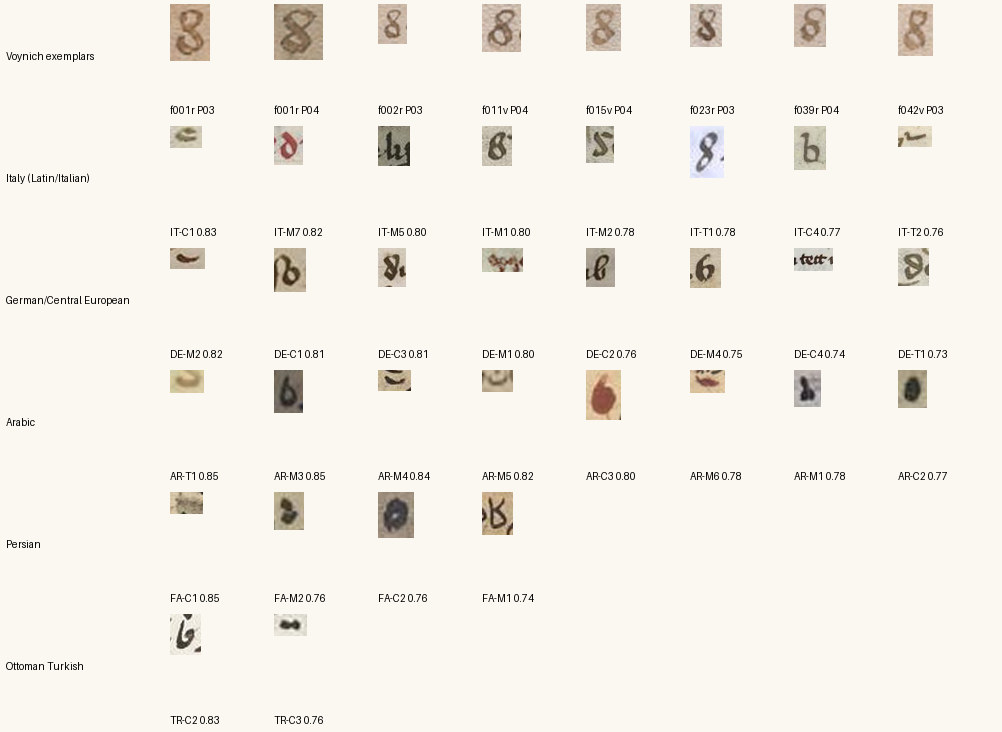
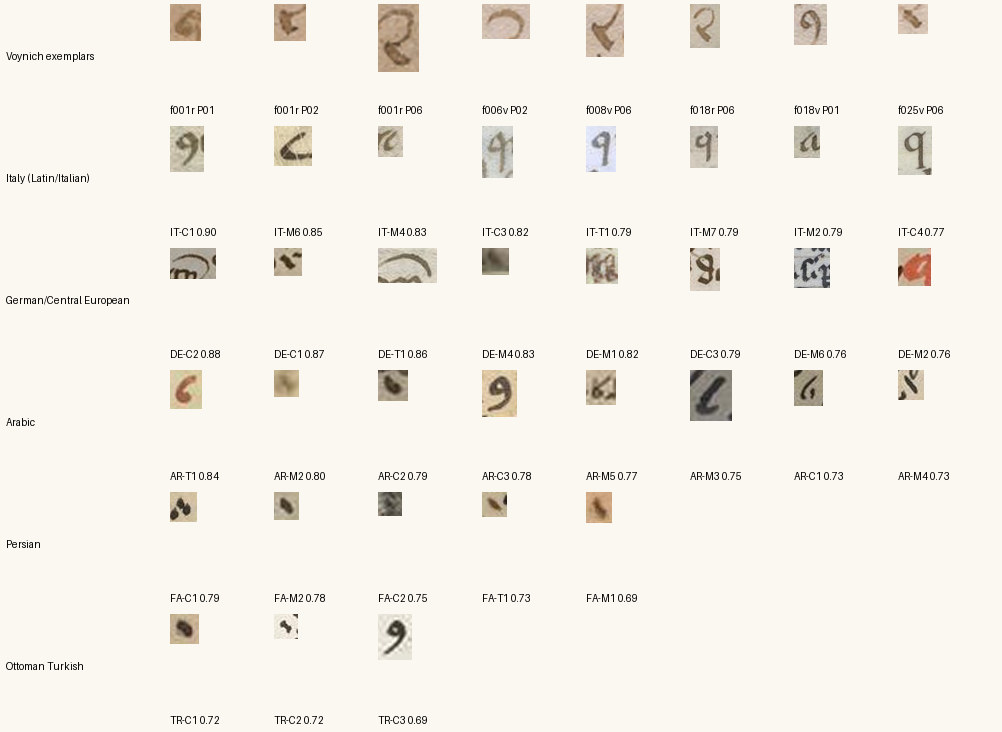
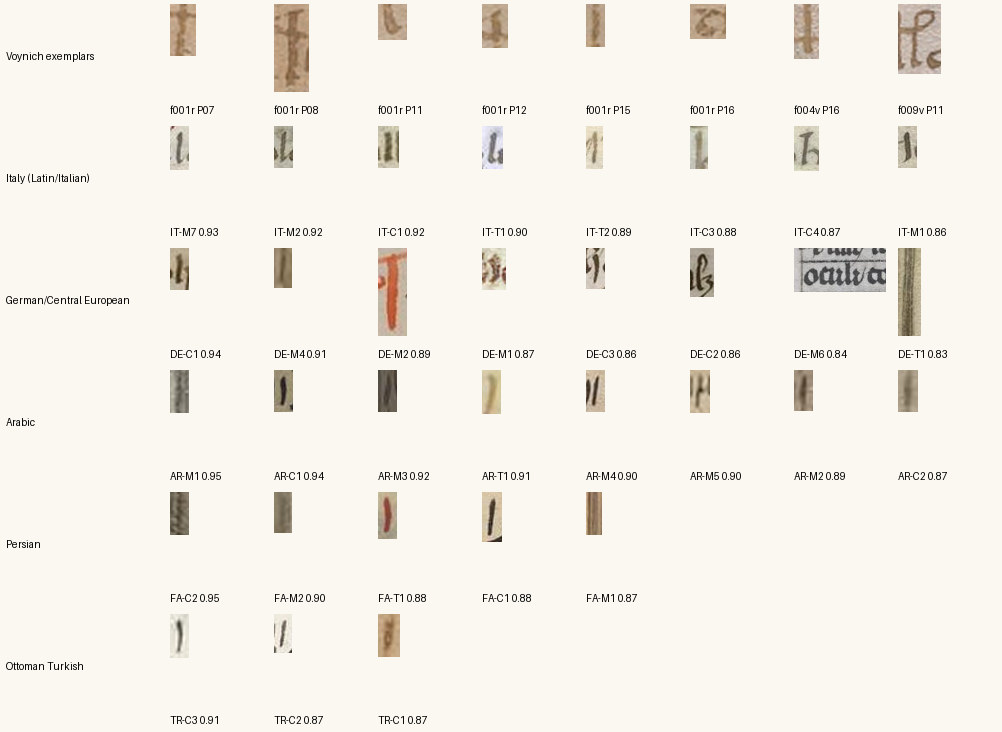
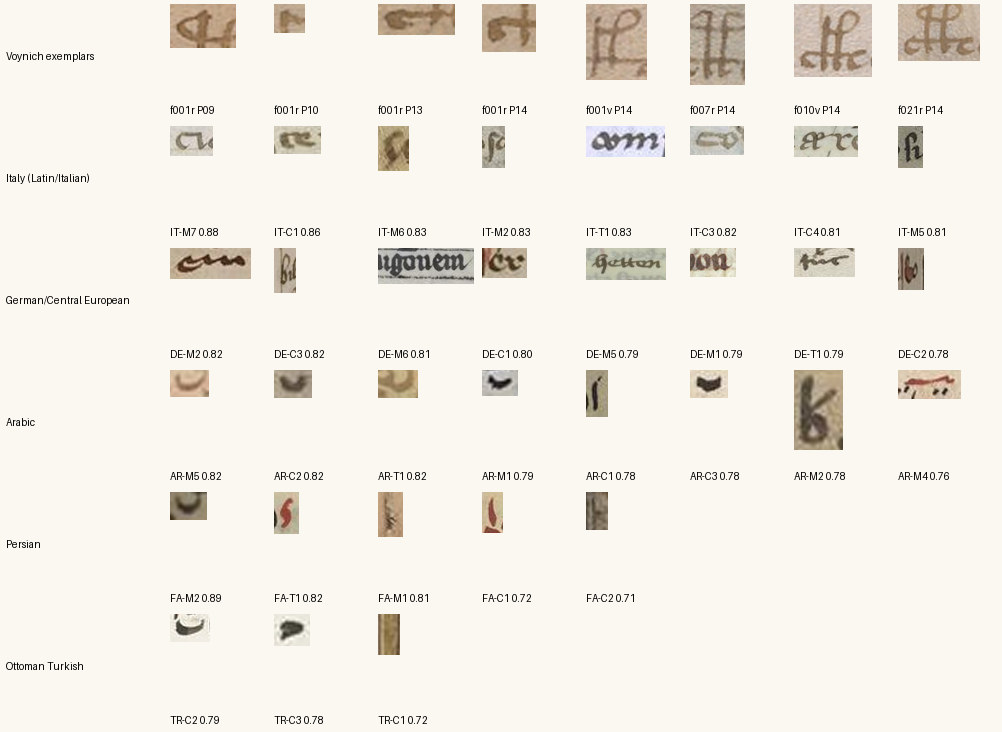
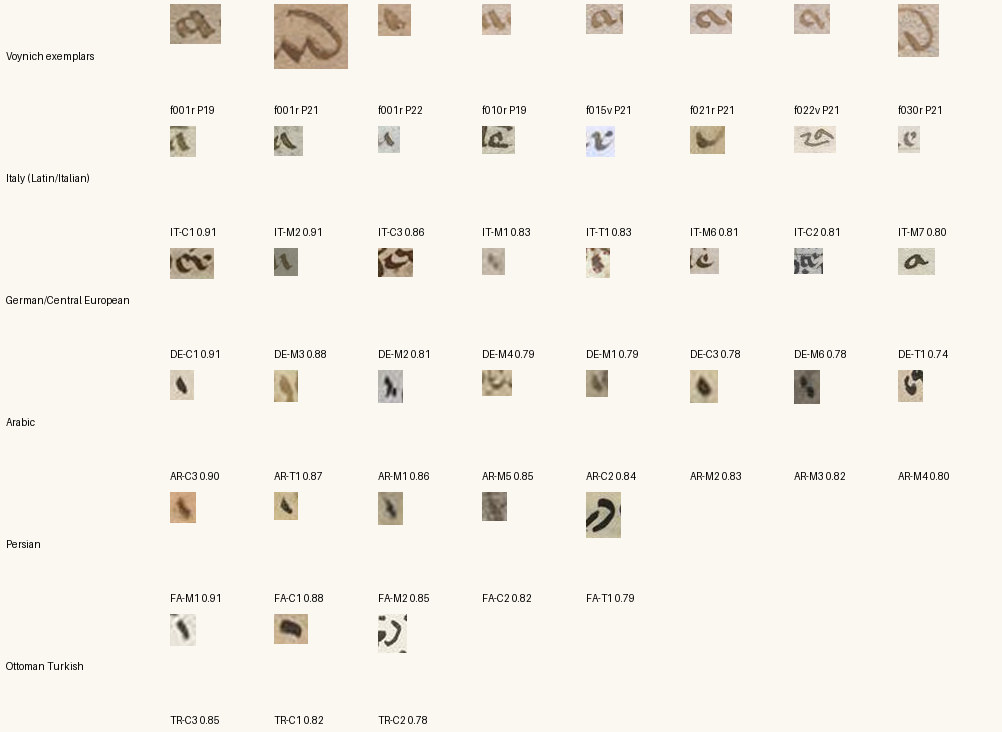
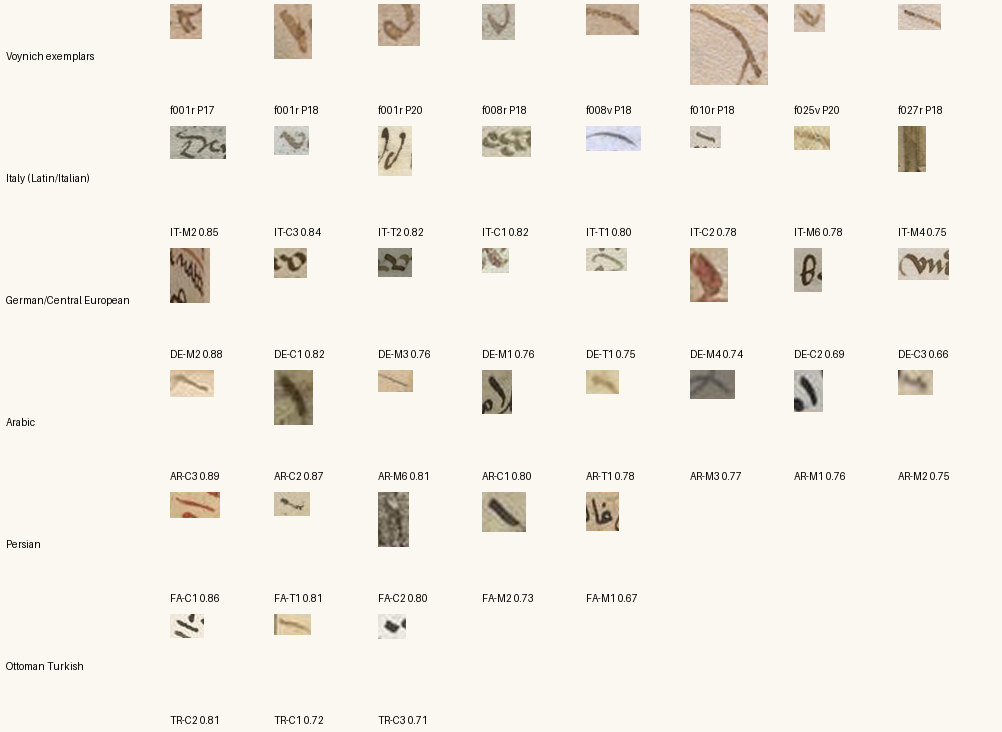
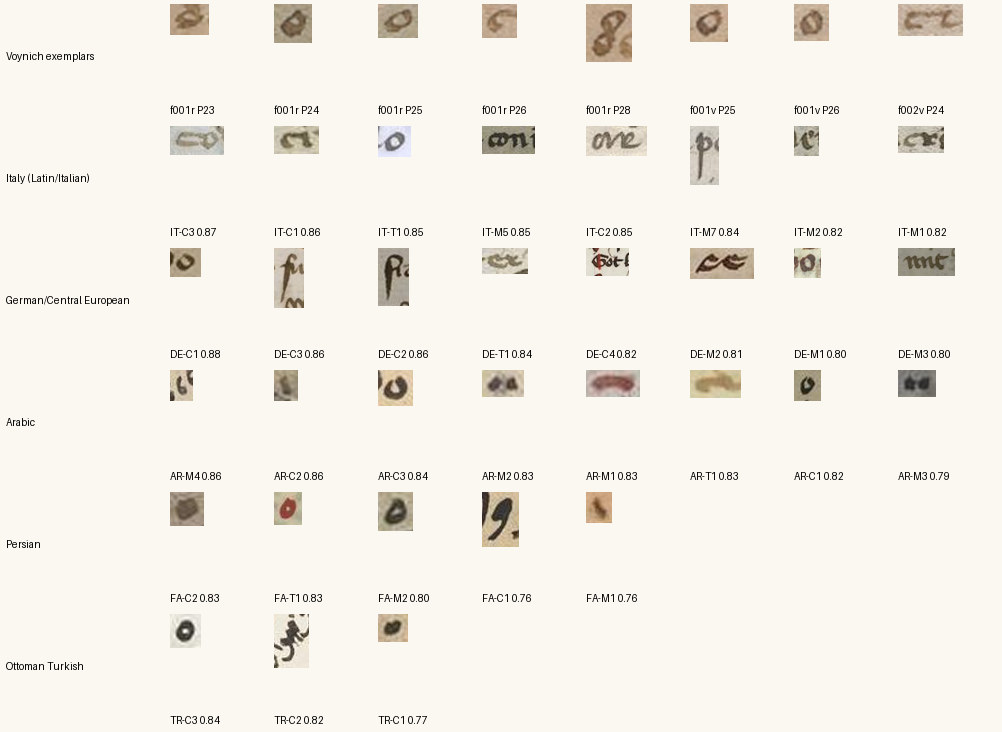
Every page — Voynich included — was normalised to a common x-height and its connected ink components scored against 181 Voynich exemplar components from the pattern cards. Rates are relative to the Voynich median page (1.0 = Voynich-like frequency). The contact sheets show that top matches are mostly generic strokes (l, alif, q, g, و): this layer measures a stroke inventory, not shared conventions.

Tradition | categorynmean relative rate (strict)families ≥ half Voynichprofile cosine
Arabic | medical60.2160.670.8713
Arabic | ordinary30.3492.00.8893
Arabic | technical_nonmedical10.3642.00.9223
German/Central European | medical60.3971.50.8865
German/Central European | ordinary40.4431.50.8849
German/Central European | technical_nonmedical10.222.00.9104
Italy (Latin/Italian) | medical70.3621.570.9116
Italy (Latin/Italian) | ordinary40.4522.250.9265
Italy (Latin/Italian) | technical_nonmedical20.2390.50.8761
Ottoman Turkish | ordinary30.2942.00.8696
Persian | medical20.1781.00.8083
Persian | ordinary20.3151.50.8777
Persian | technical_nonmedical10.2641.00.9259
double_loop_S matches
double loop S: Voynich exemplars (top row), then best-scoring component per manuscript, by tradition
nine_hook matches
nine hook: Voynich exemplars (top row), then best-scoring component per manuscript, by tradition
gallows_tall matches
gallows tall: Voynich exemplars (top row), then best-scoring component per manuscript, by tradition
bench_crossbar matches
bench crossbar: Voynich exemplars (top row), then best-scoring component per manuscript, by tradition
minim_runs matches
minim runs: Voynich exemplars (top row), then best-scoring component per manuscript, by tradition
arch_plume_modifier matches
arch plume modifier: Voynich exemplars (top row), then best-scoring component per manuscript, by tradition
connected_compounds matches
connected compounds: Voynich exemplars (top row), then best-scoring component per manuscript, by tradition

Limits

FINDINGS FROM THE COMPLETED STUDY · public presentation of [preserved evidence reference]

Medical-manuscript comparison — exploratory first corpus (v001)

Date: 2026-09-28 · Status: exploratory, not a conclusion · Visual review ·

Question: Does the Voynich writing system look more like medieval medical/pharmaceutical working notation than like ordinary contemporary writing? Does any geographic or script tradition stand out?

No Voynich text was read, translated or assigned letter values. No language or region was assumed. Italian and Turkic sources received no priority.

Answer

Not in this corpus. Voynich does not look more closely related to medical/technical writing than to ordinary prose.

What was compared

Corpus: 42 dated manuscripts, with 2 pages each (84 pages), c.1300–1560. The manuscripts were chosen from catalogue metadata (date, place, language and subject) before any scoring. Pages were selected automatically by a text-likeness score from evenly spaced candidates in the middle of each book. Two picks were replaced after visual QC because they were full-page illustrations. The exclusions are recorded in [deterministic method].

TraditionMedicalTechnical, non-medicalOrdinary controls
Italy (Latin/Italian)72 (arithmetic, accounts)4
German/Central European61 (university notes)4
Arabic61 (algebra)3
Persian21 (astronomy)2
Ottoman Turkish0 — gap03

Ottoman gap: the open sources searched had no dated Ottoman Turkish medical manuscript from before 1550 with usable images. Those sources were Wellcome, Heidelberg, Penn/OPenn and the Free Library of Philadelphia. The Ottoman material is therefore non-medical control material only. Wellcome's Arabic medical items are digitized as two-page openings. Their audit crops were too small to judge, although automated scoring still ran on them.

Voynich side: there are 181 exemplar components from the existing 28 internal pattern cards. They are grouped, before any scoring, into seven requested fingerprint families:

Twelve Voynich folios served as a positive control. The exemplar boxes themselves were excluded from those folios.

Methods (two independent layers)

  1. Deterministic shape retrieval ([deterministic method]). Every page, Voynich included, received identical processing:
  2. scaled to a common page height of 1800 px;
  3. printed library banners and dark scan background removed;
  4. binarized with the Sauvola method;
  5. x-height estimated and rescaled to a common 18 px;
  6. split into connected components;
  7. described with the existing project descriptor (src/voynich/internal_visual_features_v001.py).

Similarity to each exemplar combines a DCT shape score, aspect and relative-height penalties, and a binary-support overlap gate. Family thresholds were calibrated only on Voynich exemplars, using leave-one-out scores (lenient = 20th percentile, strict = median). They were frozen in exemplars.json before any comparison page was scored. Rates are hits per 1000 components, expressed relative to the median Voynich page. Contrasts are manuscript-level permutation tests (20,000 permutations).

  1. Convention audit ([deterministic method]). There is one crop from the densest text area of each page. Crops were shuffled under codes A01–A84, which hid manuscript identity and medical/non-medical category. The script type was necessarily visible. Nine conventions were fixed in advance and scored 0/1/2/?. One field was added mid-audit, before unblinding: non-pharmaceutical technical notation. The ratings were sealed by SHA-256 (audit/ratings_seal.sha256) before the key was opened.

Findings by construction, and what kind of convention each is

Voynich constructionClosest comparison materialKind of convention
Double-loop/STwo-bowl g, sigmatic s, looped Arabic-script lettersGeneral script features in every tradition
9/hookLatin superscript 9 (-us) and backwards-c con-. Densest in Padua logic, also in Italian vernacular remedies. Arabic wāw/rāʾ shapes are only look-alikes.General medieval Latin abbreviation, strongest in university writing; not medical
Gallows/tall + bench/crossbarLooped ascenders with bars across tall strokes in German cursiva. Crossbar joins were present in 75% of ordinary German crops and 17% of German medical crops.Regional script style. It spans sermons, verse, law and recipes.
Minim runsLatin m/n/u/i runs; Arabic-script "teeth". In recipes they also appear as roman dosage numerals ending in a long j (ij, iij, vj).Minims are general. The numerals are pharmaceutical, but they have a transparent numeric function.
Superscript/modifierLatin suspension marks and superscript letters in every Latin crop; vowel signs and overlines in Arabic scriptGeneral (Latin abbreviation) or script-specific (Arabic vocalisation)
Connected compoundsCursive word blobs in German cursiva and all Arabic-script handsScript-level connectivity
Pharmaceutical signs (℞, ana, ʒ/℥, dosage numerals, recipe layout)Italian ricettario (1530), Bologna medical annotations (1500–01), German/Austrian materia medica (c.1400), Nuremberg recipes (1474). Arabic/Persian formularies use coloured recipe headings and write weights out as words.Medical-specific. No matching Voynich system is visible.

Notable isolated observation: the corpus contains one line of non-alphabetic signs that looks strikingly Voynich-like: 9/6/3-like hooks, loops, bars and dot groups (panel A72). It occurs in an Andalusian political-advice manuscript (LJS 456, AH 797/1394), which is not a medical text. The line is unidentified here; it may be a numeral or cipher table. Checking its identity is a worthwhile lead. It remains a single embedded sign set, not a script-wide system.

Limits

Suggested next tests (not started)

  1. Identify the sign line in LJS 456 (Maghribi rumi/Fez numerals? cipher key?) and compare it deliberately with Voynich 9/hook, double-loop and gallows forms.
  2. Extend controls for the two top "resemblance" traditions: Italian university scholastic hands and 15th-century German cursiva. Test whether Voynich's co-occurring loops, crossbars and 9-forms track one regional hand better than chance, with matched pages and several raters.
  3. Add sources for the missing categories: a pre-1550 Ottoman medical hand, Hebrew-script medical notebooks, and 15th-century cipher manuscripts (e.g., LJS 225, a cryptography treatise from Rome, 1455–58, already on OPenn).

Provenance

All sources are open-access IIIF/TEI records, public domain or public-domain mark. The full catalogue records, image URLs and SHA-256 hashes are in . Images are stored under [preserved evidence reference].

IDCategoryRepository / shelfmarkDatePlaceLanguageGenre (catalogue)Pages sampled
IT-M1medicalUniv. of Pennsylvania LJS 236ca. 1450-1499ItalyLatin, with one section (f.recipe collection (Thesaurus pauperum)61r =59r, 80r =68r
IT-M2medicalUniv. of Pennsylvania LJS 4241500-1501BolognaLatin, with one work in Germuniversity medical text with annotations (Bologna)187v, 387r
IT-M3medicalUniv. of Pennsylvania LJS 4581545CremonaLatinrecipes / secrets (Abscondita naturae)139v, 70v
IT-M4medicalUniv. of Pennsylvania LJS 385circa 1500ItalyLatinschool miscellany with medical recipes (working notebook)22r, 26v
IT-M5medicalUniv. of Pennsylvania LJS 479after 1323ItalyItalian, with one section inmoral and medical miscellany (vernacular)13r, 14v
IT-M6medicalUniv. of Pennsylvania Ms. Codex 115ca. 1530ItalyItalian and Latinricettario (recipe book)35 =33, 44 =40
IT-M7medicalUniv. of Pennsylvania LJS 484between 1450 and 1475Ferrara?, ItalyItalian, in Tuscan dialectveterinary medicine with recipes30v, 23r
IT-C1ordinaryUniv. of Pennsylvania LJS 561420Padua?, ItalyLatinuniversity logic text (student copy)27v, 37r
IT-C2ordinaryUniv. of Pennsylvania LJS 4571475PerugiaLatinlogic text54v, 62r
IT-C3ordinaryUniv. of Pennsylvania LJS 342after 1444MilanLatincopies of legal documents (water rights)29v, 15v
IT-C4ordinaryUniv. of Pennsylvania LJS 381between 1455 and 1465?Padua?, ItalyLatinclassical history (Sallust)109r, 77v
IT-T1technical nonmedicalUniv. of Pennsylvania LJS 271478NolaItalianpractical arithmetic (Algorismus)20r, 43r
IT-T2technical nonmedicalUniv. of Pennsylvania Ms. Codex 13661538-1541ItalyItalianaccount notebook (Medici)99r, 82v
DE-M1medicalHeidelberg UB Cod. Pal. germ. 2141321SpeyerGerman (catalogue)Arzneibuch (medical recipe book)24r, 26v
DE-M2medicalHeidelberg UB Cod. Pal. germ. 2261456-1469ElsassGerman (catalogue)recipes with medical and astronomical treatises191r, 107r
DE-M3medicalHeidelberg UB Cod. Pal. germ. 5451474Nürnberg (?)German (catalogue)medical recipe collection and treatises145v, 74v
DE-M4medicalUniv. of Pennsylvania LJS 195between 1450 and 1499GermanyMiddle High German, with sommedical miscellany with receipts151r =154r, 62v =65v
DE-M5medicalUniv. of Pennsylvania LJS 4631443Buchau, GermanyGerman with Latin calendar amedical and astrological miscellany33v, 42r
DE-M6medicalUniv. of Pennsylvania LJS 437ca. 1400Germany or AustriaLatinmateria medica (De re medicina)18r, 21r
DE-C1ordinaryHeidelberg UB Cod. Pal. germ. 1401456BayernGerman (catalogue)town chronicle54v, 99r
DE-C2ordinaryHeidelberg UB Cod. Pal. germ. 1601438AugsburgGerman (catalogue)town law114v, 84v
DE-C3ordinaryHeidelberg UB Cod. Pal. germ. 351439BayernGerman (catalogue)sermons37v, 50v
DE-C4ordinaryHeidelberg UB Cod. Pal. germ. 3291414/1415SteiermarkGerman (catalogue)songs, letters and speeches24v, 18r
DE-T1technical nonmedicalUniv. of Pennsylvania LJS 483circa 1480IngolstadtLatinuniversity questions on Aristotle Physics (student notes)122r, 66v
AR-M1medicalUniv. of Pennsylvania Oversize LJS 417A.H. 899-904 (1494-1498)ArabicIbn Sina, Qanun books III-V255v, 208r
AR-M2medicalUniv. of Pennsylvania LJS 393between 1300 and 1399?Egypt or Syria?Arabiccommentary on Hippocratic Aphorisms33r, 23r
AR-M3medicalUniv. of Pennsylvania LJS 426between 1375 and 1399?Iran?Arabical-Kulliyat (medical theory)93r, 242r
AR-M4medicalUniv. of Pennsylvania LJS 444A.H. 884 (1480)Arabiccommentary on the Mujiz (medical epitome)86r, 96r
AR-M5medicalWellcome Collection MS Arabic 4094 April 1435 (part 1)28 July 1Arabicmedical text (Medicine, Arab)canvas 240, canvas 124
AR-M6medicalWellcome Collection MS Arabic 43114 June 1513Arabicmedical text (Medicine, Arab)canvas 51, canvas 44
AR-C1ordinaryUniv. of Pennsylvania Oversize LJS 486A.H. 720 (1320)EgyptArabicriddles in Arabic language and poetry52v, 34v
AR-C2ordinaryUniv. of Pennsylvania LJS 456A.H. 797 (1394)Andalusia?Arabicpolitical advice (Siyasah)184 =16, 197 =29
AR-C3ordinaryUniv. of Pennsylvania, Katz Center CAJS Rar Ms 126A.H. 831 (1428)Arabichadith / devotional (Kitab al-Shifa)113r, 83v
AR-T1technical nonmedicalUniv. of Pennsylvania LJS 464A.H. 849 (1445)GranadaArabicalgebra commentary24r, 28r
FA-M1medicalUniv. of Pennsylvania Oversize LJS 189between 1300 and 1399?Persia?PersianZakhirah-i Khvarazmshahi (medical encyclopedia)211r, 252v
FA-M2medicalUniv. of Pennsylvania LJS 49A.H. 813 (1411)PersiaPersian and Arabicanatomy treatise9r, 15r
FA-C1ordinaryUniv. of Pennsylvania, Katz Center CAJS Rar Ms 207A.H. 916 (1510 or 1511)PersianSa'di, Gulistan174, 138
FA-C2ordinaryUniv. of Pennsylvania LJS 404between 1200 and 1399?Iran?Persianencyclopedia of sciences107v, 100v
FA-T1technical nonmedicalUniv. of Pennsylvania LJS 400A.H. 899 (1493-1494)Iran?Persiancommentary on astronomical tables198r, 182r
TR-C1ordinaryFree Library of Philadelphia Lewis O 92917 A.H. (1511)TurkeyOttoman Turkishendowment deed (vaqfname)23v, 15r
TR-C2ordinaryUniv. of Pennsylvania Ms. Codex 1895A.H. 956 (1549)TurkeyArabic headwords, Ottoman deArabic-Turkish dictionary77r, 69r
TR-C3ordinaryFree Library of Philadelphia Lewis O 96968 A.H. (1560)TurkeyOttoman Turkishverse translation of Gulistan100r, 119r