Can we identify the plants, and which visible features support or contradict each candidate?
What did we do?
Modern flora/photos/herbaria and historical herbal illustrations were searched in independent lanes. Actual pictures were inspected; candidate batches were frozen before comparing conclusions. A fresh reviewer challenged the evidence. No local models or generated reference images were used.
What did we find?
Useful leads include Viola-like flowers, Smilax-like climbing growth, daisy-like heads and Filipendula-like roots. Each has missing diagnostics or contradictory features. No species or geographic identity is accepted.
What does it mean?
These are testable comparison leads. Agreement on one structure is insufficient when leaves, flowers, roots or their connections conflict.
Scope and limits: Full mapped-corpus first-pass records: 134/134 modern and 134/134 historical records saved; broader follow-up searches remain incomplete. The corpus is 134 mapped whole-plant instances across 126 unchanged Yale views; no verified standalone 134-plant crop collection was found. Foldouts and multiple-plant boundaries remain uncertain. Filled records are not exhaustive searches. These eight selected cases do not replace the full coverage ledger.
Review needed
All eight candidates need botanical judgment, attention to competing taxa, and diagnostic organ connections. Some reference pictures are link-only because reuse permission is unknown. Broader historical/Arabic and alternative searches remain incomplete. Phone-width checks do not establish physical iPhone Files success.
Both lanes contain 134 records across 126 unchanged Yale source views. Each record has at least one researcher-inspected lead or rival picture; this does not mean every candidate or diagnostic organ was tested. Zero plant identities are accepted. The independent review audited all 268 records, personally inspected nine source views and 25 reference pictures, then checked the four recovered historical comparisons. It did not visually reassess every comparison.
Lane candidates were frozen before comparison. Same-lane historical reference metadata sharing is disclosed; reviewer/coordinator additions are separate from the original batches. This supports procedural separation, not proof of mental independence. The interrupted modern assignment was preserved and completed by a fresh modern-only worker; no baseline gaps or duplicate assignments remain.
Exact Nummularia and Egerton 747 Ruta f85r pictures remain deferred. The recovered Brunfels Primula, Fuchs Rumex, Cibo Asarum rival and Gerard Rue pictures are link-only. Fuchs/Gerard edition and holding-copy metadata remain unverified; the Rue vendor page later returned HTTP 404 despite the saved picture having been inspected. A mismatch with the Cibo Asarum comparator does not exclude its genus. Broader flora, herbarium, medieval/Arabic herbal, diagnostic-organ and alternative searches remain incomplete.
These are 134 external whole-plant mappings, not 134 validated standalone plant extractions. Multiple-plant boundaries remain unverified; small pharmaceutical parts outside the crosswalk were not inventoried. No geographic origin, source-copy relationship or accuracy percentage follows from this first pass. Browser-width checks do not establish physical iPhone Files success.
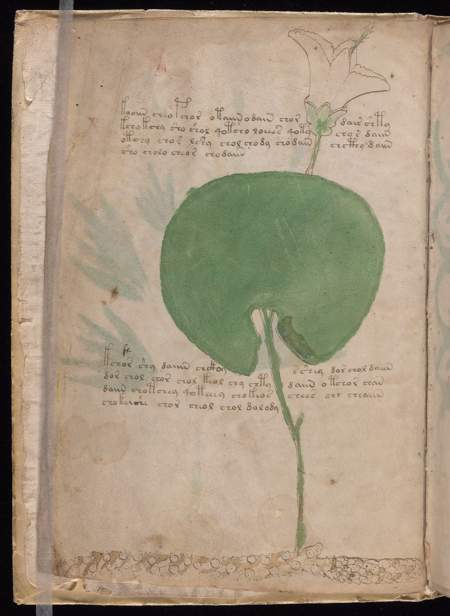
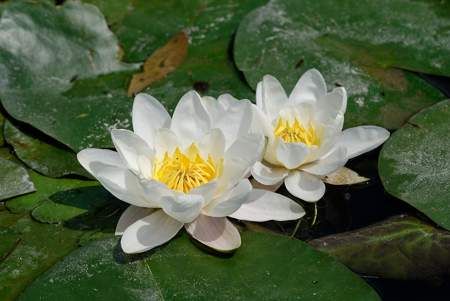
f002v: Floating-leaved aquatic plant; species unresolved
Supports: The round notched leaf and substantial horizontal base support an aquatic-plant comparison.
Contradicts / missing: Nymphaea alba has many overlapping, smooth petals and exposed yellow stamens. The drawing has few large frilled lobes and a green cup. Nuphar and Nymphoides comparisons also leave flower and root mismatches.
Two-lane evidence and alternatives: Modern: Nymphaeaceae versus Nymphoides/Menyanthaceae. Historical: water-plant conventions nominate a comparison, not an accepted species.
Review / limitation: Leaf attachment, reproductive structure and root scars need diagnostic review; one exemplar cannot exclude a whole genus.
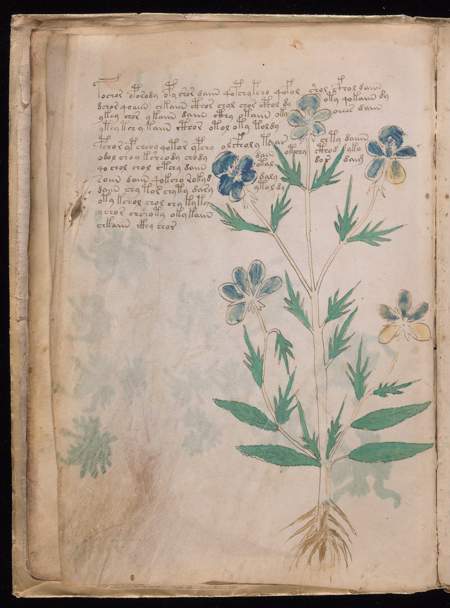
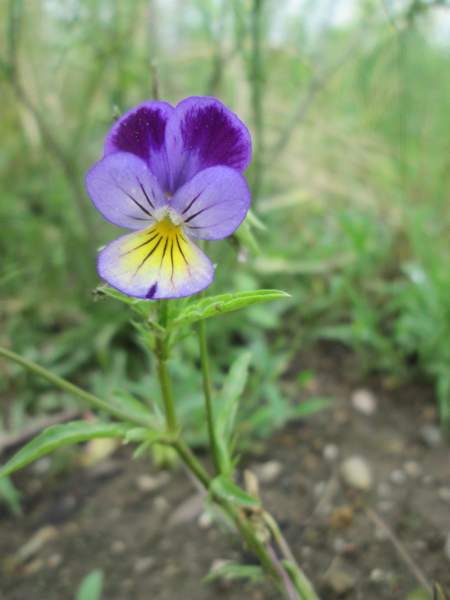
Beinecke Rare Book and Manuscript Library, Yale University, MS408. Scaled derivative; original pixels preserved.Viola tricolor front flower AnRo0002,12 June2018 CC0 1.0; scaled for report, no botanical alteration; visual inspection: True Open original reference picture
Supports: A front flower photograph supports the broad five-petal colour partition. Viola arvensis also combines simple leaves with deeply divided stipules, matching part of the drawing.
Contradicts / missing: Several drawn flowers look more radial; leaf attachment can appear paired. The spur and sepal/petal measurements needed to distinguish species are unavailable.
Two-lane evidence and alternatives: Modern: V.tricolor, V.arvensis and other Viola. Historical violet portraits provide a separate broad comparison. Blue pigment does not decide species.
Review / limitation: The earlier rear-view flower comparison is superseded by this front-view test, while its frozen original is preserved.
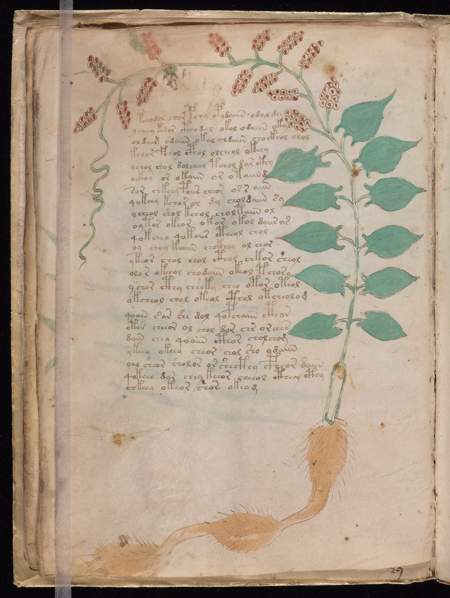
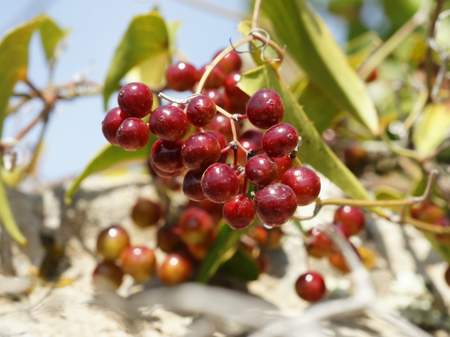
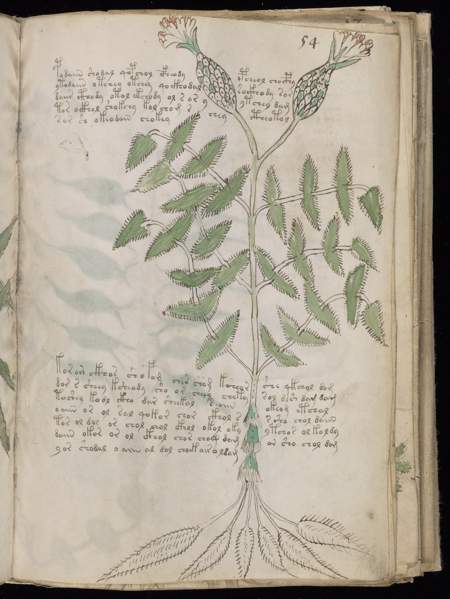
Supports: Pointed somewhat cordate blades, projections, a hanging coil and red units form a climbing-plant lead. The actual Smilax picture shows red berries on branching pedicels.
Contradicts / missing: Drawn red units appear hollow and sit in orderly paired rows. Paired tendrils at petiole bases and basal leaf veins are unclear; the large hairy linked underground bodies are not verified.
Two-lane evidence and alternatives: Modern: Smilax versus Bryonia and other red-fruited climbers. Historical portraits test whole-herb conventions. Bryonia leaf lobing conflicts with the drawing.
Review / limitation: Kew describes Smilax umbels along an extended axis: the earlier absolute spike/umbel objection was too strong. Berry photographs do not test full roots.
Beinecke Rare Book and Manuscript Library, Yale University, MS408. Scaled derivative; original pixels preserved.Actual botanical photograph: sanguisorba minor Jason Sachs Explicit source caption: No permission needed for non-commercial uses, with proper credit. Non-commercial research only; credit Jason Sachs.; scaled for report, no botanical alteration; visual inspection: True Open original reference picture
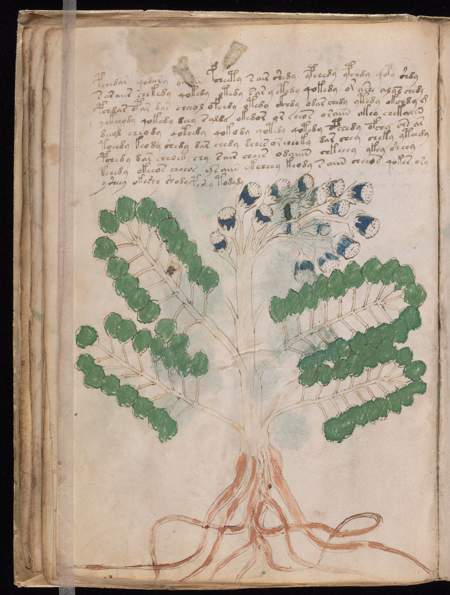
Supports: Round toothed units along compound-looking axes and terminal heads resemble the actual Sanguisorba reference.
Contradicts / missing: The actual flower close-up has green sepals, pink stigmas and long stamens; the drawing has blue-white cup-like heads. The pictured root loops remain unexplained.
Two-lane evidence and alternatives: Modern: Sanguisorba versus Agrimonia and other pinnate-leaved herbs. Historical: no secure named portrait; the tested comfrey has simple leaves and conflicts.
Review / limitation: Review leaflet junctions and flower anatomy. This photograph is permitted for non-commercial use with Jason Sachs credit.
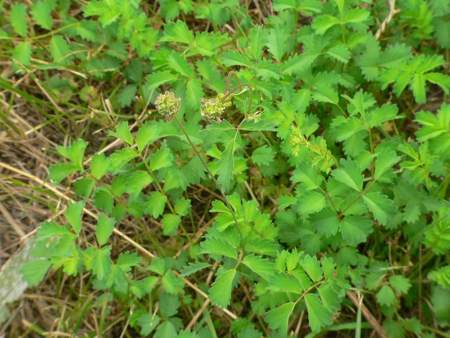
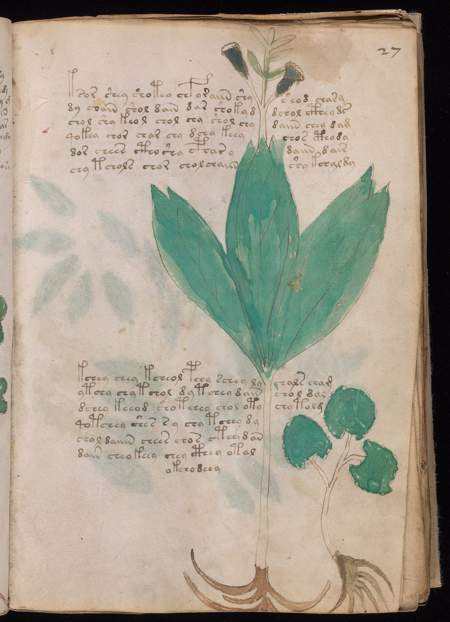
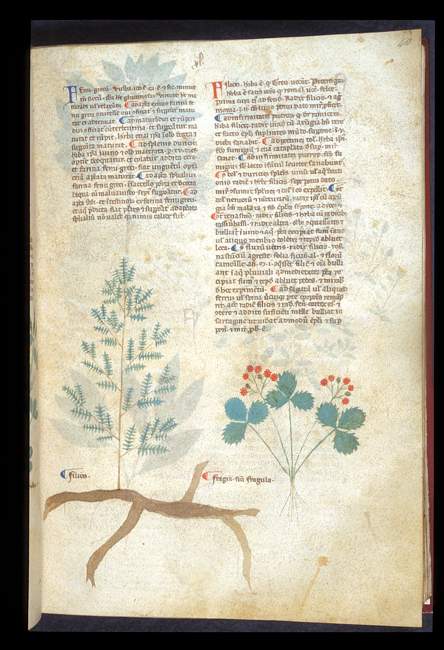
Supports: Modern strawberry and clover photographs demonstrate round toothed leaflets. The medieval page at right offers an actual strawberry-type portrait with three leaflets and red reproductive clusters.
Contradicts / missing: The small Voynich plant appears to attach each blade separately at different heights, rather than at one distal trifoliate junction. Flowers, fruit, stipules and a creeping stolon are absent.
Two-lane evidence and alternatives: Modern: Fragaria, Trifolium, Viola, Geranium or other simple-leaved herbs remain open. Historical: RIGHT plant is strawberry-type; LEFT plant on the same reference page is fern.
Review / limitation: The two mapped instances on f027r have unverified boundaries. This later reviewer test repairs one historical strawberry-picture gap; an exact clover portrait remains deferred.
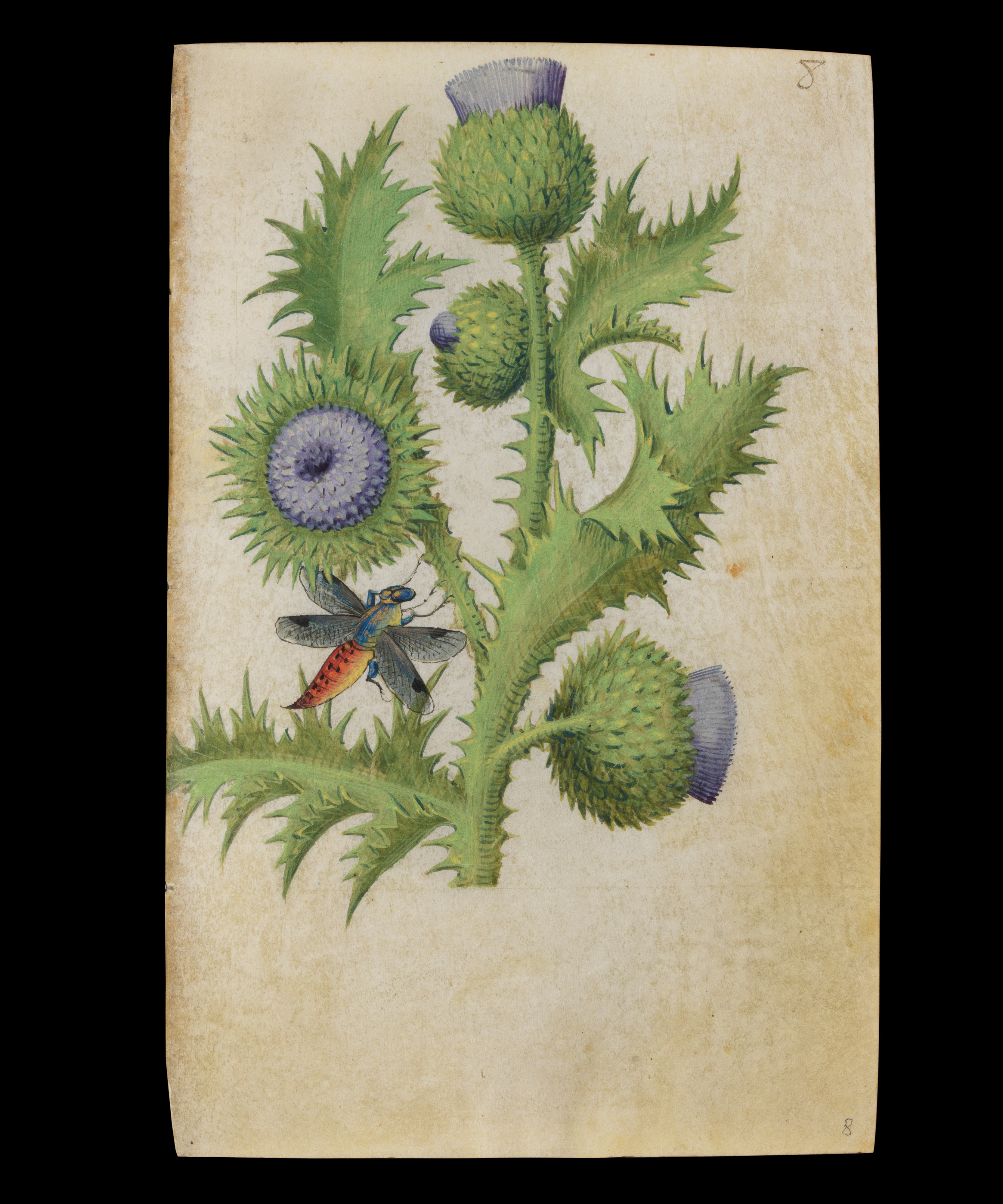
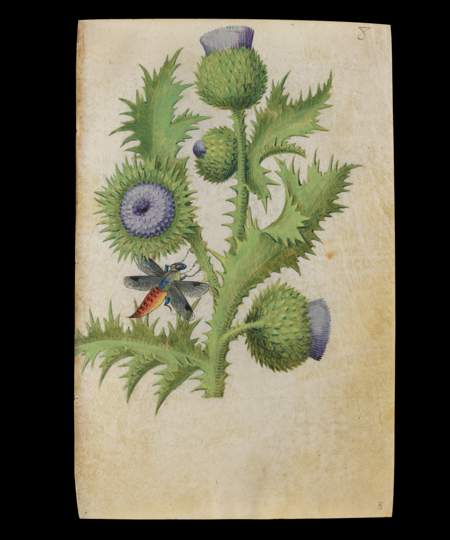
Beinecke Rare Book and Manuscript Library, Yale University, MS408. Scaled derivative; original pixels preserved.Book of Flower Studies thistle, folio8; ca1510–1515 The Metropolitan Museum of Art; Master of Claude de France Public Domain; Met object record verified; scaled for report, no botanical alteration; visual inspection: True Open original reference picture
Supports: Spiny/scaled head construction gives a useful Asteraceae lead. A modern Centaurea comparison and the later historical thistle portrait each test head structure.
Contradicts / missing: Paired or pinnate-looking bristly foliage and the root architecture are not matched securely. The visible head alone cannot distinguish Centaurea, Cirsium, Dipsacus or an artistic composite.
Two-lane evidence and alternatives: Modern: Centaurea/Cirsium versus teasel-like forms. Historical: thistle/knapweed convention in a ca1510–1515 Book of Flower Studies comparator.
Review / limitation: The reference is later than the manuscript dating interval; similarity does not establish copying or a geographic origin.
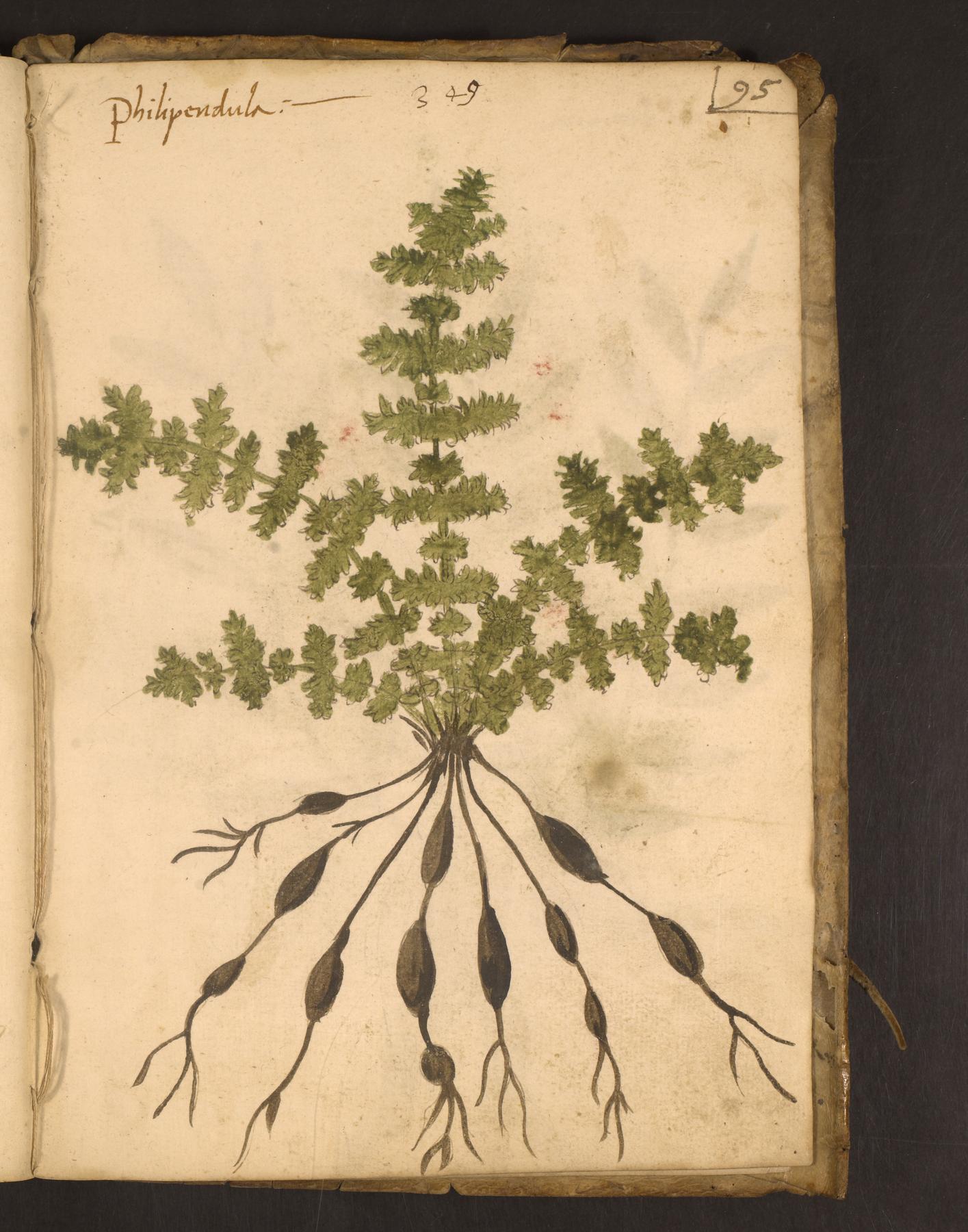
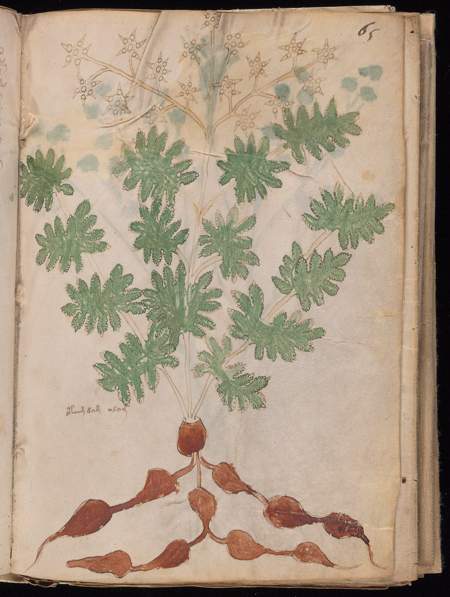
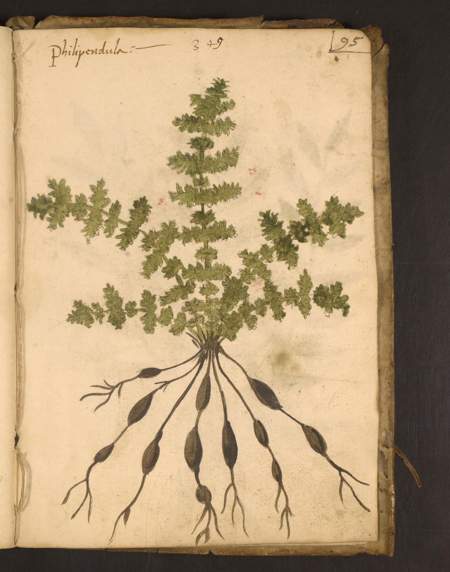
Supports: Modern root specimens and the historical philipendula portrait show spindle-shaped storage swellings, a concrete feature shared with part of the drawing.
Contradicts / missing: Both references conflict with the broad palmate-looking manuscript foliage. The serial links and joins of the drawn underground forms are also not anatomically established.
Two-lane evidence and alternatives: Modern and historical agreement concerns one root feature only. Other tuber-bearing herbs and a composite or schematic construction remain plausible.
Review / limitation: The Penn illustration is fol95r, labelled philipendula; its insertion-layer date is unresolved. Review roots together with leaves and flowers.
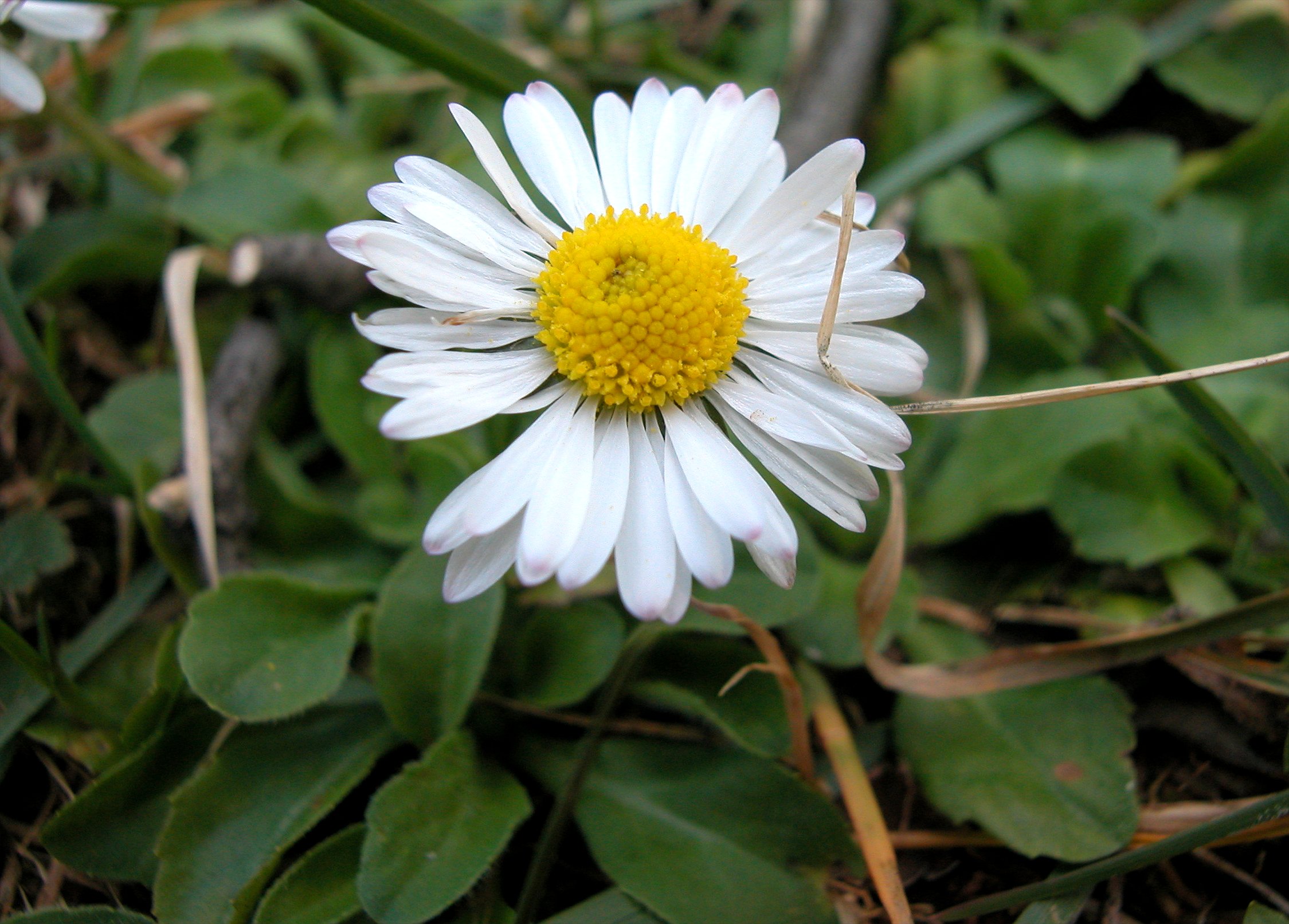
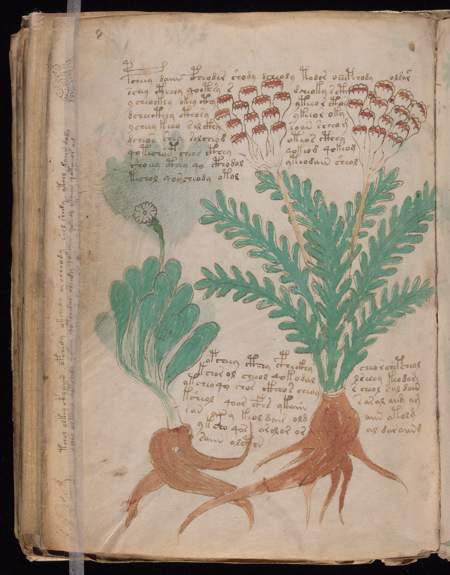
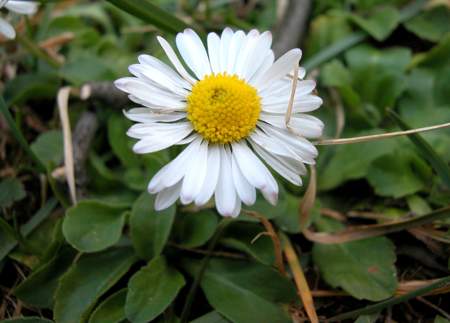
Supports: The left drawing has a spatulate-looking basal rosette and a solitary radiate head. The licensed Bellis photograph tests flower form, with foliage partly visible behind it.
Contradicts / missing: The photo is not a whole-root specimen and does not settle leaf attachment or species. The right drawing is a separate, yarrow-like comparison with coarser foliage.
Two-lane evidence and alternatives: Modern: Bellis versus other rosette-forming Asteraceae; right plant Achillea-type remains weak. Historical daisy/chamomile portraits offer broad construction parallels.
Review / limitation: External a/b labels are not validated crop-to-left/right assignments. Both mapped records preserve the shared full source view; do not count them as two validated extractions.


.jpg)